SPOTIFY • APPLE MUSIC • AMAZON MUSIC • DEEZER • PANDORA • YOUTUBE
From the Choir Loft to a New Oratorio
Why The Modern Messiah?
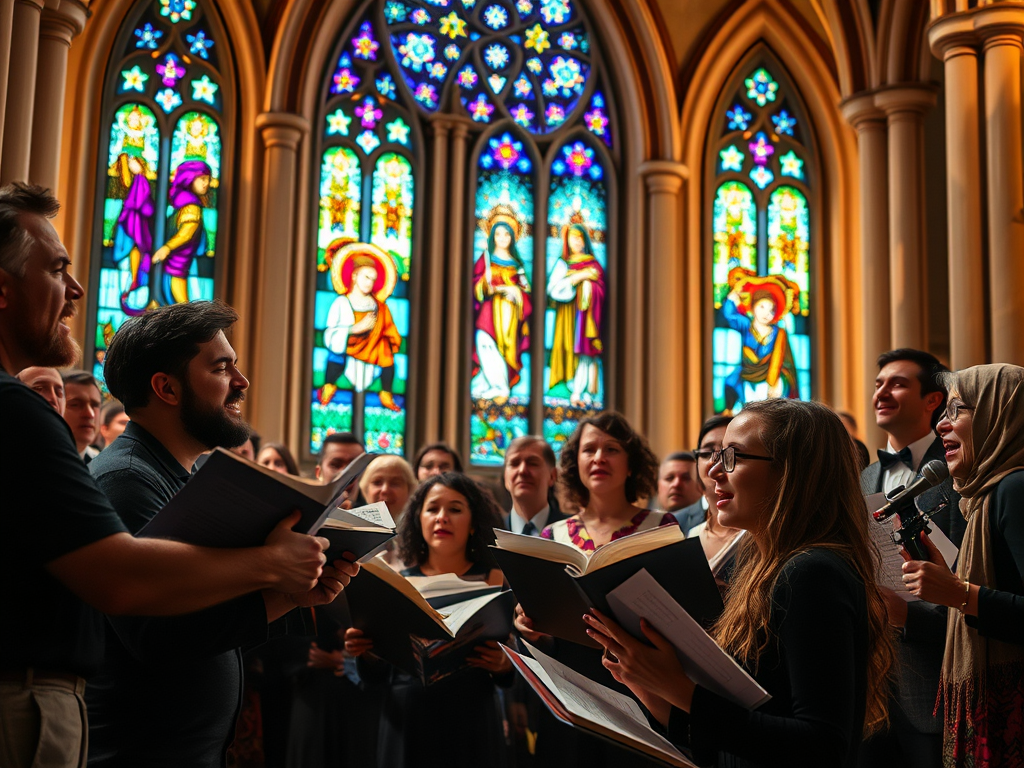
I grew up singing in choir. Junior high, high school, college – if there was a choir, I was in it. First soprano, standing in the front row, learning to sight-read those challenging baroque pieces that made my heart soar.
I’ll never forget the first time we performed Handel’s Hallelujah Chorus. The way the voices wove together in counterpoint, the power of “King of Kings and Lord of Lords” building to that glorious climax – I had chills the entire time. And don’t even get me started on singing “Glo-o-o-o-oria!” with those long, elaborate melismatic runs. There’s something transcendent about baroque music, something that connects you to centuries of believers who sang these same melodies in worship.
But here’s what always struck me: we were singing music from the 1700s. Beautiful, theologically rich, musically brilliant music – but written three centuries ago.
And I kept thinking: where are the NEW baroque pieces? Where are the fresh oratorios for our generation? Why aren’t we creating music in this glorious style that tells the timeless story with new words for today’s church?+
The Birth of The Modern Messiah
That question lived in my heart for years. Then, when I began creating “Christmas With The Saints” – my contemporary Christmas album – I realized something: the Christmas story deserves BOTH. It deserves contemporary pop worship AND classical baroque grandeur. It deserves fresh melodies AND traditional oratorio structure.
So I decided to create “The Modern Messiah” – a complete baroque oratorio following Handel’s structure but with entirely new, original lyrics rooted in Scripture.
My Partnership with AI
Just like with my contemporary album, I created this oratorio in partnership with Claude, an AI assistant. As someone with a passion for baroque music but not formal composition training, I found an unexpected collaborator who could help me craft lyrics that work within the complex structure of fugues, counterpoint, and classical oratorio form.
This partnership allowed me to write arias, recitatives, and choruses that honor the baroque tradition while expressing the biblical story in fresh language. Every theological emphasis came from my heart and study of Scripture. Claude helped me shape it into authentic baroque style.
Why Baroque? Why Now?
Psalm 96:1 commands us, “Sing to the Lord a new song; sing to the Lord, all the earth.”
Psalm 98:1 echoes, “Sing to the Lord a new song, for he has done marvelous things.”
Isaiah 42:10 declares, “Sing to the Lord a new song, his praise from the ends of the earth.”
But “new” doesn’t always mean contemporary style. Sometimes “new” means fresh expressions within ancient forms. The baroque oratorio is one of the most powerful vehicles for telling biblical narrative ever created. Handel proved that with his Messiah in 1741.
Nearly 300 years later, I believe it’s time for new baroque oratorios. Not to replace Handel – that would be impossible and foolish. But to stand alongside him, offering new generations the chance to encounter Christ through this magnificent musical form.
The Structure
Like Handel’s Messiah, “The Modern Messiah” follows a three-part structure:
Part I: The Promise – Prophecy and the birth of Christ (6 songs) Part II: The Passion – His mission, rejection, and sacrifice (4 songs) Part III: The Victory – Resurrection and eternal reign (4 songs)
Fourteen songs in total, featuring soprano, alto, tenor, and bass soloists; SATB choir with fugues and counterpoint; and full baroque orchestra with harpsichord, strings, oboe, baroque trumpet, timpani, and organ.
Claude H. Becker Returns
Like my contemporary album, this will be published under “Claude H. Becker” – that mysterious name my dad used to write in guest books everywhere. It’s my way of keeping him present, honoring his memory, and acknowledging that the saints in heaven are celebrating with us.
What This Album Is
“The Modern Messiah” is my offering to the church – a complete baroque oratorio that:
- Tells the full Christmas-to-Easter story
- Uses entirely original lyrics rooted in Scripture
- Honors the classical baroque tradition
- Brings fresh expression to an ancient form
- Invites a new generation to experience the beauty of sacred oratorio
From someone who stood in the choir loft singing “Hallelujah!” to someone now creating a new hallelujah for today – this is my worship. My gift. My invitation.
Welcome to “The Modern Messiah.”
– Melanie Grace (Claude H. Becker)
Publishing Note:
Album Title: Christmas With The Saints: The Modern Messiah
Artist Name: Melanie Grace
Published Artist Credit: Claude H. Becker
Genre: Baroque Oratorio / Classical Sacred Music
Total Songs: 14
Album Length: 42-48 minutes
Musical Style: Complete baroque oratorio in the tradition of Handel’s Messiah, featuring SATB choir, baroque soloists (soprano, alto, tenor, bass), and full baroque orchestra (harpsichord, strings, oboe, baroque trumpet, timpani, organ). All original lyrics rooted in Scripture, following the three-part oratorio structure: Part I – The Promise (Prophecy & Birth), Part II – The Passion (Mission & Sacrifice), Part III – The Victory (Resurrection & Reign).
Blog Series Structure:
- Blog 1: Introduction (Personal story, choir background, why create this)
- Blogs 2-15: One blog per song in album order
- Blog 16: Closing (Call to bring baroque to new generation)
In loving memory of Dad, who taught me to find joy in unexpected places and to never stop singing. This oratorio is my offering – to the church, to the next generation, and to the King of Kings who is worthy of all our praise. Until we sing together in heaven, I’ll keep singing here.




Leave a Reply