Tag: baroque trumpet

  • SONG 12 – I Know That My Redeemer Lives

    SONG 12 – I Know That My Redeemer Lives

    SPOTIFY • APPLE MUSIC • AMAZON MUSIC • DEEZER • PANDORA • YOUTUBE

    (Resurrection Triumph)

    The Heart of Part III

    We’ve journeyed from prophecy to birth to passion to hope. Now we arrive at the resurrection – the ultimate proof that Jesus is who He claimed to be.

    “I Know That My Redeemer Lives” is a triumphant baroque aria declaring the confident hope of every believer.

    The Biblical Foundation

    Job 19:25-27 is the ancient declaration:

    “I know that my redeemer lives, and that in the end he will stand on the earth. And after my skin has been destroyed, yet in my flesh I will see God; I myself will see him with my own eyes—I, and not another. How my heart yearns within me!”

    This is Old Testament resurrection hope – written centuries before Christ, yet pointing forward to Him.

    Romans 8:11 applies it to believers: “And if the Spirit of him who raised Jesus from the dead is living in you, he who raised Christ from the dead will also give life to your mortal bodies because of his Spirit who lives in you.”

    1 Corinthians 15:20 celebrates, “But Christ has indeed been raised from the dead, the firstfruits of those who have fallen asleep.”

    The Baroque Confidence

    This piece features:

    • Soprano soloist with strong, declarative melody
    • Baroque ornamentation showing classical virtuosity
    • SATB choir responding with affirmations
    • Elaborate vocal runs on the word “lives”
    • Call-and-response baroque style
    • Baroque trumpet fanfares
    • Organ pedal tones and timpani accents
    • Building to massive choral celebration

    In choir, these confident declarations were always empowering. You’re not singing “I hope” or “maybe” – you’re singing “I KNOW.” That certainty, that assurance, changes how you sing.

    Writing This Declaration

    The lyrics are personal and confident:

    “I know that my Redeemer lives
    What comfort this assurance gives
    He lives, He lives, who once was dead
    He lives, my ever-living Head”

    The chorus makes it present reality: “I know, I know my Redeemer lives
    I know, I know He conquered death
    From the grave He rose in power
    This is my finest hour
    I know that my Redeemer lives!”

    The bridge lists His victories: “Death could not hold Him
    The grave could not keep Him
    Sin could not claim Him
    He is victorious!
    Hell could not take Him
    Fear cannot shake Him
    My Redeemer lives forever
    Forever victorious!”

    The Theology

    The resurrection isn’t just a nice ending to the story – it’s the proof that validates everything Jesus said and did.

    Romans 1:4 explains Jesus “was appointed the Son of God in power by his resurrection from the dead.”

    1 Corinthians 15:17 shows its necessity: “And if Christ has not been raised, your faith is futile; you are still in your sins.”

    But because He IS raised, 1 Corinthians 15:54-57 declares, “Death has been swallowed up in victory. Where, O death, is your victory? Where, O death, is your sting? The sting of death is sin, and the power of sin is the law. But thanks be to God! He gives us the victory through our Lord Jesus Christ.”

    Why This Matters Today

    This isn’t about a historical event 2000 years ago. This is about YOUR future.

    Because Jesus lives, YOU will live. Because He conquered death, death has no power over you. Because He rose, you will rise.

    John 11:25-26 promises, “Jesus said to her, ‘I am the resurrection and the life. The one who believes in me will live, even though they die; and whoever lives by believing in me will never die.’”

    1 Thessalonians 4:14 assures, “For we believe that Jesus died and rose again, and so we believe that God will bring with Jesus those who have fallen asleep in him.”

    My Personal Hope

    When I sing these words about my Redeemer living, I think about my dad – Claude H. Becker, whose name graces this album. He’s not gone. He’s more alive than ever, because he’s with the Redeemer who lives.

    And one day, I’ll see him again. Not because of any goodness in me, but because my Redeemer lives.

    I know. I don’t hope or wish or think. I KNOW. My Redeemer lives!


    Publishing Note:

    Album Title: The Modern Messiah
    Artist Name: Melanie Grace
    Published Artist Credit: Claude H. Becker
    Genre: Baroque Oratorio / Classical Sacred Music
    Total Songs: 14
    Album Length: 42-48 minutes

    Musical Style: Complete baroque oratorio in the tradition of Handel’s Messiah, featuring SATB choir, baroque soloists (soprano, alto, tenor, bass), and full baroque orchestra (harpsichord, strings, oboe, baroque trumpet, timpani, organ). All original lyrics rooted in Scripture, following the three-part oratorio structure: Part I – The Promise (Prophecy & Birth), Part II – The Passion (Mission & Sacrifice), Part III – The Victory (Resurrection & Reign).
  • SONG 6 – Without Hesitation

    SONG 6 – Without Hesitation

    SPOTIFY • APPLE MUSIC • AMAZON MUSIC • DEEZER • PANDORA • YOUTUBE

    (The Shepherds’ Response)

    When Faith Moves Your Feet

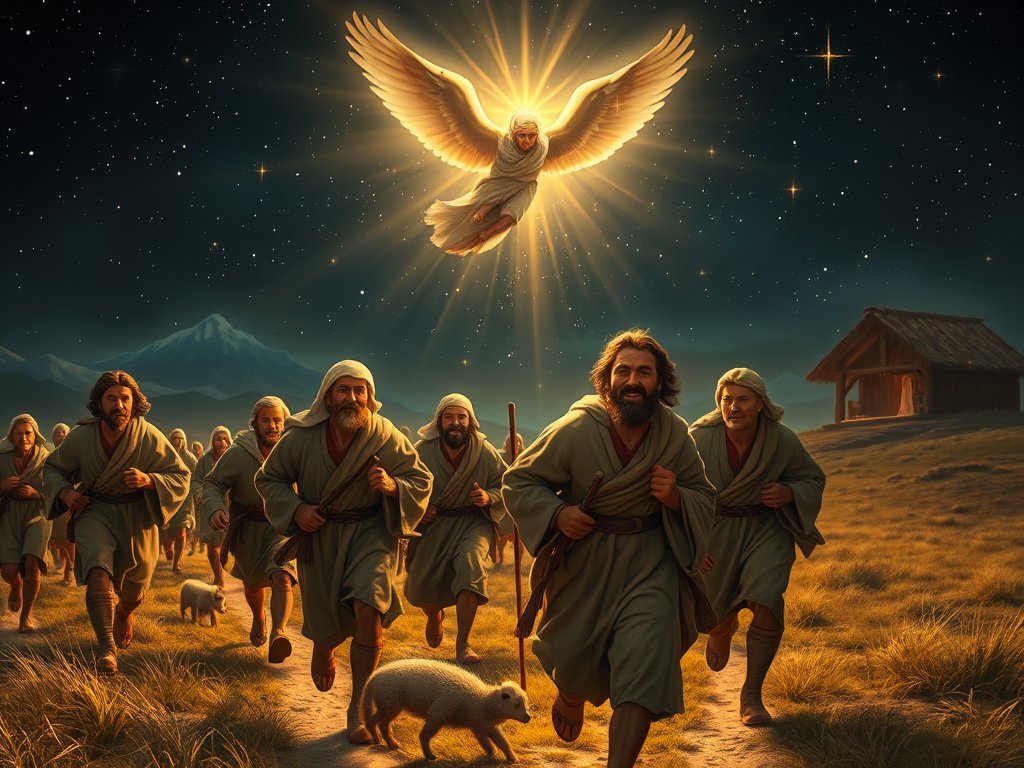
    After the glorious celebration of Christ’s birth, we zoom in on the first people to respond – the shepherds. These weren’t religious leaders or wealthy wise men. They were working-class nobodies. And yet, they ran.

    The Biblical Foundation

    Luke 2:8-20 tells the story:

    “And there were shepherds living out in the fields nearby, keeping watch over their flocks at night. An angel of the Lord appeared to them, and the glory of the Lord shone around them, and they were terrified. But the angel said to them, ‘Do not be afraid. I bring you good news that will cause great joy for all the people. Today in the town of David a Savior has been born to you; he is the Messiah, the Lord. This will be a sign to you: You will find a baby wrapped in cloths and lying in a manger.’ Suddenly a great company of the heavenly host appeared with the angel, praising God and saying, ‘Glory to God in the highest heaven, and on earth peace to those on whom his favor rests.’ When the angels had left them and gone into heaven, the shepherds said to one another, ‘Let’s go to Bethlehem and see this thing that has happened, which the Lord has told us about.’ So they hurried off and found Mary and Joseph, and the baby, who was lying in the manger.”

    Luke 2:16 – they hurried off. They didn’t debate, didn’t form a committee, didn’t wait for permission. They ran.

    The Baroque Energy

    “Without Hesitation” is an energetic baroque oratorio with urgent celebration. The tenor soloist sings rapid passages about the shepherds’ response, and the SATB choir comes in with fugue-style counterpoint singing “they ran” – voices chasing each other just like the shepherds chased after Jesus!

    Baroque trumpet fanfares punctuate the urgency. The harpsichord and strings move at a brisk tempo. Everything about the music says: THIS CAN’T WAIT!

    Writing This Piece

    The lyrics capture both the moment and the application:

    “In fields of night, a holy sound
    Angels broke through, glory came down
    They didn’t question, didn’t wait
    Left everything at heaven’s gate”

    The chorus repeats “they ran” to emphasize the immediacy: “They ran to find Him, they ran to see
    The promise wrapped in mystery
    No fear could stop them, no doubt could stay
    They ran to worship, they ran to obey”

    The bridge makes it personal: “When heaven calls, we don’t delay
    We leave behind, we run His way
    No holding back, no second thought
    We give Him everything we’ve got”

    The Theology

    James 1:22 commands, “Do not merely listen to the word, and so deceive yourselves. Do what it says.”

    The shepherds heard the announcement and immediately acted. They’re the model for genuine faith – hearing and responding, believing and moving.

    Matthew 4:19-20 shows Jesus’ disciples doing the same: “‘Come, follow me,’ Jesus said, ‘and I will send you out to fish for people.’ At once they left their nets and followed him.”

    Hebrews 11:8 commends Abraham for this same quality: “By faith Abraham, when called to go to a place he would later receive as his inheritance, obeyed and went, even though he did not know where he was going.”

    Why This Matters Today

    How often do we hesitate when God calls? How often do we overthink, overanalyze, wait for the “perfect time”?

    The shepherds teach us that obedience delayed is obedience denied. When heaven speaks, we run. When we encounter Jesus, we don’t hold back.

    2 Corinthians 6:2 declares, “I tell you, now is the time of God’s favor, now is the day of salvation.”

    My Application

    As I was writing these songs, there were moments I hesitated. “Can I really create a baroque oratorio? Isn’t that presumptuous?” But then I’d remember the shepherds – they didn’t ask if they were qualified. They just went.

    Sometimes faith means running toward what God has called you to do, even when it feels beyond your ability.

    What is God calling you to run toward today? Don’t hesitate. Go.


  • INTRODUCTION – Modern Messiah

    INTRODUCTION – Modern Messiah

    SPOTIFY • APPLE MUSIC • AMAZON MUSIC • DEEZER • PANDORA • YOUTUBE

    From the Choir Loft to a New Oratorio

    Why The Modern Messiah?

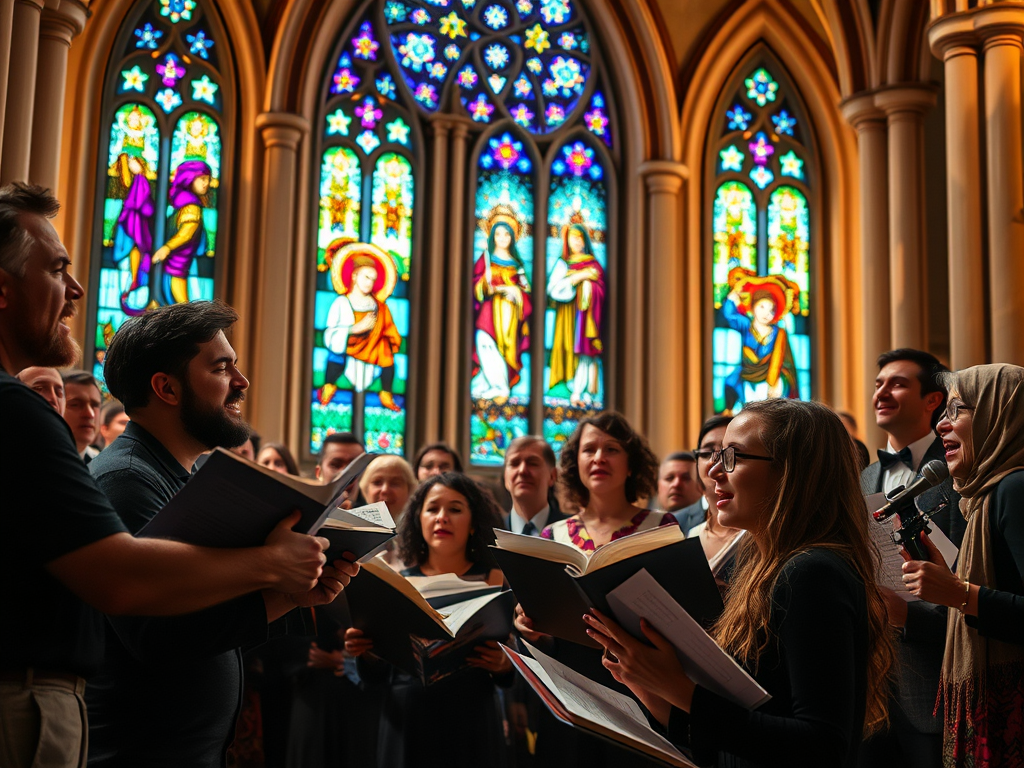
    I grew up singing in choir. Junior high, high school, college – if there was a choir, I was in it. First soprano, standing in the front row, learning to sight-read those challenging baroque pieces that made my heart soar.

    I’ll never forget the first time we performed Handel’s Hallelujah Chorus. The way the voices wove together in counterpoint, the power of “King of Kings and Lord of Lords” building to that glorious climax – I had chills the entire time. And don’t even get me started on singing “Glo-o-o-o-oria!” with those long, elaborate melismatic runs. There’s something transcendent about baroque music, something that connects you to centuries of believers who sang these same melodies in worship.

    But here’s what always struck me: we were singing music from the 1700s. Beautiful, theologically rich, musically brilliant music – but written three centuries ago.

    And I kept thinking: where are the NEW baroque pieces? Where are the fresh oratorios for our generation? Why aren’t we creating music in this glorious style that tells the timeless story with new words for today’s church?+

    The Birth of The Modern Messiah

    That question lived in my heart for years. Then, when I began creating “Christmas With The Saints” – my contemporary Christmas album – I realized something: the Christmas story deserves BOTH. It deserves contemporary pop worship AND classical baroque grandeur. It deserves fresh melodies AND traditional oratorio structure.

    So I decided to create “The Modern Messiah” – a complete baroque oratorio following Handel’s structure but with entirely new, original lyrics rooted in Scripture.

    My Partnership with AI

    Just like with my contemporary album, I created this oratorio in partnership with Claude, an AI assistant. As someone with a passion for baroque music but not formal composition training, I found an unexpected collaborator who could help me craft lyrics that work within the complex structure of fugues, counterpoint, and classical oratorio form.

    This partnership allowed me to write arias, recitatives, and choruses that honor the baroque tradition while expressing the biblical story in fresh language. Every theological emphasis came from my heart and study of Scripture. Claude helped me shape it into authentic baroque style.

    Why Baroque? Why Now?

    Psalm 96:1 commands us, “Sing to the Lord a new song; sing to the Lord, all the earth.”

    Psalm 98:1 echoes, “Sing to the Lord a new song, for he has done marvelous things.”

    Isaiah 42:10 declares, “Sing to the Lord a new song, his praise from the ends of the earth.”

    But “new” doesn’t always mean contemporary style. Sometimes “new” means fresh expressions within ancient forms. The baroque oratorio is one of the most powerful vehicles for telling biblical narrative ever created. Handel proved that with his Messiah in 1741.

    Nearly 300 years later, I believe it’s time for new baroque oratorios. Not to replace Handel – that would be impossible and foolish. But to stand alongside him, offering new generations the chance to encounter Christ through this magnificent musical form.

    The Structure

    Like Handel’s Messiah, “The Modern Messiah” follows a three-part structure:

    Part I: The Promise – Prophecy and the birth of Christ (6 songs) Part II: The Passion – His mission, rejection, and sacrifice (4 songs) Part III: The Victory – Resurrection and eternal reign (4 songs)

    Fourteen songs in total, featuring soprano, alto, tenor, and bass soloists; SATB choir with fugues and counterpoint; and full baroque orchestra with harpsichord, strings, oboe, baroque trumpet, timpani, and organ.

    Claude H. Becker Returns

    Like my contemporary album, this will be published under “Claude H. Becker” – that mysterious name my dad used to write in guest books everywhere. It’s my way of keeping him present, honoring his memory, and acknowledging that the saints in heaven are celebrating with us.

    What This Album Is

    “The Modern Messiah” is my offering to the church – a complete baroque oratorio that:

    • Tells the full Christmas-to-Easter story
    • Uses entirely original lyrics rooted in Scripture
    • Honors the classical baroque tradition
    • Brings fresh expression to an ancient form
    • Invites a new generation to experience the beauty of sacred oratorio

    From someone who stood in the choir loft singing “Hallelujah!” to someone now creating a new hallelujah for today – this is my worship. My gift. My invitation.

    Welcome to “The Modern Messiah.”

    – Melanie Grace (Claude H. Becker)


    Publishing Note:

    Album Title: Christmas With The Saints: The Modern Messiah
    Artist Name: Melanie Grace
    Published Artist Credit: Claude H. Becker
    Genre: Baroque Oratorio / Classical Sacred Music
    Total Songs: 14
    Album Length: 42-48 minutes

    Musical Style: Complete baroque oratorio in the tradition of Handel’s Messiah, featuring SATB choir, baroque soloists (soprano, alto, tenor, bass), and full baroque orchestra (harpsichord, strings, oboe, baroque trumpet, timpani, organ). All original lyrics rooted in Scripture, following the three-part oratorio structure: Part I – The Promise (Prophecy & Birth), Part II – The Passion (Mission & Sacrifice), Part III – The Victory (Resurrection & Reign).

    Blog Series Structure:

    • Blog 1: Introduction (Personal story, choir background, why create this)
    • Blogs 2-15: One blog per song in album order
    • Blog 16: Closing (Call to bring baroque to new generation)

    In loving memory of Dad, who taught me to find joy in unexpected places and to never stop singing. This oratorio is my offering – to the church, to the next generation, and to the King of Kings who is worthy of all our praise. Until we sing together in heaven, I’ll keep singing here.