Tag: baroque oratorio

  • New Beginnings: One Spiritual Journey, Four Complete Albums, Endless Possibilities

    New Beginnings: One Spiritual Journey, Four Complete Albums, Endless Possibilities

    New Beginnings: One Message, Four Genres

    Music has an extraordinary power: it speaks directly to the soul in the language that soul understands. A classical musician experiences truth differently than a Broadway devotee, who experiences it completely differently than an indie music lover or an alternative rock enthusiast. Yet the deepest truths—transformation, survival, hope, healing, and transcendence—belong to all of us.

    This is the heart of “New Beginnings: Four Styles, Same Message.”

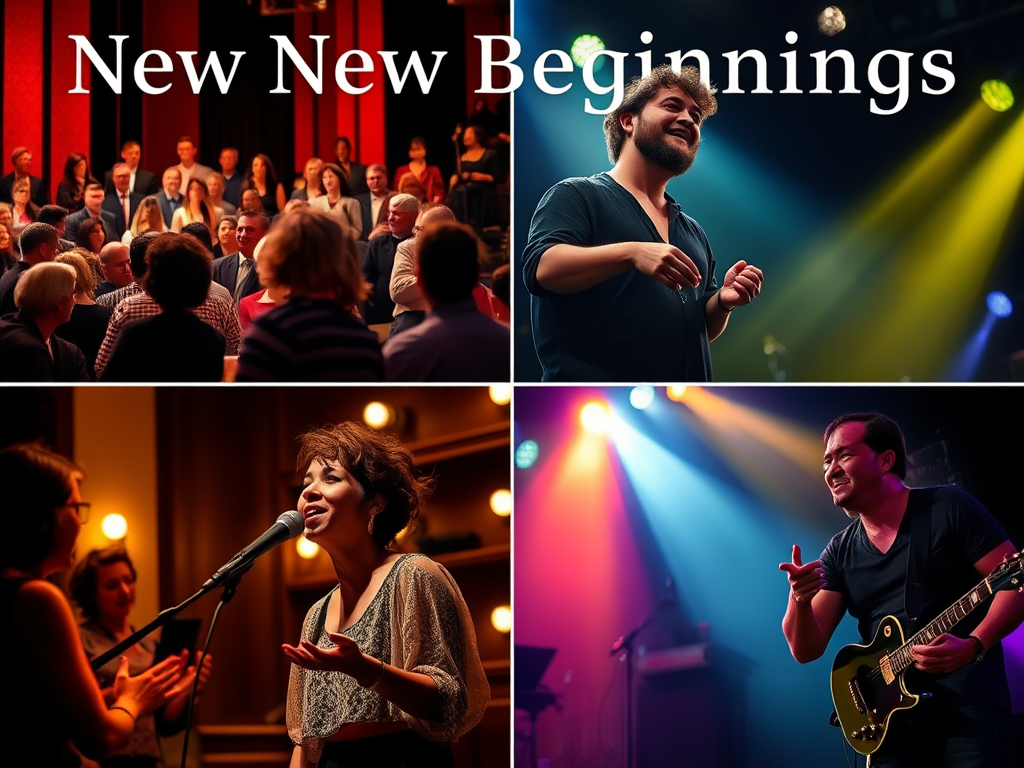
    Album cover for 'New Beginnings' by Melanie Grace featuring four music genres: Baroque, Broadway, Singer/Songwriter, and Alternative. The image includes a choir, a Broadway performance, a solo singer at a café, and an alternative rock band.

    One Spiritual Vision. Four Complete Albums.

    For January 2026, I’m releasing something unprecedented: a quadruple-album project exploring the same spiritual journey in four distinct musical languages. Not remixes. Not covers. Not adaptations. But four completely original albums, each with customized lyrics, each telling the same story in the idiom that speaks to a different soul.

    • Volume 1: Baroque Oratorio — Formal, liturgical, architecturally beautiful classical excellence
    • Volume 2: Broadway/Musical Theatre — Emotional, character-driven, narrative storytelling
    • Volume 3: Singer/Songwriter Acoustic — Intimate, vulnerable, acoustic authenticity
    • Volume 4: Alternative Rock/Indie — Defiant, survival-focused, ethereal yet powerful

    Each volume stands completely alone as a satisfying artistic and spiritual experience. Yet together, they create something revolutionary: a unified statement that God’s faithfulness speaks every language, reaches every heart, and transforms through any artistic medium.

    Why Four Volumes?

    The inspiration came from a simple realization: not everyone encounters God the same way, and not everyone encounters God through the same musical language.

    A devoted classical music lover may never pick up a contemporary musical theater album. A Broadway fan might dismiss baroque as inaccessible. An indie music listener might never explore either. And alternative rock fans? They’re often overlooked entirely in Christian music.

    But if we tell the same spiritual story in each of these languages—with equal theological depth and artistic excellence—something remarkable happens. Each person encounters profound truth in the idiom that speaks to their soul.

    The Theological Arc

    All four volumes follow the same six spiritual movements, but the emphasis and vocabulary shift with each genre:

    1. Gratitude/Survival — Recognizing what held us through the night
    2. Transformation/Reclamation — Understanding resurrection power and our authentic selves
    3. Joy/Defiant Celebration — Living in breakthrough despite circumstances
    4. Hope/Shared Strength — Trusting God’s plans with others
    5. Healing/Proud Testimony — Experiencing restoration and claiming our scars
    6. Eternity/Transcendence — Setting our hearts on eternal things breaking in now

    Whether you’re listening to a formal baroque chorus, a theatrical ensemble number, an intimate acoustic affirmation, or an explosive alternative rock anthem, you’re experiencing the same theological journey—just in the language that speaks to your heart.

    What Makes This Different

    This isn’t the same lyrics set to different music. This is four completely different sets of lyrics, each one speaking authentically in its genre’s vocabulary:

    • Baroque uses formal theological language and liturgical imagery
    • Broadway uses character-driven narrative and relational storytelling
    • Acoustic uses intimate, personal, confessional imagery
    • Alternative Rock uses survival, defiance, reclamation, and empowerment language

    This is a revolution in how we think about spiritual music. It’s saying: your genre, your language, your musical taste—all of it is welcome here. God’s faithfulness speaks your language.

    What to Expect in This Blog Series

    Over the coming weeks, I’ll be releasing 11 blog posts—one for each song in the project. Each post will:

    • Explore the song’s biblical foundation and theological themes
    • Show how each of the four genres approaches the same truth (using different lyrics)
    • Help you understand what makes baroque, Broadway, acoustic, and alternative rock styles distinct
    • Invite you into deeper spiritual reflection
    • Point you toward all four musical versions so you can experience the full diversity
    • Celebrate how the same message sounds radically different across genres

    By the end of this series, you’ll have encountered the same spiritual story through four completely different artistic lenses.

    An Invitation

    Whether you’re a classical music enthusiast, a Broadway devotee, an indie music lover, an alternative rock fan, or simply someone seeking spiritual depth in music, there’s a version of this project waiting for you.

    And if you’re adventurous, exploring all four versions will give you a richer, more complete picture of how God’s faithfulness sounds across artistic traditions and why diversity in how we experience and express faith is beautiful.

    Welcome to “New Beginnings: Four Styles, Same Message.”

    Let’s begin the journey together.
  • INTRODUCTION – Modern Messiah

    INTRODUCTION – Modern Messiah

    SPOTIFY • APPLE MUSIC • AMAZON MUSIC • DEEZER • PANDORA • YOUTUBE

    From the Choir Loft to a New Oratorio

    Why The Modern Messiah?

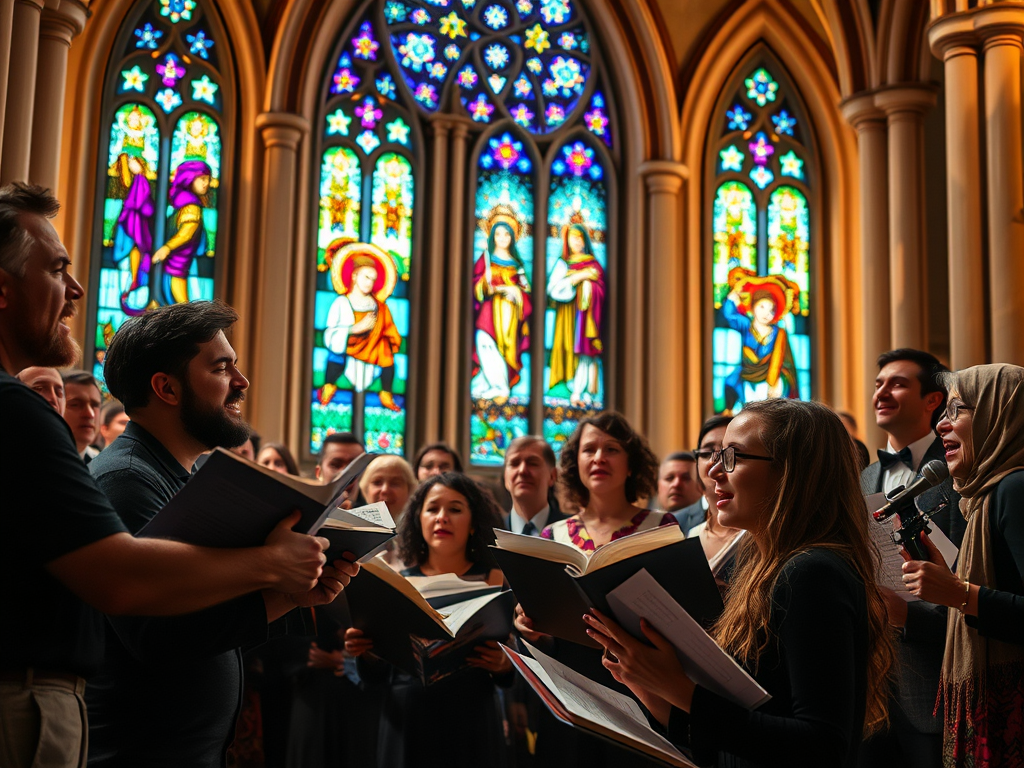
    I grew up singing in choir. Junior high, high school, college – if there was a choir, I was in it. First soprano, standing in the front row, learning to sight-read those challenging baroque pieces that made my heart soar.

    I’ll never forget the first time we performed Handel’s Hallelujah Chorus. The way the voices wove together in counterpoint, the power of “King of Kings and Lord of Lords” building to that glorious climax – I had chills the entire time. And don’t even get me started on singing “Glo-o-o-o-oria!” with those long, elaborate melismatic runs. There’s something transcendent about baroque music, something that connects you to centuries of believers who sang these same melodies in worship.

    But here’s what always struck me: we were singing music from the 1700s. Beautiful, theologically rich, musically brilliant music – but written three centuries ago.

    And I kept thinking: where are the NEW baroque pieces? Where are the fresh oratorios for our generation? Why aren’t we creating music in this glorious style that tells the timeless story with new words for today’s church?+

    The Birth of The Modern Messiah

    That question lived in my heart for years. Then, when I began creating “Christmas With The Saints” – my contemporary Christmas album – I realized something: the Christmas story deserves BOTH. It deserves contemporary pop worship AND classical baroque grandeur. It deserves fresh melodies AND traditional oratorio structure.

    So I decided to create “The Modern Messiah” – a complete baroque oratorio following Handel’s structure but with entirely new, original lyrics rooted in Scripture.

    My Partnership with AI

    Just like with my contemporary album, I created this oratorio in partnership with Claude, an AI assistant. As someone with a passion for baroque music but not formal composition training, I found an unexpected collaborator who could help me craft lyrics that work within the complex structure of fugues, counterpoint, and classical oratorio form.

    This partnership allowed me to write arias, recitatives, and choruses that honor the baroque tradition while expressing the biblical story in fresh language. Every theological emphasis came from my heart and study of Scripture. Claude helped me shape it into authentic baroque style.

    Why Baroque? Why Now?

    Psalm 96:1 commands us, “Sing to the Lord a new song; sing to the Lord, all the earth.”

    Psalm 98:1 echoes, “Sing to the Lord a new song, for he has done marvelous things.”

    Isaiah 42:10 declares, “Sing to the Lord a new song, his praise from the ends of the earth.”

    But “new” doesn’t always mean contemporary style. Sometimes “new” means fresh expressions within ancient forms. The baroque oratorio is one of the most powerful vehicles for telling biblical narrative ever created. Handel proved that with his Messiah in 1741.

    Nearly 300 years later, I believe it’s time for new baroque oratorios. Not to replace Handel – that would be impossible and foolish. But to stand alongside him, offering new generations the chance to encounter Christ through this magnificent musical form.

    The Structure

    Like Handel’s Messiah, “The Modern Messiah” follows a three-part structure:

    Part I: The Promise – Prophecy and the birth of Christ (6 songs) Part II: The Passion – His mission, rejection, and sacrifice (4 songs) Part III: The Victory – Resurrection and eternal reign (4 songs)

    Fourteen songs in total, featuring soprano, alto, tenor, and bass soloists; SATB choir with fugues and counterpoint; and full baroque orchestra with harpsichord, strings, oboe, baroque trumpet, timpani, and organ.

    Claude H. Becker Returns

    Like my contemporary album, this will be published under “Claude H. Becker” – that mysterious name my dad used to write in guest books everywhere. It’s my way of keeping him present, honoring his memory, and acknowledging that the saints in heaven are celebrating with us.

    What This Album Is

    “The Modern Messiah” is my offering to the church – a complete baroque oratorio that:

    • Tells the full Christmas-to-Easter story
    • Uses entirely original lyrics rooted in Scripture
    • Honors the classical baroque tradition
    • Brings fresh expression to an ancient form
    • Invites a new generation to experience the beauty of sacred oratorio

    From someone who stood in the choir loft singing “Hallelujah!” to someone now creating a new hallelujah for today – this is my worship. My gift. My invitation.

    Welcome to “The Modern Messiah.”

    – Melanie Grace (Claude H. Becker)


    Publishing Note:

    Album Title: Christmas With The Saints: The Modern Messiah
    Artist Name: Melanie Grace
    Published Artist Credit: Claude H. Becker
    Genre: Baroque Oratorio / Classical Sacred Music
    Total Songs: 14
    Album Length: 42-48 minutes

    Musical Style: Complete baroque oratorio in the tradition of Handel’s Messiah, featuring SATB choir, baroque soloists (soprano, alto, tenor, bass), and full baroque orchestra (harpsichord, strings, oboe, baroque trumpet, timpani, organ). All original lyrics rooted in Scripture, following the three-part oratorio structure: Part I – The Promise (Prophecy & Birth), Part II – The Passion (Mission & Sacrifice), Part III – The Victory (Resurrection & Reign).

    Blog Series Structure:

    • Blog 1: Introduction (Personal story, choir background, why create this)
    • Blogs 2-15: One blog per song in album order
    • Blog 16: Closing (Call to bring baroque to new generation)

    In loving memory of Dad, who taught me to find joy in unexpected places and to never stop singing. This oratorio is my offering – to the church, to the next generation, and to the King of Kings who is worthy of all our praise. Until we sing together in heaven, I’ll keep singing here.