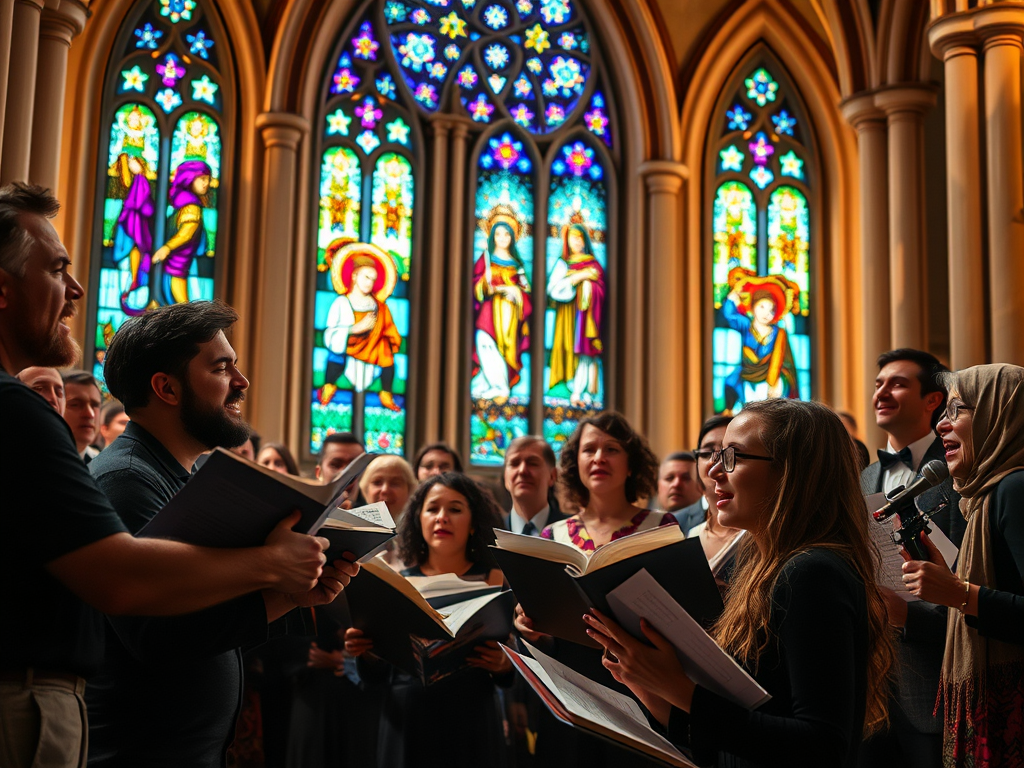
Tag: church choir

  • From Church Choir to Indie Album: How Faith Shaped My Songwriting Voice

    From Church Choir to Indie Album: How Faith Shaped My Songwriting Voice

    How does faith influence songwriting?  Faith shapes songwriting by providing a framework for meaning, a vocabulary for transcendence, and a tradition of communal music that emphasizes songs serving a purpose larger than entertainment. Many of the most enduring songs across genres are rooted in a songwriter’s relationship with something larger than themselves.

    My First Musical Home

    I was a little girl standing in the soprano section next to women who had been singing in that same choir for decades, learning to blend my voice into something much larger than it could be alone, to listen as much as I sang, to lift a melody above a harmony and know intuitively when to carry and when to pull back. Church music gave me my first understanding that songs have a purpose that goes beyond entertainment or performance. They can carry someone through a grief they cannot name. They can open up a room in ways that words alone never could.

    That understanding has stayed with me through every kind of music I have made since then. Every album I have released in 2026, whether it is explicitly faith-based or not, carries that quality in it somewhere. The sincerity. The sense that a song is meant to land somewhere real in the listener and mean something when it does. That quality comes directly from years of making music in community, in worship, in service of something larger than the performance itself.

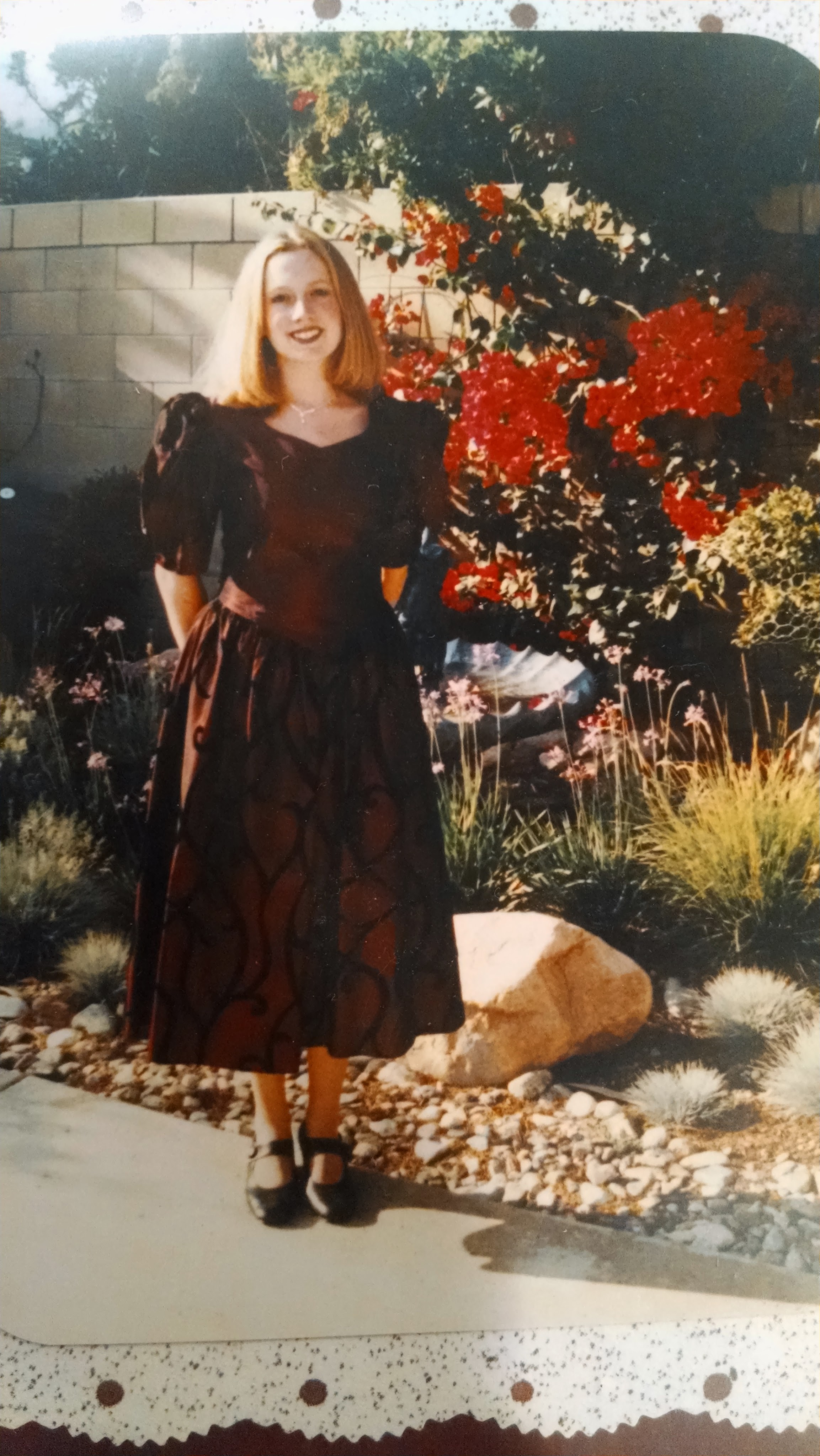
    A group of five musicians posed together in a room. Two women are standing, one holding a drink and another sitting on an amplifier with an acoustic guitar. A man sits in the background, and another man stands on the right holding a bass guitar. A teenager is sitting on the floor with a drumstick.

    How Does Faith Influence My Music?

    Faith influences my music on two distinct levels. The first is direct: albums like Chosen by Grace are explicitly about the experience of being held by grace, about reaching toward something larger than your own effort, about the profound relief of being loved without first having to earn it. Those songs are grounded in specific spiritual conviction and they do not pretend otherwise.

    The second level is more diffuse but equally present throughout my catalog. Faith shapes the way I understand what songs are fundamentally for. I believe music matters beyond entertainment. I believe a song can reach into a person and change something, or at minimum make them feel less alone in what they are carrying. That belief is entirely formed by years of making music in community contexts where the purpose of the song was always larger than the song itself.

    What Did Classical Training Give You as a Songwriter?

    Training as a first soprano gave me an understanding of how individual voices create together something that neither could achieve alone. It gave me ear training that is audible in how I approach song architecture. It gave me a high standard for what music can actually be when everyone involved commits completely to what they are making.

    I am still an active singer in my church community and it keeps me genuinely grounded in why music matters. On the days when the industry side of things feels loud and metrics-driven, singing in a room full of people who are simply trying to connect to something larger than themselves brings me back to the essential thing. The choir loft was the first room that shaped me as a musician. I am grateful for every room that has shaped me since.
  • INTRODUCTION – Modern Messiah

    INTRODUCTION – Modern Messiah

    SPOTIFY • APPLE MUSIC • AMAZON MUSIC • DEEZER • PANDORA • YOUTUBE

    From the Choir Loft to a New Oratorio

    Why The Modern Messiah?

    I grew up singing in choir. Junior high, high school, college – if there was a choir, I was in it. First soprano, standing in the front row, learning to sight-read those challenging baroque pieces that made my heart soar.

    I’ll never forget the first time we performed Handel’s Hallelujah Chorus. The way the voices wove together in counterpoint, the power of “King of Kings and Lord of Lords” building to that glorious climax – I had chills the entire time. And don’t even get me started on singing “Glo-o-o-o-oria!” with those long, elaborate melismatic runs. There’s something transcendent about baroque music, something that connects you to centuries of believers who sang these same melodies in worship.

    But here’s what always struck me: we were singing music from the 1700s. Beautiful, theologically rich, musically brilliant music – but written three centuries ago.

    And I kept thinking: where are the NEW baroque pieces? Where are the fresh oratorios for our generation? Why aren’t we creating music in this glorious style that tells the timeless story with new words for today’s church?+

    The Birth of The Modern Messiah

    That question lived in my heart for years. Then, when I began creating “Christmas With The Saints” – my contemporary Christmas album – I realized something: the Christmas story deserves BOTH. It deserves contemporary pop worship AND classical baroque grandeur. It deserves fresh melodies AND traditional oratorio structure.

    So I decided to create “The Modern Messiah” – a complete baroque oratorio following Handel’s structure but with entirely new, original lyrics rooted in Scripture.

    My Partnership with AI

    Just like with my contemporary album, I created this oratorio in partnership with Claude, an AI assistant. As someone with a passion for baroque music but not formal composition training, I found an unexpected collaborator who could help me craft lyrics that work within the complex structure of fugues, counterpoint, and classical oratorio form.

    This partnership allowed me to write arias, recitatives, and choruses that honor the baroque tradition while expressing the biblical story in fresh language. Every theological emphasis came from my heart and study of Scripture. Claude helped me shape it into authentic baroque style.

    Why Baroque? Why Now?

    Psalm 96:1 commands us, “Sing to the Lord a new song; sing to the Lord, all the earth.”

    Psalm 98:1 echoes, “Sing to the Lord a new song, for he has done marvelous things.”

    Isaiah 42:10 declares, “Sing to the Lord a new song, his praise from the ends of the earth.”

    But “new” doesn’t always mean contemporary style. Sometimes “new” means fresh expressions within ancient forms. The baroque oratorio is one of the most powerful vehicles for telling biblical narrative ever created. Handel proved that with his Messiah in 1741.

    Nearly 300 years later, I believe it’s time for new baroque oratorios. Not to replace Handel – that would be impossible and foolish. But to stand alongside him, offering new generations the chance to encounter Christ through this magnificent musical form.

    The Structure

    Like Handel’s Messiah, “The Modern Messiah” follows a three-part structure:

    Part I: The Promise – Prophecy and the birth of Christ (6 songs) Part II: The Passion – His mission, rejection, and sacrifice (4 songs) Part III: The Victory – Resurrection and eternal reign (4 songs)

    Fourteen songs in total, featuring soprano, alto, tenor, and bass soloists; SATB choir with fugues and counterpoint; and full baroque orchestra with harpsichord, strings, oboe, baroque trumpet, timpani, and organ.

    Claude H. Becker Returns

    Like my contemporary album, this will be published under “Claude H. Becker” – that mysterious name my dad used to write in guest books everywhere. It’s my way of keeping him present, honoring his memory, and acknowledging that the saints in heaven are celebrating with us.

    What This Album Is

    “The Modern Messiah” is my offering to the church – a complete baroque oratorio that:

    • Tells the full Christmas-to-Easter story
    • Uses entirely original lyrics rooted in Scripture
    • Honors the classical baroque tradition
    • Brings fresh expression to an ancient form
    • Invites a new generation to experience the beauty of sacred oratorio

    From someone who stood in the choir loft singing “Hallelujah!” to someone now creating a new hallelujah for today – this is my worship. My gift. My invitation.

    Welcome to “The Modern Messiah.”

    – Melanie Grace (Claude H. Becker)


    Publishing Note:

    Album Title: Christmas With The Saints: The Modern Messiah
    Artist Name: Melanie Grace
    Published Artist Credit: Claude H. Becker
    Genre: Baroque Oratorio / Classical Sacred Music
    Total Songs: 14
    Album Length: 42-48 minutes

    Musical Style: Complete baroque oratorio in the tradition of Handel’s Messiah, featuring SATB choir, baroque soloists (soprano, alto, tenor, bass), and full baroque orchestra (harpsichord, strings, oboe, baroque trumpet, timpani, organ). All original lyrics rooted in Scripture, following the three-part oratorio structure: Part I – The Promise (Prophecy & Birth), Part II – The Passion (Mission & Sacrifice), Part III – The Victory (Resurrection & Reign).

    Blog Series Structure:

    • Blog 1: Introduction (Personal story, choir background, why create this)
    • Blogs 2-15: One blog per song in album order
    • Blog 16: Closing (Call to bring baroque to new generation)

    In loving memory of Dad, who taught me to find joy in unexpected places and to never stop singing. This oratorio is my offering – to the church, to the next generation, and to the King of Kings who is worthy of all our praise. Until we sing together in heaven, I’ll keep singing here.