Tag: baroque music

  • New Beginnings: A Year-Long Journey Through Four Musical Expressions of One Unchanging Truth

    New Beginnings: A Year-Long Journey Through Four Musical Expressions of One Unchanging Truth

    New Beginnings: A Journey Complete

    We’ve journeyed together through four complete albums, eleven movements, and forty-four separate interpretations of the same fundamental spiritual truth: God is faithful, transformative, loving, healing, and eternal.

    From baroque majesty to Broadway emotion to singer/songwriter intimacy to alternative rock defiance, we’ve encountered one story told four ways.

    What We’ve Discovered Together

    Over these past weeks, we’ve encountered the same biblical passages and theological themes through four completely different artistic lenses:

    • Gratitude/Survival: From formal liturgical recognition to character awakening to intimate personal realization to defiant celebration
    • Transformation: From architectural baroque beauty to character-driven narrative to acoustic personal journey to explosive liberation
    • Joy: From trumpet fanfares to infectious ensemble to quiet small moments to fierce defiance
    • Hope: From formal duet harmony to relational partnership to intimate conversation to defiant solidarity
    • Healing: From tender baroque to character testimony to ongoing learning to proud testimony
    • Eternity: From grand finale chorus to communal kingdom vision to personal conviction to cosmic transcendence

    Each approach reached different people. Each spoke to different hearts.

    Why Four Volumes Matter

    In our culture, we often assume that there’s one “right” way to encounter truth. One musical genre. One artistic style. One expression of faith.

    But what if God delights in the diversity? What if His faithfulness doesn’t sound the way the previous generation expected it to sound? What if your particular musical language is exactly how God wants to speak to your soul?

    “New Beginnings: Four Styles, Same Message” suggests something radical: the gospel doesn’t need a single expression. It thrives in multiplicity.

    The classical musician encounters God’s faithfulness through baroque majesty.

    The theater lover encounters it through character-driven narrative.

    The acoustic seeker encounters it through intimate vulnerability.

    The alternative rock enthusiast encounters it through defiant transcendence.

    All four encounter the same God. All four discover the same truth. They just hear it in the language that speaks to their soul.

    What This Means for Your Faith

    As you finish this series, consider:

    Which version of each song resonated most deeply with you?

    Was it the baroque? The Broadway? The acoustic? The alternative rock?

    Or did you find that different versions spoke to you at different moments? That some days you needed formal beauty, other days relational testimony, still other days intimate vulnerability, and still other days defiant power?

    That’s not contradiction. That’s wholeness.

    Our faith isn’t meant to be one-dimensional. It’s meant to be rich, textured, approached from multiple angles.

    The Invitation Forward

    In 2026, I invite you to:

    Listen to all four volumes. Not just the one that initially appeals to you. Listen to all four and discover how four different musical languages celebrate the same God.

    Share with others. If you love the baroque, introduce a friend to the Broadway. If the acoustic version speaks to you, ask someone who loves classical music to listen with you. If you’re energized by alternative rock, invite someone who loves musical theatre to experience it with you.

    Notice the diversity. Pay attention to how the same theological truth transforms across genres. What does that teach you about God’s nature? About His multi-faceted character?

    Let your faith expand. If you’ve only ever encountered God’s faithfulness in one musical style, discovering it in three others might deepen your understanding, broaden your worship, expand your experience of the sacred.

    Celebrate the multiplicities. Recognize that God speaks every language, reaches every heart, and transforms through any artistic medium that carries truth.

    The Same Story, Forever Unfolding

    God’s faithfulness isn’t a story that gets old. It doesn’t exhaust itself.

    It emerges new every morning. It speaks in every language. It reaches every heart.

    This past month, we’ve journeyed through that faithfulness in four complete artistic expressions. But the invitation doesn’t end here.

    In your life, God’s story will continue unfolding—perhaps in ways you haven’t yet discovered. Perhaps in artistic expressions you haven’t yet encountered. Perhaps in communities you haven’t yet joined. Perhaps in your own voice, in your own music, in your own expression of truth.

    The same story keeps telling itself. Through Scripture. Through tradition. Through contemporary art. Through your life.

    Thank You for the Journey

    I’m genuinely grateful that you’ve journeyed through “New Beginnings: Four Styles, Same Message” with me. Whether you connected most deeply with the baroque, the Broadway, the acoustic, the alternative rock, or some combination of all four, you’ve been part of something genuinely unique.

    You’ve participated in a statement that faith thrives in diversity, that God’s truth speaks every language, that the gospel is both timeless and constantly fresh.

    You’ve discovered that the same message sounds completely different depending on the language, and that’s beautiful.

    What’s Next?

    As you step into 2026, I invite you to:

    • Download or stream all four volumes of “New Beginnings: A Spiritual Journey in Four Musical Languages”
    • Share your favorite version with someone whose musical taste differs from yours
    • Reflect on which version(s) resonate most deeply with your faith journey
    • Consider how encountering God’s faithfulness across artistic traditions might deepen your spiritual life
    • Join the conversation about what it means to experience faith in multiple languages, multiple genres, multiple expressions

    The story continues. The faithfulness endures. The music plays on.

    Thank you for listening. Thank you for believing. Thank you for being part of “New Beginnings: Four Styles, Same Message.”

    May your 2026 be filled with the discovery that God’s faithfulness really does sound beautiful in every language, speaks to every heart, and transforms through any artistic medium that carries truth.

    Welcome to new beginnings. Welcome to the fullness of God’s voice, speaking in the language that speaks to your soul.

    A promotional image for 'New Beginnings' featuring four musical volumes: Baroque, Broadway, Songwriter, and Alternative, with images of performances from each genre.
  • Finding Gratitude: How One Truth Sounds in Four Completely Different Languages

    Finding Gratitude: How One Truth Sounds in Four Completely Different Languages

     • SPOTIFY • APPLE MUSIC • AMAZON MUSIC • DEEZER • PANDORA • YOUTUBE

    Finding Gratitude: The Song That Sounds Four Different Ways

    “This day the Lord has made; let us rejoice and be glad.” Psalm 118:24 is one of Scripture’s most joyful invitations. Yet the way we experience gratitude—and the way we express it—varies wildly depending on our spiritual and artistic traditions.

    More radically, it varies depending on where we are in our journey. Sometimes gratitude looks like formal thanksgiving. Sometimes it looks like relief that we survived. Sometimes it’s intimate recognition of grace. Sometimes it’s defiant celebration despite everything.

    The Baroque Version: “This Day the Lord Has Made”

    Step into a grand sanctuary. The harpsichord begins, steady and majestic. Strings swell in layers of complexity. Soprano and alto voices enter with reverence, their lines intricate and theologically articulate. “This day the Lord has made, let us rejoice and be glad, in the mercies given by His hand.”

    By the time the full choir joins, you’re experiencing the formal liturgical gratitude of centuries of Christian tradition. This approach is architectural—building layer upon layer of harmonic beauty to express profound reverence before God. Individual voices give way to community, introspection yields to corporate praise, and the journey from contemplation to celebration mirrors the spiritual awakening of recognizing God’s provision.

    This is gratitude as formal theological statement. It assumes you have time, space, and language to articulate appreciation. It’s beautiful. It’s true. And it speaks directly to those who find God in formal beauty and tradition.

    The Broadway Version: “The Day the Lord Has Made”

    Now imagine a theater. Bright lights. A character steps forward—vulnerable, honest, almost conversational. “Wake up, wake up, the morning’s here. The sun is breaking through. This day the Lord has made for us, so let’s believe it’s true.”

    The Broadway approach is intimate first, communal second. The character asks: “Can you feel it in the air?” They share their struggle: “I didn’t know if I would make it here.” Then they invite others into the realization together.

    Broadway theology is relational. It’s about characters discovering truth together, about recognizing that gratitude isn’t automatic—it’s a choice made fresh each morning despite the weight we carry. This speaks to those who need to see others believing before they can believe.

    The Singer/Songwriter Version: “This Morning”

    Picture someone alone, early morning, with an acoustic guitar. The song is so simple it could be a whisper: “I opened up my eyes this morning, didn’t know if I would make it through the day, but there it was—the sun on my pillow, the mercy brand new.”

    The singer/songwriter approach honors the struggle intimately. It admits some mornings feel like battles. But it captures something the other versions approach differently: the recognition of God’s presence in the most ordinary moments. The sun on a pillow. A thought that whispers, “You’re not done yet.” This speaks to those who need to feel personally known by God.

    The Alternative Rock Version: “Still Standing”

    Now imagine someone who’s been through hell and back, standing defiant in the face of what tried to destroy them. “I woke up this morning, didn’t think I would. The night tried to take me but it never could. Still standing, still breathing, still here, still alive.”

    The alternative rock approach is survival. Not gentle gratitude. Not formal appreciation. But fierce, defiant thanksgiving for the fact that we’re still here despite everything. “They said I’d never make it, but I’m still around.” This isn’t denial of pain—it’s refusal to let pain have the final word. This speaks to those who need to celebrate their own resilience.

    The Same Truth, Four Languages

    Psalm 118:24 contains one truth: each day is a gift from God, worthy of rejoicing. But the experience of that truth is radically different depending on how we encounter it:

    • Baroque speaks to the contemplative soul who finds God in formal beauty
    • Broadway speaks to the relational heart that needs to see others believing
    • Singer/Songwriter speaks to the intimate seeker needing to feel personally known
    • Alternative Rock speaks to the survivor needing to celebrate their own strength

    What This Means for Your Gratitude

    As you begin this new year, consider: which version of gratitude speaks most deeply to your soul today?

    If you’re moved by classical beauty and liturgical tradition, the baroque version might become your morning meditation.

    If you’re energized by ensemble community and character storytelling, the Broadway version might remind you that gratitude is something we choose together.

    If you need intimate reassurance that God knows your particular morning struggle, the singer/songwriter version might be the companion you didn’t know you needed.

    If you’re a survivor celebrating the fact that you’re still here despite the night’s attempt to take you, the alternative rock version might be your battle cry.

    Or perhaps—just perhaps—listening to all four versions might expand your understanding of what gratitude sounds like, helping you hear God’s faithfulness in new ways that speak to different parts of your journey.

    The Invitation Forward

    Psalm 118 doesn’t ask us to choose one way of rejoicing. It invites us to let this day—this ordinary, sacred, hard-won day—awaken gratitude in whatever language our soul understands.

    The story is the same. The gratitude is the same. Only the music—and the vocabulary—changes.

    And maybe that’s exactly as it should be.

    A collage of four music performance scenes representing different genres: a Baroque choir in a grand sanctuary, a Broadway musical ensemble on stage, a singer-songwriter performing with an acoustic guitar, and an alternative rock band playing in a lively setting. The text 'NEW BEGINNINGS' is centered, along with the names of the featured volumes and artists.
  • INTRODUCTION – Modern Messiah

    INTRODUCTION – Modern Messiah

    SPOTIFY • APPLE MUSIC • AMAZON MUSIC • DEEZER • PANDORA • YOUTUBE

    From the Choir Loft to a New Oratorio

    Why The Modern Messiah?

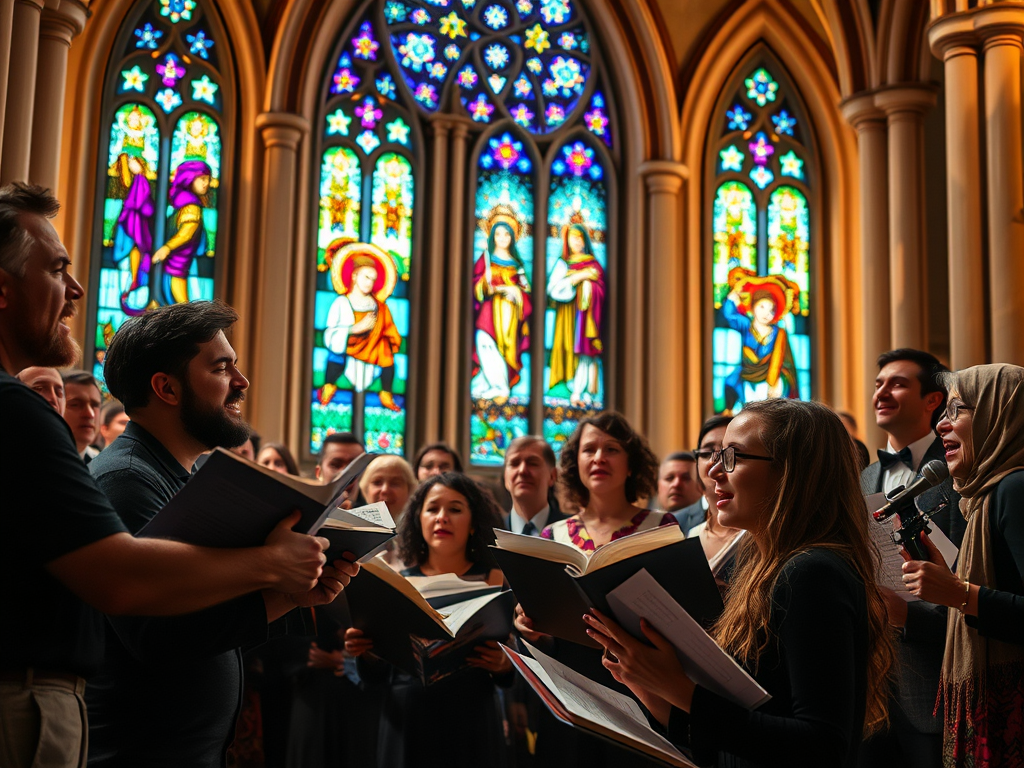
    I grew up singing in choir. Junior high, high school, college – if there was a choir, I was in it. First soprano, standing in the front row, learning to sight-read those challenging baroque pieces that made my heart soar.

    I’ll never forget the first time we performed Handel’s Hallelujah Chorus. The way the voices wove together in counterpoint, the power of “King of Kings and Lord of Lords” building to that glorious climax – I had chills the entire time. And don’t even get me started on singing “Glo-o-o-o-oria!” with those long, elaborate melismatic runs. There’s something transcendent about baroque music, something that connects you to centuries of believers who sang these same melodies in worship.

    But here’s what always struck me: we were singing music from the 1700s. Beautiful, theologically rich, musically brilliant music – but written three centuries ago.

    And I kept thinking: where are the NEW baroque pieces? Where are the fresh oratorios for our generation? Why aren’t we creating music in this glorious style that tells the timeless story with new words for today’s church?+

    The Birth of The Modern Messiah

    That question lived in my heart for years. Then, when I began creating “Christmas With The Saints” – my contemporary Christmas album – I realized something: the Christmas story deserves BOTH. It deserves contemporary pop worship AND classical baroque grandeur. It deserves fresh melodies AND traditional oratorio structure.

    So I decided to create “The Modern Messiah” – a complete baroque oratorio following Handel’s structure but with entirely new, original lyrics rooted in Scripture.

    My Partnership with AI

    Just like with my contemporary album, I created this oratorio in partnership with Claude, an AI assistant. As someone with a passion for baroque music but not formal composition training, I found an unexpected collaborator who could help me craft lyrics that work within the complex structure of fugues, counterpoint, and classical oratorio form.

    This partnership allowed me to write arias, recitatives, and choruses that honor the baroque tradition while expressing the biblical story in fresh language. Every theological emphasis came from my heart and study of Scripture. Claude helped me shape it into authentic baroque style.

    Why Baroque? Why Now?

    Psalm 96:1 commands us, “Sing to the Lord a new song; sing to the Lord, all the earth.”

    Psalm 98:1 echoes, “Sing to the Lord a new song, for he has done marvelous things.”

    Isaiah 42:10 declares, “Sing to the Lord a new song, his praise from the ends of the earth.”

    But “new” doesn’t always mean contemporary style. Sometimes “new” means fresh expressions within ancient forms. The baroque oratorio is one of the most powerful vehicles for telling biblical narrative ever created. Handel proved that with his Messiah in 1741.

    Nearly 300 years later, I believe it’s time for new baroque oratorios. Not to replace Handel – that would be impossible and foolish. But to stand alongside him, offering new generations the chance to encounter Christ through this magnificent musical form.

    The Structure

    Like Handel’s Messiah, “The Modern Messiah” follows a three-part structure:

    Part I: The Promise – Prophecy and the birth of Christ (6 songs) Part II: The Passion – His mission, rejection, and sacrifice (4 songs) Part III: The Victory – Resurrection and eternal reign (4 songs)

    Fourteen songs in total, featuring soprano, alto, tenor, and bass soloists; SATB choir with fugues and counterpoint; and full baroque orchestra with harpsichord, strings, oboe, baroque trumpet, timpani, and organ.

    Claude H. Becker Returns

    Like my contemporary album, this will be published under “Claude H. Becker” – that mysterious name my dad used to write in guest books everywhere. It’s my way of keeping him present, honoring his memory, and acknowledging that the saints in heaven are celebrating with us.

    What This Album Is

    “The Modern Messiah” is my offering to the church – a complete baroque oratorio that:

    • Tells the full Christmas-to-Easter story
    • Uses entirely original lyrics rooted in Scripture
    • Honors the classical baroque tradition
    • Brings fresh expression to an ancient form
    • Invites a new generation to experience the beauty of sacred oratorio

    From someone who stood in the choir loft singing “Hallelujah!” to someone now creating a new hallelujah for today – this is my worship. My gift. My invitation.

    Welcome to “The Modern Messiah.”

    – Melanie Grace (Claude H. Becker)


    Publishing Note:

    Album Title: Christmas With The Saints: The Modern Messiah
    Artist Name: Melanie Grace
    Published Artist Credit: Claude H. Becker
    Genre: Baroque Oratorio / Classical Sacred Music
    Total Songs: 14
    Album Length: 42-48 minutes

    Musical Style: Complete baroque oratorio in the tradition of Handel’s Messiah, featuring SATB choir, baroque soloists (soprano, alto, tenor, bass), and full baroque orchestra (harpsichord, strings, oboe, baroque trumpet, timpani, organ). All original lyrics rooted in Scripture, following the three-part oratorio structure: Part I – The Promise (Prophecy & Birth), Part II – The Passion (Mission & Sacrifice), Part III – The Victory (Resurrection & Reign).

    Blog Series Structure:

    • Blog 1: Introduction (Personal story, choir background, why create this)
    • Blogs 2-15: One blog per song in album order
    • Blog 16: Closing (Call to bring baroque to new generation)

    In loving memory of Dad, who taught me to find joy in unexpected places and to never stop singing. This oratorio is my offering – to the church, to the next generation, and to the King of Kings who is worthy of all our praise. Until we sing together in heaven, I’ll keep singing here.