
Category: Song Details

  • Walk This Road – Faith Is a Journey, Not a Destination

    Walk This Road – Faith Is a Journey, Not a Destination


    Faith Does Not Always Look Like a Mountain Moment

    We love the mountain moments. The altar experiences, the worship services that leave you undone, the prayers that get answered immediately and dramatically. Those moments are real and they are gifts.

    But most of the faith journey is the road between those moments.

    “Walk This Road” is a song about the in-between. The long stretches. The days when you are not on the mountain and you are not in the valley, you are just walking. And you are trusting that the road is going somewhere, even when you cannot see the next turn.

    The Image of a Road

    Roads show up all through Scripture as a metaphor for the life of faith. There is the narrow road Jesus describes in the Sermon on the Mount. There is the road to Emmaus where two disciples walked with a stranger who turned out to be the risen Jesus. There is the Psalmist’s “valley of the shadow of death” that is walked, not teleported through.

    Walking takes time. It requires endurance and commitment and the willingness to take the next step when you would rather stop.

    “Walk This Road” honors that commitment. It says: yes, this is long and hard and not what I always imagined, but I am still walking. And I am not walking alone.

    The Feeling: Steady Resolve

    The dominant emotion in this song is not excitement or ecstasy. It is steady resolve. The quiet, unshowy kind of faith that does not make headlines but sustains a life.

    There is something beautiful about a person who just keeps walking. Not because everything is easy, but because they have decided that the destination is worth the distance. That the One walking alongside them is trustworthy enough to keep following, even when the road gets hard.

    This song also carries companionship. Because the promise of Scripture is not that the road will always be smooth. It is that we do not walk it alone. Immanuel, God with us, is not just a Christmas theme. It is the reality of every mile.

    What Scripture Speaks to This Song

    Isaiah 40:29-31 “He gives strength to the weary and increases the power of the weak. Even youths grow tired and weary, and young men stumble and fall; but those who hope in the Lord will renew their strength. They will soar on wings like eagles; they will run and not grow weary, they will walk and not be faint.”

    Walk and not be faint. Even walking, the smallest pace, is sustained by God. You do not have to be running to qualify for His strength.

    Psalm 23:4 “Even though I walk through the darkest valley, I will fear no evil, for you are with me; your rod and your staff, they comfort me.”

    Walk through. Not around. Not teleported past. Through. And the comfort is not the absence of the valley. It is the presence of the Shepherd in it.

    Micah 6:8 “He has shown you, O mortal, what is good. And what does the Lord require of you? To act justly and to love mercy and to walk humbly with your God.”

    Walk humbly. Not sprint proudly. Walk. The ordinary, daily cadence of life with God is a walk. That is what faithfulness looks like most of the time.

    Hebrews 12:1 “Therefore, since we are surrounded by such a great cloud of witnesses, let us throw off everything that hinders and the sin that so easily entangles. And let us run with perseverance the race marked out for us.”

    Even when the metaphor shifts to running, the key word is perseverance. Not speed. Not perfection. Persistence.

    Who This Song Is For

    This song is for the person who is tired. Not spiritually defeated, just tired. The person who has been faithful for a long time without a visible reward and is wondering if it is worth continuing.

    It is for the person in the middle of something long and hard who needs to hear: you are not behind. You are exactly where you need to be. And the road you are on is the right one.

    Keep walking.

    Listen Now

    “Walk This Road” is track nine on “Chosen by Grace,” available on all major streaming platforms. Visit themelaniegrace.com for links.

    Coming next: the final song story, “yesterday, today, forever,” and why God’s unchanging nature is the best news you will ever receive.


    Follow Melanie Grace at themelaniegrace.com for song stories, devotional music content, and faith reflections.

  • He Found Me – The Most Personal Story You’ll Ever Tell

    He Found Me – The Most Personal Story You’ll Ever Tell


    Every Testimony Has a Before and an After

    You do not have to have a dramatic rock-bottom story for your testimony to be real. Some of the most powerful “He found me” stories happen quietly, in ordinary life, in the middle of a Tuesday when something shifts and you realize you have been found.

    “He Found Me” is about that shift. The moment God’s pursuit becomes undeniable.

    The Parable Behind the Song

    Jesus told a story in Luke 15 that we often call the Parable of the Lost Sheep. A shepherd has one hundred sheep, and one wanders off. So the shepherd leaves the ninety-nine and goes looking.

    He goes looking. He does not wait for the sheep to find its way back. He does not post a notice and hope for the best. He searches. Actively, persistently, personally.

    And when he finds it, he carries it home on his shoulders and calls his neighbors to celebrate.

    That is not a casual story. That is a portrait of how God pursues people. Not passively. Not from a distance. Specifically, actively, and with great joy at the finding.

    “He Found Me” is my version of being the sheep on the shepherd’s shoulders.

    The Feeling: Grateful Undoing

    There is a specific emotion that comes with the realization that you were being searched for while you were wandering. That during the seasons you were not thinking much about God, He was thinking about you. Moving toward you.

    I do not have a better word for it than “undoing.” It undoes the narrative that you were abandoned. It undoes the story that you were too far gone. It undoes the suspicion that the love was conditional.

    When you realize you were found, not because you found your way back but because He came looking, something in you comes apart in the best possible way.

    This song was written from that place.

    What Scripture Speaks to This Song

    Luke 15:4-6 “Suppose one of you has a hundred sheep and loses one of them. Doesn’t he leave the ninety-nine in the open country and go after the lost sheep until he finds it? And when he finds it, he joyfully puts it on his shoulders and goes home. Then he calls his friends and neighbors together and says, ‘Rejoice with me; I have found my lost sheep.’”

    The joy at the finding. That is the part that wrecks me. He is not annoyed that you wandered. He is overjoyed to have you back.

    Luke 19:10 “For the Son of Man came to seek and to save the lost.”

    Came to seek. That is His mission statement. Not “sat and waited for the lost to return.” Came to seek.

    Romans 5:8 “But God demonstrates his own love for us in this: While we were still sinners, Christ died for us.”

    He did not wait until we were better. He came for us at our worst and most wandering.

    Isaiah 53:6 “We all, like sheep, have gone astray, each of us has turned to our own way; and the Lord has laid on him the iniquity of us all.”

    The wandering is universal. And so is the rescue.

    What “He Found Me” Sounds Like Emotionally

    There is gratitude in this song, but it is not the polished, contained kind. It is the kind that comes with wet eyes and a slightly disbelieving shake of the head. The kind that says: I do not fully understand why, but I know it is true.

    There is also awe at the specificity of being found. He did not find “people in general.” He found me. By name. In my actual situation. He knew where I was.

    That is the personal testimony at the heart of this song. Not a general statement about God’s goodness. A specific statement about His finding.

    Your Story Is Worth Telling

    One of the things I hope this song does is give people language for their own story. Because every person who has been found by God has a testimony. Some are loud and dramatic. Some are quiet and slow. All of them matter.

    “He Found Me” is my invitation to remember your own version. The moment, or the slow season, when it became clear that you were not on your own out there. That you were found.

    Listen Now

    Stream “Chosen by Grace” everywhere music is available. Visit themelaniegrace.com for links.

    Coming next: “You Chose Me,” an intimate response to the love that would not let you go.


    Follow Melanie Grace at themelaniegrace.com for song stories, devotional content, and new music updates.

  • Hosanna, King of Kings – The Cry That Never Gets Old

    Hosanna, King of Kings – The Cry That Never Gets Old


    A Crowd, a King, and a Cry That Echoes Still

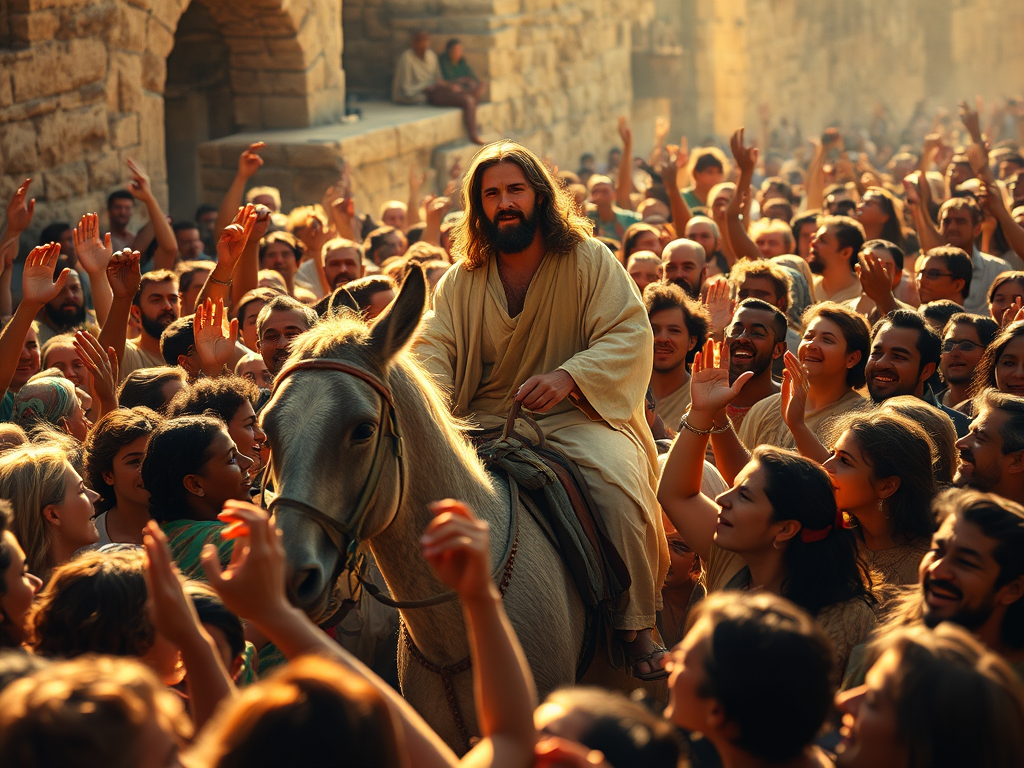
    Imagine the scene. Jesus is riding into Jerusalem on a donkey. The crowds are pressing in. And they are shouting something ancient, a word pulled from the Psalms, a word that meant both “save us now” and “praise be.”

    Hosanna.

    It was not a quiet, orderly worship service. It was a crowd overwhelmed by who they were standing in front of. It was the collision of desperation and celebration, of needing to be saved and believing that the One who could save them was right there.

    “Hosanna, King of Kings” was written from inside that collision.

    What Does Hosanna Actually Mean?

    “Hosanna” comes from the Hebrew “hoshia na,” which literally means “please save” or “save now.” It is a cry of need. But by the time Jesus rode into Jerusalem, it had also become an expression of praise and celebration.

    It holds both at once. The “save us” and the “we believe you can.” That is not a contradiction. That is faith.

    The crowd that cried Hosanna was not pretending everything was fine. Judea was under Roman occupation. Life was hard. The expectations they carried were complicated and often wrong. But they knew they needed a king, and they believed this was Him.

    They were right. Just not in the way they expected.

    The Feeling: Awe and Longing

    “Hosanna, King of Kings” lives in two emotional registers simultaneously.

    The first is awe. The recognition of who Jesus actually is, not just a teacher or a miracle worker or a symbol, but the King. The One that all of history was moving toward. The One that every longing in the human heart was reaching for without always knowing His name.

    The second is longing. Because the crowd on Palm Sunday did not fully understand what was coming. And we, on this side of the cross and resurrection, understand it. And that makes the cry of Hosanna even more loaded.

    When we sing “Hosanna” now, we are not asking to be saved without knowing if it is possible. We are saying: You already saved us. You are King. You are still King.

    What Scripture Speaks to This Song

    Matthew 21:9 “The crowds that went ahead of him and those that followed shouted, ‘Hosanna to the Son of David! Blessed is he who comes in the name of the Lord! Hosanna in the highest heaven!’”

    The declaration was instinctive. The crowds could not help it. When you are in the presence of the King, praise is the most natural response.

    Psalm 118:25-26 “Lord, save us! Lord, grant us success! Blessed is he who comes in the name of the Lord. From the house of the Lord we bless you.”

    This is the Psalm the crowd was quoting. It was a song of trust and deliverance. When they shouted Hosanna, they were singing Scripture, whether they knew it or not.

    Revelation 19:16 “On his robe and on his thigh he has this name written: King of Kings and Lord of Lords.”

    The title “King of Kings” is not just a song lyric or a poetic expression. It is His name as recorded in the final revelation of Scripture. It is who He is beyond the limits of time.

    Philippians 2:9-11 “Therefore God exalted him to the highest place and gave him the name that is above every name, that at the name of Jesus every knee should bow, in heaven and on earth and under the earth, and every tongue acknowledge that Jesus Christ is Lord.”

    Every knee. Every tongue. Not only the people who feel like it on a good day. The acknowledgment of His kingship is the direction all of creation is moving toward.

    Why This Song Belongs in Your Easter Playlist

    Palm Sunday starts the final week of Holy Week. It is the beginning of the most significant sequence of events in human history. And it begins with praise.

    That is not an accident. Before the suffering, before the silence of Holy Saturday, before the resurrection, there was worship. A crowd that did not fully understand what was happening looked at Jesus and could not help but cry out.

    We have the full picture now. And if they could not contain their praise with partial understanding, how much more should we be undone with everything we know?

    “Hosanna, King of Kings” is that response. The one that says: we know who You are. We know what You did. And You are still King.

    Listen Now

    Stream “Chosen by Grace” on all major platforms. Visit themelaniegrace.com for direct links and more song stories.

    Next up: “He Found Me,” a song about the personal, specific moment of being found by God.


    Follow Melanie Grace at themelaniegrace.com for devotional music content, song stories, and faith-based reflection.

  • “With My Hands Lifted High” — What Surrender Really Looks Like

    “With My Hands Lifted High” — What Surrender Really Looks Like


    There Is a Reason We Lift Our Hands

    When a child wants to be picked up, they reach their arms toward the one they trust. It is not a complicated gesture. It is pure. It is helpless in the best way. It says: I cannot do this on my own. I trust you. Take me.

    Lifting your hands in worship is that same gesture, grown up.

    “With My Hands Lifted High” was written from inside that moment. The moment when words stop being enough and your body wants to participate in the prayer.

    Surrender Is Not Defeat

    We need to untangle something here, because the word “surrender” has some baggage.

    In a worldly context, surrender means losing. It means the fight is over and you did not win. But in the kingdom of God, surrender is not defeat. It is the bravest and most powerful thing a person can do.

    To lift your hands is to say: I stop trying to be in control of this. I stop holding it together by sheer willpower. I stop pretending that my grip is what is keeping things from falling apart. I open my hands and I give it to You.

    That is not weakness. That is the kind of strength that only comes from faith.

    The Feeling: Letting Go

    The dominant feeling in this song is release. That specific physical and emotional experience of letting something heavy down.

    You know the feeling when you have been holding tension in your shoulders for so long that you did not even realize it anymore, and then someone says “relax your shoulders” and suddenly you feel them drop two inches? This song is the spiritual equivalent of that.

    Lifting your hands is an act of release. And something happens in that release. Not always something you can name or describe. But something shifts when you stop clenching and start opening.

    There is also a feeling of declaration in this song. When I lift my hands, I am saying something to heaven and to myself and to anything that is trying to convince me that God is not worth trusting. I am saying: yes, anyway. With everything uncertain and unresolved, I choose to worship.

    What Scripture Speaks to This Song

    Psalm 63:4 “I will praise you as long as I live, and in your name I will lift up my hands.”

    This is one of the most personal worship declarations in all of Scripture. David wrote this while in a dry and weary land, while being pursued by enemies. And still: I will lift my hands. Worship that persists through difficulty is the most powerful kind.

    1 Timothy 2:8 “Therefore I want the men everywhere to pray, lifting up holy hands without anger or disputing.”

    Lifted hands are connected to a clean heart. The posture matters because it represents something internal. It is hard to raise your hands in worship while clenching your fists in anger.

    Lamentations 3:41 “Let us lift up our hearts and our hands to God in heaven.”

    Not just hands. Hearts. The physical posture and the inner posture together.

    Isaiah 40:31 “But those who hope in the Lord will renew their strength. They will soar on wings like eagles; they will run and not grow weary, they will walk and not be faint.”

    Surrender to God is not the end of strength. It is the beginning of a different kind of strength. One that does not depend on your reserves.

    Why This Song Belongs on an Easter Album

    Easter is the ultimate act of surrender. Jesus, in the garden of Gethsemane, prayed “not my will but yours be done.” He lifted everything, His rights, His life, His will, and placed it in the Father’s hands.

    And the Father raised Him.

    When we lift our hands in worship, we are participating in that same movement. We are saying: I trust the One who raised the dead. I trust that what I surrender does not disappear. I trust that opened hands receive more than clenched ones.

    “With My Hands Lifted High” is a worship song born from that trust.

    Listen Now

    Stream “Chosen by Grace” on all major platforms. Visit themelaniegrace.com for links and more song stories.

    Coming next: “Hosanna, King of Kings,” rooted in the Palm Sunday story and the praise that echoes across centuries.


    Follow Melanie Grace at themelaniegrace.com for devotional content, song stories, and new music.

  • Finding Me — What Happens When God Introduces You to Yourself

    Finding Me — What Happens When God Introduces You to Yourself

    Have You Ever Felt Like You Were Still Looking for Yourself?

    Most people assume that self-discovery is something you finish when you are young. You try things, figure out who you are, land somewhere, and move forward.

    But a lot of us are still in the middle of that story well into adulthood. Still figuring out what is real about us versus what we performed or adopted or survived into.

    “Finding Me” is a song about what it feels like when God is the one who does the finding.

    The Identity Question We All Carry

    There is a question that runs underneath so much of what we do and feel and seek. It surfaces in different forms: Am I lovable? Do I belong? Is there something real and good at the center of who I am?

    For a lot of us, the answers we received early in life were incomplete or damaging. We built identities out of what we could do, what we achieved, how we appeared, or who approved of us. And those identities are exhausting to maintain because they are never quite secure.

    The spiritual journey, for me, has been the slow process of setting those down and picking up something true.

    “Finding Me” is about that process. The moment when who God says you are starts to feel more real than what everyone else said. Or what you feared about yourself.

    The Feeling: Relief and Recognition

    This song carries two feelings at once, and they are both necessary.

    The first is relief. The kind that comes when you stop performing and realize you are still standing. That who you are underneath the effort is not disqualified. That you are, actually, beloved.

    The second is recognition. That quiet sense of “yes, that is me.” Not the curated version. The real one. The one that God made on purpose, before the world had a chance to talk you out of it.

    There is something about being truly known by God that allows you to know yourself. Not perfectly. Not without growth. But truthfully.

    What Scripture Speaks to This Song

    Psalm 139:13-14 “For you created my inmost being; you knit me together in my mother’s womb. I praise you because I am fearfully and wonderfully made; your works are wonderful, I know that full well.”

    Before anyone else had an opinion about you, God had already made something intentional. You were not thrown together. You were knit.

    2 Corinthians 5:17 “Therefore, if anyone is in Christ, the new creation has come: The old has gone, the new is here!”

    Finding yourself in Christ is finding a new self. Not a fake self. Not a performance. A new creation with a real identity rooted in the resurrection.

    Galatians 2:20 “I have been crucified with Christ and I no longer live, but Christ lives in me. The life I now live in the body, I live by faith in the Son of God, who loved me and gave himself for me.”

    The “me” that is found in Christ is not the ego-self I was building. It is the self that lives by faith, held by the One who loved me enough to die for me.

    Romans 8:15-16 “The Spirit you received does not make you slaves, so that you live in fear again; rather, the Spirit you received brought about your adoption to sonship. And by him we cry, ‘Abba, Father.’ The Spirit himself testifies with our spirit that we are God’s children.”

    Children. Not employees. Not strangers. Children with a Father who knows our name.

    What Finding Yourself in God Actually Looks Like

    It does not happen all at once. That is the honest truth. It is a long walk of choosing to believe what God says over what fear says. Of receiving grace repeatedly until it starts to feel like home.

    But there are moments, sometimes in a song, sometimes in a verse, sometimes in a conversation that catches you off guard, where something in you goes quiet and says: that is true. That is me.

    I wrote “Finding Me” for those moments.

    Listen Now

    “Finding Me” is track four on “Chosen by Grace,” available now on all streaming platforms. Visit themelaniegrace.com for listening links.

    Coming next: “With My Hands Lifted High,” a song about surrender and what it takes to really let go.


    Follow Melanie Grace at themelaniegrace.com for devotional content, song stories, and new music.