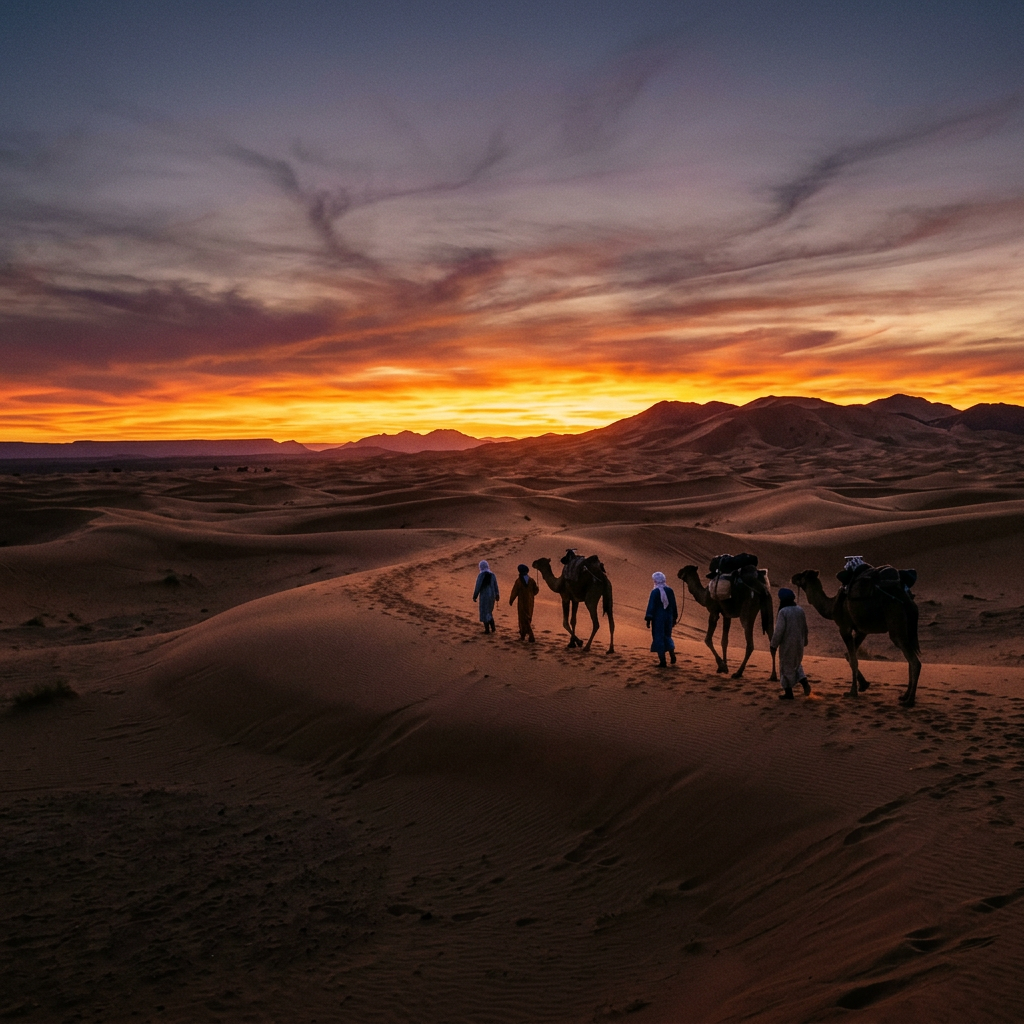
This is it: the song that gives “Bring Us Home” its other half. If “Bring Us Home” is the prayer that opens the show, “We Are Home” is the answer that closes it. Today I want to walk you through how this finale comes together, and why one specific moment in it might be the one I’m most proud of in the entire musical.
Where it begins
“We Are Home” doesn’t open with triumph. It opens with the folded-in “Can These Dry Bones Live?” section: low voices, a haunting question, the exiles standing at the edge of the wilderness looking at a city they’ve only ever heard about in songs.
Then they cross the desert. The music shifts, mile by mile, from minor-key sorrow into something that starts to feel like momentum: a thundering rhythm of return.
“It’s so small”
When the travelers finally crest the ridge and see Jerusalem (really see it, for the first time) it’s not the golden city of the lullaby. It’s ruins. Blackened stones. Fallen pillars. Weeds growing in the cracks of what was once Solomon’s Temple.
One of the young exiles says, quietly, “It’s so small.”
And Aviva, the girl who has spent her entire life hearing about this place, aching for it, almost losing it to the comfort of Babylon, carrying a harp that’s been silent for seventy years, looks at the same ruins and says:
“It’s perfect.”
I’ll be honest, I get emotional just typing that out. That exchange is the whole show, distilled into four words and two lines.
The harp’s first chord in seventy years
Here’s the moment I keep coming back to. Aviva kneels on the scorched temple floor and sets the base of the harp against the bare rock: the same harp Saba Elan hung in the willows decades ago, the harp his own trembling hands couldn’t play when the moment finally came, the harp he passed to her instead.
And next to it, she sets down the rescued golden cup.
Past and future. Side by side. On the ground where they both belong.
Then the harp’s first chord in seventy years rings out.
I don’t think I need to explain why that matters by this point in the story. If you’ve been following this whole series, you already know exactly what that chord is carrying.
“Hashiveinu” → “Halleluyah”
Some of the Hebrew vocabulary that’s run through the show (words like Hashiveinu, “restore us”) shifts here from a cry into a celebration. The same word that was a desperate plea earlier in the show becomes part of the Halleluyah that rises as the city comes back to life on stage.
I love that the language doesn’t change. The meaning changes, because the people singing it have changed, and because the prayer got answered.
The quiet ending
Here’s something I think people might not expect: the finale doesn’t end at full volume. After the triumphant homecoming, it pulls back to a soft acoustic moment: a young child, born on the long road home, who’s never known anything but walking, wanders up to the edge of the ruins. And Aviva (the girl who once couldn’t remember her mother’s lullaby) kneels down and sings it to this new child. Complete. Whole. Passed on.
“Hush now, little bird… the desert is behind us. Open your eyes… we are home.”
The very last image of the show is the lullaby (the song that started this whole story) being given to the next generation, in the place it was always about.
Why I structured it this way
I wanted the show to end the way real restoration usually feels: not as one explosive moment, but as something that settles. The big triumphant return matters: the harp, the cup, the city, the Halleluyah. But the thing that actually completes the story is small and quiet: a song, finished, handed to a child who will grow up in the place her grandmother only sang about.
That’s the whole arc. “Bring Us Home” opens with a cry from people who’ve just lost everything. “We Are Home” ends with a lullaby being sung, complete, to someone who’s never known anything but home.
Thank you for walking through this with me
This wrapped up the “Behind the Song” series, but there’s one more post in this whole series, and it’s a little different from the rest. Tomorrow, I want to get honest with you about how this entire project actually got made, including some genuinely funny (and occasionally maddening) moments with AI tools along the way.
Join me for the last post
💬 Comment below: after everything we’ve covered this month, which song are you most excited to actually hear?
📱 Follow me on Instagram and Facebook at @TheMelanieGrace for the final post in this series tomorrow.
💌 Sign up for my email list: subscribers are getting first access to music as it releases.
🎧 Follow me on Spotify, Apple Music, Amazon Music, and YouTube Music so “We Are Home” reaches you the moment it drops.
One more post tomorrow, and it’s the one where I finally tell you what it’s really like making a project this big with AI as a creative partner.



Leave a Reply