Tag: Christian musical

  • Free Bible Study Guides for “Bring Us Home” — Dig Into the Scripture Behind the Songs

    Free Bible Study Guides for “Bring Us Home” — Dig Into the Scripture Behind the Songs

    If you’ve been following along with my “Bring Us Home” series, you already know this musical isn’t just inspired by Scripture — it’s built on it. Every song, every character, every scene maps back to real passages: Psalm 137, Daniel, Jeremiah, Ezekiel, Ezra. And the more I worked on this project, the more I realized I didn’t want to keep all of that research to myself.

    So I made something for you.

    What I made

    I’ve put together a set of Bible study guides that walk through the scriptural foundation of “Bring Us Home” — the same passages that shaped Aviva’s journey, Miryam’s lullaby, Saba Elan’s vow, Daniel’s faithfulness, and the fall of Babylon itself. These aren’t just “here’s a verse, here’s a song” — they’re meant to be something you can actually sit with. Read. Reflect on. Maybe even work through with a small group, a journal, or just a quiet morning and a cup of coffee.

    My hope is that these guides do for you what writing this musical did for me: turn a story you might think you already know into something that feels personal again.

    What’s inside

    The guides walk through the heart of the story’s scriptural roots, including:

    • Psalm 137 — the rivers of Babylon, the harps in the willows, and the question that gives this whole project its emotional center: “How shall we sing the Lord’s song in a strange land?”
    • Jeremiah 29 — the seventy years of exile, and God’s surprising instructions to His people to build homes and plant gardens in the very place that took everything from them
    • Daniel 1, 5, and 9 — Daniel’s faithfulness across decades in a foreign court, the feast, the writing on the wall, and his prayer for his people’s return
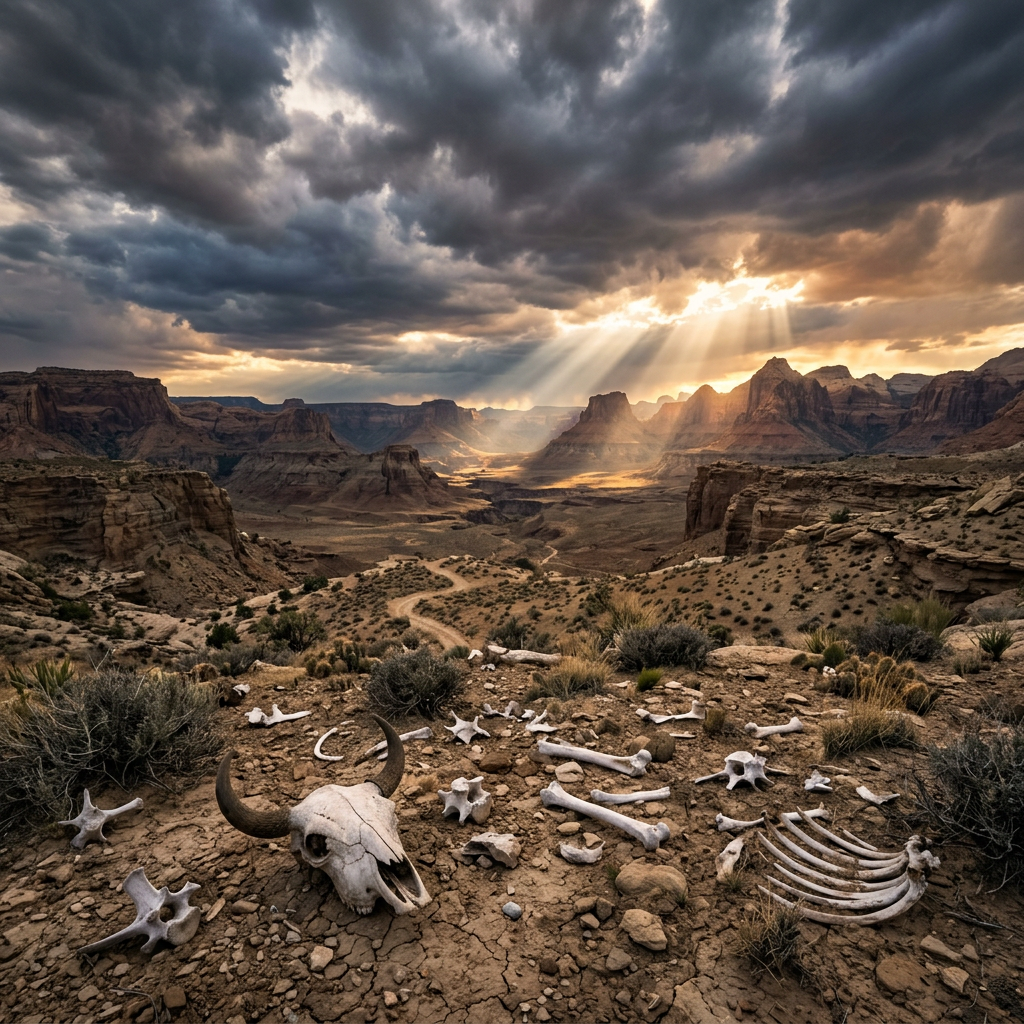
    • Ezekiel 37 — the valley of dry bones, and what it means to ask “can this live again?” before you see the answer
    • Ezra 1–3 — the decree of Cyrus, the journey home, and the bittersweet mix of weeping and rejoicing as the temple foundation was laid

    Each guide ties these passages back to the story and characters of “Bring Us Home” — so as the music releases, you’ll have a deeper well to draw from than just the songs themselves.

    How this came together

    I’ll be honest — putting these together was its own project. I had so much research spread across so many documents by the time the musical’s script was finished, and pulling it all into something organized enough to actually study took real work. I had a lot of help along the way (including AI tools helping me catch duplicates and organize everything into something coherent) — but the heart of it, the “why does this passage matter” part, is all me. This grew straight out of months of sitting with these chapters myself.

    How to get them

    These guides are completely free — I just ask that you sign up so I can send them straight to you (and so you’ll be the first to know when new ones are added as more of “Bring Us Home” releases).

    👉 Click here to download the Bible study guides

    Let’s go deeper together

    Whether you’re someone who’s walked through Scripture your whole life, or someone who’s just curious because a song caught your attention — these guides are for you. My hope is that they help “Bring Us Home” become more than something you listen to. I want it to be something that sends you back to the Word with fresh eyes.

    💬 Comment below — which passage are you most excited to dig into? Psalm 137? The writing on the wall in Daniel 5? Ezekiel’s dry bones?

    📱 Follow me on Instagram and Facebook at @TheMelanieGrace for updates as new guides and new music drop.

    💌 Download the Bible study guides here and join my email list — you’ll get these guides plus first access to everything coming next.

    🎧 Follow me on Spotify, Apple Music, Amazon Music, and YouTube Music so every song from “Bring Us Home” reaches you the moment it’s released.

    This story started with Scripture. I hope these guides help it lead you right back there.


  • Writing “Bring Us Home” with AI — My Honest Creative Process

    Writing “Bring Us Home” with AI — My Honest Creative Process

    This is the last post in my “Bring Us Home” series, and I wanted to save it for the end on purpose — because by now, you know the story. You’ve met Aviva, Miryam, Saba Elan, Daniel, Belshazzar, and Nabu. You know the theme, the history, the songs. So now I want to pull back the curtain all the way and show you how this thing actually got made.

    I’m always open about this: I use AI as part of my creative process. Claude for writing and lyrics. Suno for music production. Canva for art. And honestly? The process was a lot messier than the finished story makes it look.

    Where it started: a LOT of back and forth

    “Bring Us Home” did not arrive fully formed. It came together through an enormous amount of brainstorming, drafting, rewriting, redoing, and reformatting — most of it in long conversations with Claude. We’d build out a scene, and then I’d go, “no, this isn’t right,” and we’d take it apart and rebuild it. Characters got reshaped. Songs got moved. Whole sequences got reordered more than once as the structure of the show became clearer to me.

    That’s just… how this works, for me. The first draft of anything is never the thing. It’s the raw material for the thing.

    The Suno disaster (and I mean disaster)

    Okay, here’s the part I promised would be funny — and it really is, looking back, even though it was not funny in the moment.

    My first idea was to use Suno to create a fully narrated, multi-voice version of the script — like an audio drama, with different voices for different characters, dialogue and songs woven together.

    It did not go well.

    I’d very specifically prompt for a “young female” narrator voice for a section — and Suno would just… give me a male voice instead. No explanation, no acknowledgment, just a completely different voice than what I asked for. And then on top of that, it would layer in music underneath the spoken dialogue — music I never asked for in that spot — and the whole thing would come out sounding garbled. Voices fighting with music, the wrong gender narrating emotional scenes, transitions that made no sense.

    I actually still have that playlist saved on Suno if anyone ever wants proof of how rough this got. It is genuinely not good. I laugh about it now, but at the time I remember just staring at the output thinking, “this is not the same project I wrote.”

    The pivot that fixed everything

    After enough of that, I made a change that ended up being the single best decision in this whole process: I switched to having the entire recording/narration script handled by one consistent narrator voice — no more trying to get Suno to juggle multiple character voices in the narration sections.

    The difference was night and day. Suddenly things were coherent. The narration carried the story the way it was supposed to, and the songs — which is where the actual character voices live — could do what they do best without fighting a broken narration layer underneath them.

    Sometimes the fix for a complicated problem isn’t “make the tool smarter.” It’s “ask for something simpler.”

    Where Claude fit into all of this

    Most of the actual writing — the script, the lyrics, the character development, the Scripture research, the structural decisions (like whether “Can These Dry Bones Live?” should be its own moment or folded into the finale) — came out of long sessions with Claude. A lot of “here’s what I’m picturing, help me find the words for it,” followed by me pushing back, reshaping, rejecting drafts that weren’t right, and refining until something actually felt true to the story I had in my head.

    I don’t think of this as “AI wrote my musical.” I think of it as having a collaborator who’s endlessly patient while I figure out what I’m actually trying to say — which, for a project this big, took a lot of figuring out.

    And then Gemini joined the team

    Somewhere in the middle of all this, I also brought Gemini into the process — mainly for two things. First, catching duplicates: when you’re working across dozens of documents, character notes, song lists, and scripture references over months, things get repeated, contradicted, or left in two slightly different versions. Gemini was genuinely helpful for spotting those inconsistencies so I could clean things up.

    Second — and this was unexpected — Gemini helped me put together Bible study PDFs to go alongside the project. Taking the scriptural grounding behind “Bring Us Home” (the stuff I’ve shared across this whole series) and turning it into something people could actually study and reflect on, not just read about in a blog post.

    Why I’m telling you all of this

    Because I think it matters. I’m proud of “Bring Us Home.” I’m proud of the story, the characters, the songs, the research. And all of that came out of a process that included a LOT of dead ends, a genuinely unusable AI-narrated playlist, multiple full rewrites, and a small army of tools that each turned out to be good at very different things.

    I don’t think that makes the work less mine. If anything, I think it’s more mine — because every single piece of it passed through my judgment, my rejections, my “no, that’s not it, try again.” The tools didn’t make the decisions. I did. They just helped me get there faster, and occasionally hilariously wrong along the way.

    Thank you for following this whole series

    If you’ve read through this entire month of posts — the theme, the characters, the research, the songs, and now this — thank you. Genuinely. “Bring Us Home” has been one of the biggest creative undertakings of my life, and getting to share the process with you, start to finish, has meant a lot.

    The music is coming. I can’t wait for you to hear it.

    Stay with me for what’s next

    💬 Comment below — anything from this whole series you want me to revisit, or any questions about the process I didn’t cover?

    📱 Follow me on Instagram and Facebook at @TheMelanieGrace — more music, more behind-the-scenes, more projects coming.

    💌 Sign up for my email list so you’re first to know when “Bring Us Home” music starts releasing.

    🎧 Follow me on Spotify, Apple Music, Amazon Music, and YouTube Music so every release — this project and beyond — reaches you the moment it drops.

    This is the end of this series, but not the end of this story. More soon. 🎵


  • Behind the Song: “We Are Home” — The Finale

    Behind the Song: “We Are Home” — The Finale

    This is it — the song that gives “Bring Us Home” its other half. If “Bring Us Home” is the prayer that opens the show, “We Are Home” is the answer that closes it. Today I want to walk you through how this finale comes together, and why one specific moment in it might be the one I’m most proud of in the entire musical.

    Where it begins

    “We Are Home” doesn’t open with triumph. It opens with the folded-in “Can These Dry Bones Live?” section — low voices, a haunting question, the exiles standing at the edge of the wilderness looking at a city they’ve only ever heard about in songs.

    Then they cross the desert. The music shifts, mile by mile, from minor-key sorrow into something that starts to feel like momentum — a thundering rhythm of return.

    “It’s so small”

    When the travelers finally crest the ridge and see Jerusalem — really see it, for the first time — it’s not the golden city of the lullaby. It’s ruins. Blackened stones. Fallen pillars. Weeds growing in the cracks of what was once Solomon’s Temple.

    One of the young exiles says, quietly, “It’s so small.”

    And Aviva — the girl who has spent her entire life hearing about this place, aching for it, almost losing it to the comfort of Babylon, carrying a harp that’s been silent for seventy years — looks at the same ruins and says:

    “It’s perfect.”

    I’ll be honest, I get emotional just typing that out. That exchange is the whole show, distilled into four words and two lines.

    The harp’s first chord in seventy years

    Here’s the moment I keep coming back to. Aviva kneels on the scorched temple floor and sets the base of the harp against the bare rock — the same harp Saba Elan hung in the willows decades ago, the harp his own trembling hands couldn’t play when the moment finally came, the harp he passed to her instead.

    And next to it, she sets down the rescued golden cup.

    Past and future. Side by side. On the ground where they both belong.

    Then the harp’s first chord in seventy years rings out.

    I don’t think I need to explain why that matters by this point in the story. If you’ve been following this whole series, you already know exactly what that chord is carrying.

    “Hashiveinu” → “Halleluyah”

    Some of the Hebrew vocabulary that’s run through the show — words like Hashiveinu, “restore us” — shifts here from a cry into a celebration. The same word that was a desperate plea earlier in the show becomes part of the Halleluyah that rises as the city comes back to life on stage.

    I love that the language doesn’t change. The meaning changes, because the people singing it have changed — and because the prayer got answered.

    The quiet ending

    Here’s something I think people might not expect: the finale doesn’t end at full volume. After the triumphant homecoming, it pulls back to a soft acoustic moment — a young child, born on the long road home, who’s never known anything but walking, wanders up to the edge of the ruins. And Aviva — the girl who once couldn’t remember her mother’s lullaby — kneels down and sings it to this new child. Complete. Whole. Passed on.

    “Hush now, little bird… the desert is behind us. Open your eyes… we are home.”

    The very last image of the show is the lullaby — the song that started this whole story — being given to the next generation, in the place it was always about.

    Why I structured it this way

    I wanted the show to end the way real restoration usually feels: not as one explosive moment, but as something that settles. The big triumphant return matters — the harp, the cup, the city, the Halleluyah. But the thing that actually completes the story is small and quiet: a song, finished, handed to a child who will grow up in the place her grandmother only sang about.

    That’s the whole arc. “Bring Us Home” opens with a cry from people who’ve just lost everything. “We Are Home” ends with a lullaby being sung, complete, to someone who’s never known anything but home.

    Thank you for walking through this with me

    This wrapped up the “Behind the Song” series — but there’s one more post in this whole series, and it’s a little different from the rest. Tomorrow, I want to get honest with you about how this entire project actually got made — including some genuinely funny (and occasionally maddening) moments with AI tools along the way.

    Join me for the last post

    💬 Comment below — after everything we’ve covered this month, which song are you most excited to actually hear?

    📱 Follow me on Instagram and Facebook at @TheMelanieGrace for the final post in this series tomorrow.

    💌 Sign up for my email list — subscribers are getting first access to music as it releases.

    🎧 Follow me on Spotify, Apple Music, Amazon Music, and YouTube Music so “We Are Home” reaches you the moment it drops.

    One more post tomorrow — and it’s the one where I finally tell you what it’s really like making a project this big with AI as a creative partner.


  • Behind the Song: “Can These Dry Bones Live?”

    Behind the Song: “Can These Dry Bones Live?”

    Today’s “Behind the Song” post is about the moment in “Bring Us Home” where the entire emotional direction of the show changes — from grief to hope, from a funeral to a foundation. It’s built on one of the most striking images in all of Scripture: Ezekiel’s vision of the valley of dry bones.

    Where it sits in the story

    By this point in the show, almost everything has been lost or laid down. Babylon has fallen. The decree of Cyrus has come. The community has split — some staying in the comfortable life they’ve built in exile, some choosing to go home. Saba Elan has tried to play the harp he carried for seventy years and found his hands won’t obey him anymore. Miryam, too frail to travel, has said goodbye to her daughter and passed the songs — and the harp — into Aviva’s hands.

    It’s a lot of ending, all at once. And then this song begins.

    The vision itself

    Ezekiel 37 describes a valley full of dry bones — completely dead, completely hopeless — and God asks the prophet a question that sounds almost like a trick: “Can these bones live?” Ezekiel’s answer is honest: “O Lord God, thou knowest.” He doesn’t know. And then God breathes life back into them, and they become a living army again.

    In “Bring Us Home,” this becomes the bridge between two worlds — the funeral dirge for a dead city, and the hopeful, hands-on work of laying a foundation for a new one.

    How it’s staged

    This song starts almost a cappella — low male voices, like wind moving through ruins, asking the question: can these dry bones live? Then Saba Elan and the elders pick it up. Then Daniel and Aviva. Then the whole company. It builds from something haunting and uncertain into something that turns mourning into expectation — and it flows directly into the finale, “We Are Home,” without a break.

    I think of this song as a held breath. The exiles aren’t home yet when it starts. They’re standing at the edge of a wilderness, carrying a harp that doesn’t play and a cup that was almost lost, asking a question nobody can answer with certainty.

    And then they take the first step anyway.

    Why this had to come before the finale, not be part of it

    I went back and forth on this structurally — should “Can These Dry Bones Live?” be its own moment, or should it just be the opening section of “We Are Home”? In the end, I decided it needed to be felt as its own question, even though it flows seamlessly into the finale.

    Here’s why: if the finale just starts triumphant, it doesn’t earn anything. But if the show pauses — really pauses — on the question can this actually come back to life?, and lets that question sit in the dark for a moment before the answer arrives… that’s when “We Are Home” actually means something.

    You have to ask the question honestly before the answer can land.

    The personal layer for me

    I think almost everyone has stood at the edge of their own “valley of dry bones” at some point — a relationship, a dream, a season of faith that felt completely dead. And I think most of us have asked some version of Ezekiel’s honest non-answer: I don’t know if this can live again. Only You know.

    What I love about this passage — and about this moment in the show — is that the question doesn’t get answered with an argument. It gets answered with breath. With life showing up in a place that had none. That’s not something you can manufacture. It’s something you receive.

    From “Eicha” to “Halleluyah”

    One detail I’m really proud of: this song is where some of the Hebrew vocabulary woven through the show — like Hashiveinu (“restore us”) — starts to shift in meaning. Earlier in the show, those words carry grief. Here, they become the language of an answered prayer. Same words. Completely different weight.

    I want to hear your story

    💬 Comment below — has there been a “valley of dry bones” season in your life — something that felt completely dead — where you’ve seen (or are hoping for) new life?

    📱 Follow me on Instagram and Facebook at @TheMelanieGrace for the final “Behind the Song” post in this series.

    💌 Sign up for my email list — this one’s going out to subscribers with extra detail on the Hebrew elements.

    🎧 Follow me on Spotify, Apple Music, Amazon Music, and YouTube Music so this one reaches you the moment it’s released.

    Tomorrow: the finale. “We Are Home” — and the harp’s first chord in seventy years.


  • Behind the Song: “By the Willows”

    Behind the Song: “By the Willows”

    Today’s “Behind the Song” post is about one of the most directly biblical moments in the entire show — a song built almost entirely on a single, devastating verse: Psalm 137:4. “How shall we sing the Lord’s song in a strange land?”

    The setup

    By the time this song happens, the exiles have settled into life by the river. Saba Elan has already hung his harp in the willows, and others have followed — the trees are heavy with silent instruments. It’s become part of daily life. Survival. Threadbare dignity.

    Then the overseers show up, bored and cruel, looking for entertainment. They’ve heard the music of Judah is the finest in the east, and they want a show. “Sing us one. Entertain your hosts.”

    Silence.

    What this song actually dramatizes

    This is Psalm 137:1–4, almost beat for beat. The captors demand songs of Zion as mockery — not worship, entertainment. And the response from the exiles isn’t argument, isn’t pleading. It’s refusal. Total, collective silence.

    Saba Elan stands. He doesn’t shout. He doesn’t even speak. He just rises — an old man, but with enormous gravity — and looks at the overseer. And that look becomes a wall.

    Why silence is the loudest thing in the show

    I think a lot about how we usually write “strength” in stories — usually it’s a speech, a fight, a big declaration. But Psalm 137 gives us something different: a refusal to perform. The exiles’ sacred songs were not party tricks. They weren’t going to hand over the most holy thing they had left — their worship — to be used as a joke for the people who destroyed their home.

    That’s not passivity. That’s the most active thing they could do.

    When I was writing this scene, I kept coming back to the question: what does it cost to say nothing? For Saba Elan and the others, it could cost everything — the overseers have soldiers, and the exiles have nothing. But they say nothing anyway. And the overseers — for the first time in the show — back down.

    How this connects to Saba Elan’s vow

    This song is really the proof of the vow Saba Elan made when he hung his harp in the willows. He said he wouldn’t play for Babylon, not for gold, not for safety. This is the moment that vow gets tested — not by a temptation, but by a threat. And he holds.

    It’s also the moment that sets up something important later: when young Aviva, watching all this, asks her grandfather afterward why he wouldn’t sing when he has “the most beautiful harp of anyone,” he gives her the same vow — that harp comes down on one day. The day we go home. That’s the line that becomes her whole inheritance.

    Why I wrote it for male voices

    In the show, this song is led by Saba Elan and the male exiles, with Aviva’s voice (as a child) coming in above them at the very end — right before the moment where her own singing accidentally stops a soldier in his tracks.

    I wanted the bulk of this song to feel like a wall — low, unified, immovable. Then Aviva’s voice cutting through it, small and clear, does double duty: it’s beautiful, and it’s the moment that marks her as someone Babylon will notice. The same voice that protects the camp also puts a target on her future.

    The hardest part to get right

    Honestly? The hardest part of writing this song was resisting the urge to make it bigger. My instinct as a writer is often to build to a swell, a big emotional release. But this moment isn’t about release — it’s about holding. The power of “By the Willows” is in what doesn’t happen. No one breaks. No one sings for the king. The tension just… sits there, until the overseers can’t stand it anymore and leave.

    Writing restraint into a song is so much harder than writing a climax. But I think it’s exactly right for this moment.

    Your turn

    💬 Comment below — have you ever experienced a moment where saying nothing was the strongest thing you could do?

    📱 Follow me on Instagram and Facebook at @TheMelanieGrace for the next “Behind the Song” post.

    💌 Sign up for my email list to hear this one with the full story behind it.

    🎧 Follow me on Spotify, Apple Music, Amazon Music, and YouTube Music so “By the Willows” reaches you on release day.

    Tomorrow: “Can These Dry Bones Live?” — the moment this whole show turns from grief into hope.