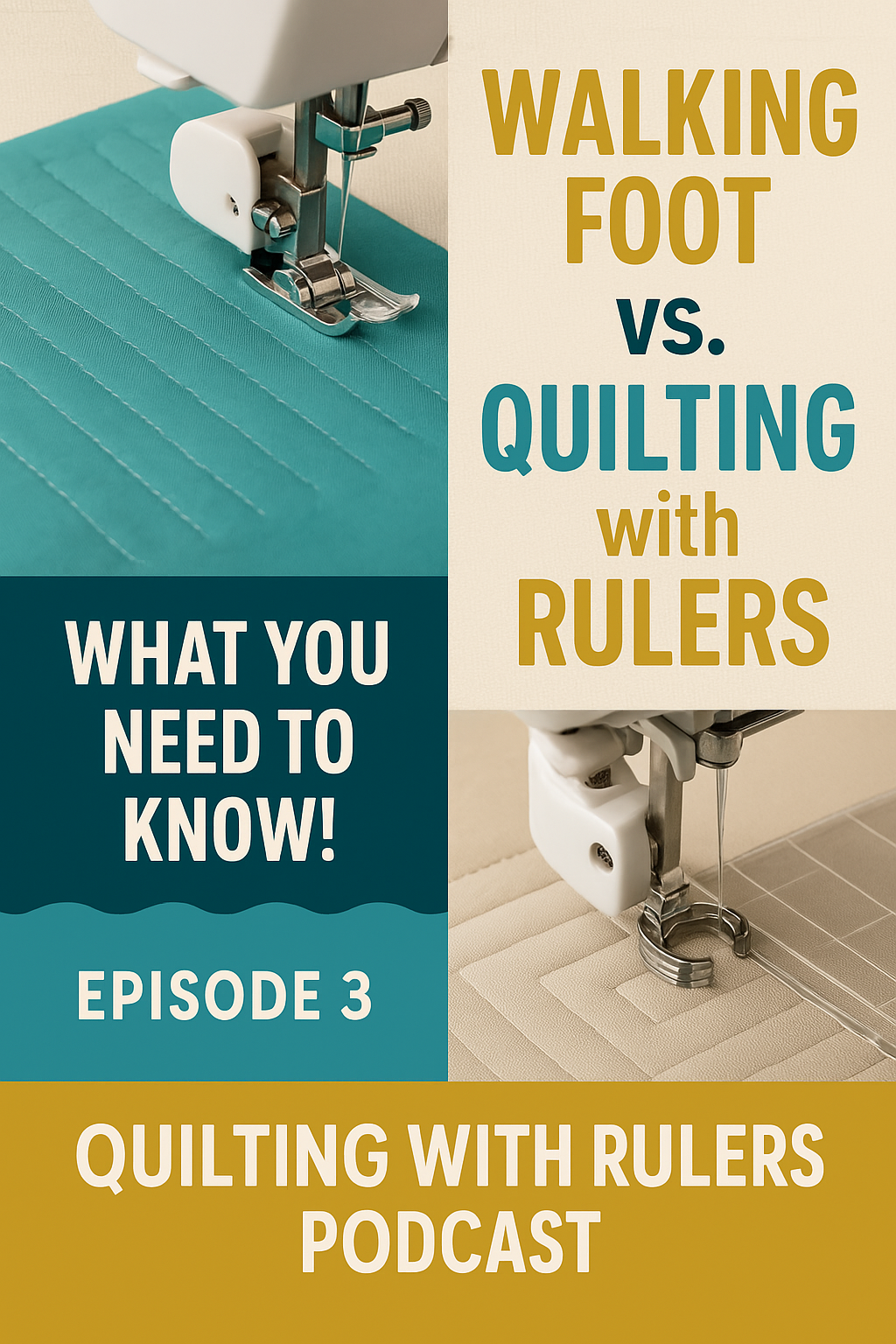
Have you ever felt like your quilt sandwich shifts no matter how many pins you use? That’s where the walking foot comes in — your BFF for even feed and straight-line quilting.
In this episode of the Quilting with Rulers Podcast, I break down the magic of the walking foot, how it works, and when to use it. Spoiler alert: it’s not just for quilting in the ditch (though it does that beautifully!).
But here’s the twist — while I love a good walking foot, my heart still belongs to ruler quilting. Curious why? Keep reading!
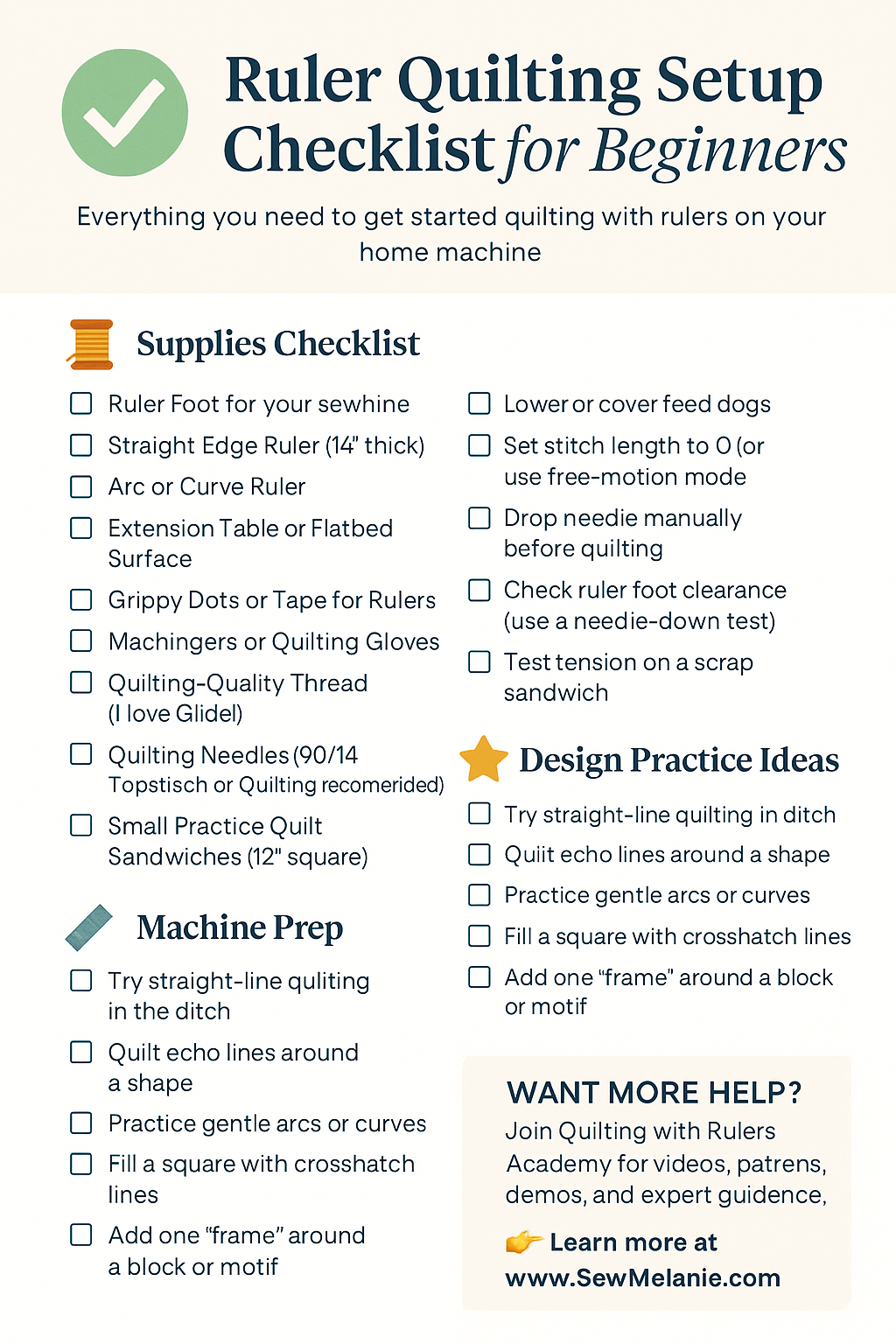
🧷 Beginner Ruler Quilting Setup Checklist
- Ruler Foot for Your Machine: Check with your sewing machine’s manufacturer to ensure compatibility.
- Favorite Ruler(s): I love using the Meander ruler from Creative Grids! I also recommend rulers by Silly Moon Quilting Co. and Amanda Murphy.
- Grippy Spray: I always use Grippy spray on my rulers for added control.
- Slip Mat or Quilting Gloves: Use either a slip mat or quilting gloves to help guide your fabric smoothly.
- Extension Table: A flat surface helps support your quilt and ruler work.
- Juki TL18 Sewing Machine: I personally love quilting on my Juki TL-18 — it’s perfect for ruler work!
- Marking Tools: A water-soluble pen or chalk pencil works great.
- Lighting: Bright task lighting makes all the difference.
- Quilting Ruler Patterns or Templates: Have a design in mind before you begin. You can find great beginner options at Fat Quarter Shop.
💡 What Is a Walking Foot?
A walking foot, or even-feed foot, has its own set of feed dogs to guide all three quilt layers through the machine together. That means no puckers, no shifting, just smooth, stable stitches.
You can grab one from Sewing Parts Online — and they even have videos to help you find the right fit for your machine.

🪡🧵 What Can You Quilt with a Walking Foot?
The walking foot is your go-to for structured, geometric quilting—and even some gentle curves! Here’s how you can put it to work:
Straight-Line Quilting
This is where the walking foot really shines. It feeds all layers evenly, so you can create crisp, clean lines across your quilt. Want that modern, minimalist look? Try evenly spaced vertical or horizontal lines for a chic grid effect—it’s perfect for solid fabrics and negative space.
Grids and Crosshatching
Take straight lines to the next level by quilting grids! Mark lines with a hera marker or chalk, then quilt in both directions for a timeless look. Crosshatching adds texture without overpowering your piecing, and it looks amazing on classic blocks like Nine Patches and Log Cabins.
Gentle Curves
Yes, you can quilt curves with a walking foot—just keep them wide and smooth. Think soft hills or gentle arcs. Use a circle template or the edge of a plate to draw your curves before stitching. The key is to move slowly and let the foot guide you.
Echo Quilting
This is a fun way to highlight applique, shapes, or even straight-line quilting. Simply “echo” around a motif or seam multiple times, spacing each line ¼” to ½” apart. The walking foot helps maintain consistent spacing without fabric shifting.
Stitch in the Ditch (SITD pros, unite!)
If you’re quilting right along the seam line, the walking foot helps you stay in the ditch with precision. It’s ideal for stabilizing your quilt before adding decorative quilting—or for a subtle finish that highlights your piecing work. Honest opinion – I don’t like this – but others do!
Why I Still Prefer Ruler Quilting
Walking foot quilting is awesome… but it can feel a little boxy or limited after a while. That’s where ruler work shines! With rulers, you can add curves, motifs, borders, and all the swirly magic that makes your quilt pop.
If you want to learn more about ruler quilting (especially if you’re on a home sewing machine), check out my first episode here. I also highly recommend getting started with a simple ruler foot like the Westalee Ruler Foot Starter Kit from Fat Quarter Shop.
🧷 Final Thoughts
A walking foot is a fantastic tool to have in your quilting toolbox. It’s beginner-friendly, super helpful for larger projects, and gives beautiful results. But once you get the hang of quilting with rulers? Game. Changer.
Want to learn both techniques? Start with my free checklist to get your setup right
Happy quilting, friend! 🎉
—Melanie

Episode 7 – The Quilting With Rulers Academy – Quilting With Rulers
- Episode 7 – The Quilting With Rulers Academy
- Episode 6 – Quilt Fast! Christmas in July: Get Ahead on Handmade Gifts
- Episode 5: Holding Your Quilt Like a Pro: Quilt Control Tips for Ruler Quilting
- Episode 4: Ruler Quilting for Beginners – What You Actually Need
- Episode 3: How to Use a Walking Foot for Quilting (and Why Using Rulers is My Favorite!)
Want a Video-Based Course?

If you want to see ruler quilting in action — and have me walk you through it step-by-step — check out my Quilting with Rulers Academy! It’s designed for beginners who want to finally finish their quilts at home (without stress or confusion).
🎓 Learn more here → Quilting with Rulers Academy



Leave a Reply