Tag: quilt

  • 🧵 How to Use a Walking Foot for Quilting

    🧵 How to Use a Walking Foot for Quilting

    Have you ever felt like your quilt sandwich shifts no matter how many pins you use? That’s where the walking foot comes in — your BFF for even feed and straight-line quilting.

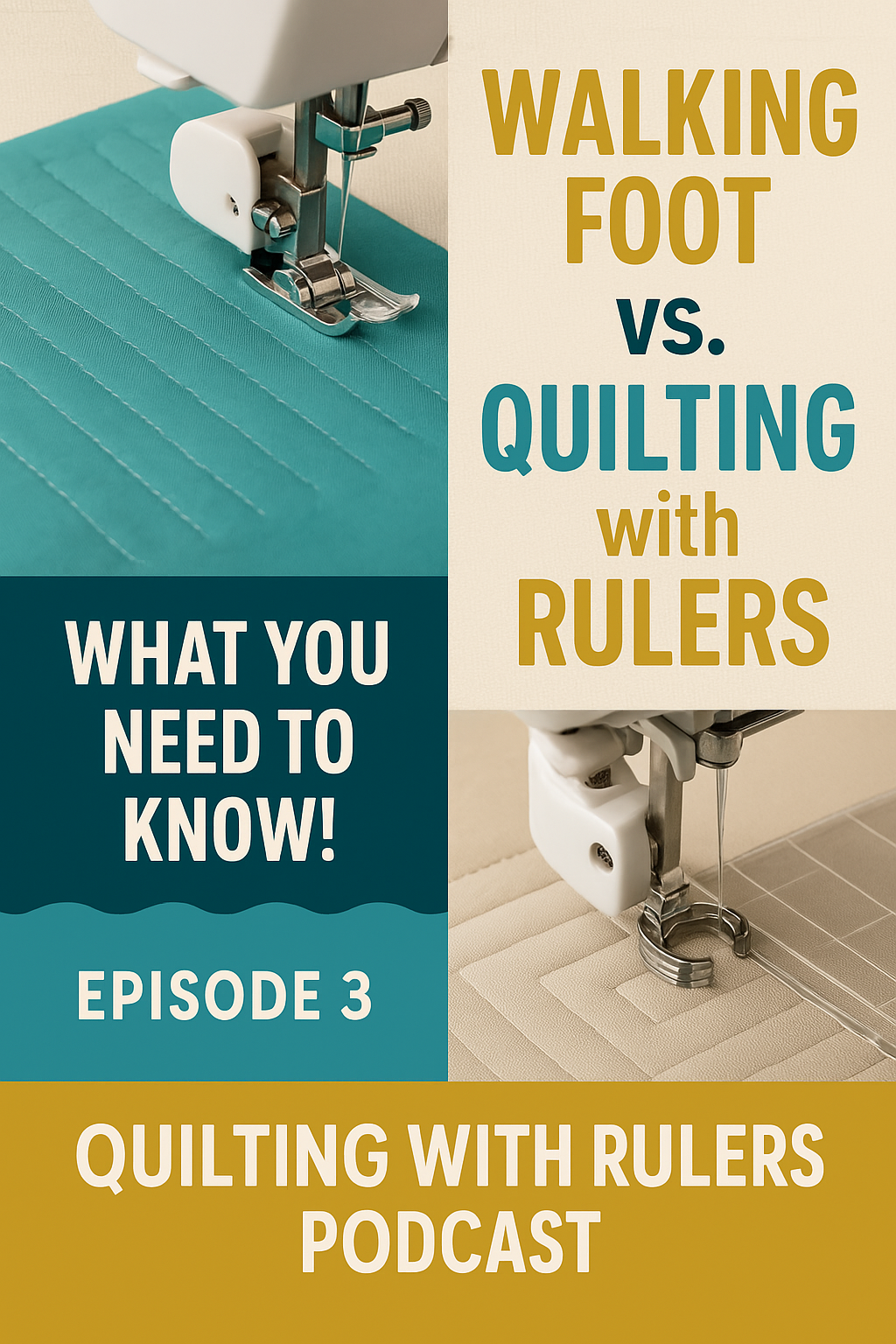
    In this episode of the Quilting with Rulers Podcast, I break down the magic of the walking foot, how it works, and when to use it. Spoiler alert: it’s not just for quilting in the ditch (though it does that beautifully!).

    But here’s the twist — while I love a good walking foot, my heart still belongs to ruler quilting. Curious why? Keep reading!

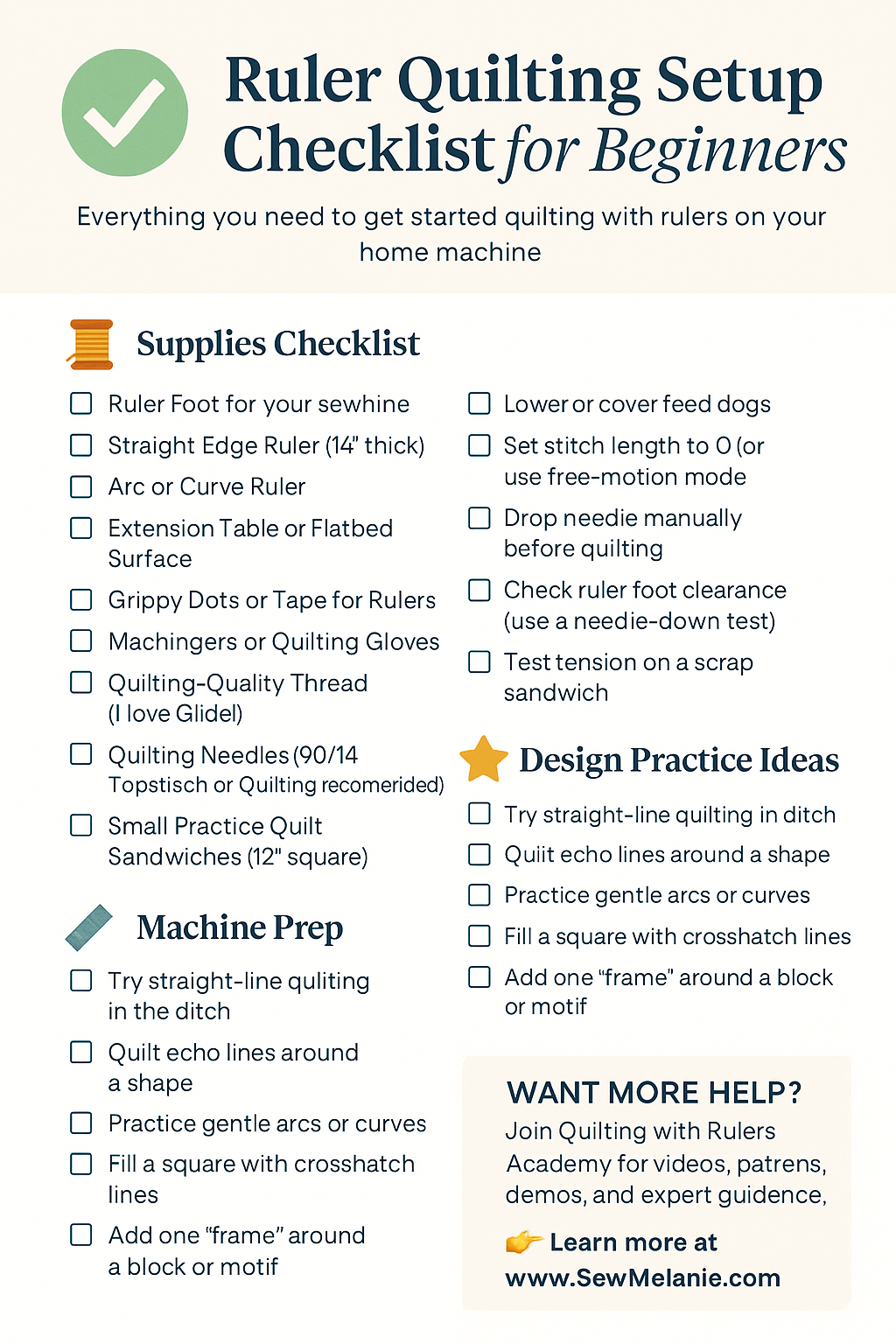
    🧷 Beginner Ruler Quilting Setup Checklist

    • Ruler Foot for Your Machine: Check with your sewing machine’s manufacturer to ensure compatibility.
    • Favorite Ruler(s): I love using the Meander ruler from Creative Grids! I also recommend rulers by Silly Moon Quilting Co. and Amanda Murphy.
    • Grippy Spray: I always use Grippy spray on my rulers for added control.
    • Slip Mat or Quilting Gloves: Use either a slip mat or quilting gloves to help guide your fabric smoothly.
    • Extension Table: A flat surface helps support your quilt and ruler work.
    • Juki TL18 Sewing Machine: I personally love quilting on my Juki TL-18 — it’s perfect for ruler work!
    • Marking Tools: A water-soluble pen or chalk pencil works great.
    • Lighting: Bright task lighting makes all the difference.
    • Quilting Ruler Patterns or Templates: Have a design in mind before you begin. You can find great beginner options at Fat Quarter Shop.

    💡 What Is a Walking Foot?

    A walking foot, or even-feed foot, has its own set of feed dogs to guide all three quilt layers through the machine together. That means no puckers, no shifting, just smooth, stable stitches.

    You can grab one from Sewing Parts Online — and they even have videos to help you find the right fit for your machine.

    Close-up of a Juki TL-18VP sewing machine surrounded by a partially completed quilt, featuring various fabric patterns and colors under the presser foot.

    🪡🧵 What Can You Quilt with a Walking Foot?

    The walking foot is your go-to for structured, geometric quilting—and even some gentle curves! Here’s how you can put it to work:

    Straight-Line Quilting

    This is where the walking foot really shines. It feeds all layers evenly, so you can create crisp, clean lines across your quilt. Want that modern, minimalist look? Try evenly spaced vertical or horizontal lines for a chic grid effect—it’s perfect for solid fabrics and negative space.

    Grids and Crosshatching

    Take straight lines to the next level by quilting grids! Mark lines with a hera marker or chalk, then quilt in both directions for a timeless look. Crosshatching adds texture without overpowering your piecing, and it looks amazing on classic blocks like Nine Patches and Log Cabins.

    Gentle Curves

    Yes, you can quilt curves with a walking foot—just keep them wide and smooth. Think soft hills or gentle arcs. Use a circle template or the edge of a plate to draw your curves before stitching. The key is to move slowly and let the foot guide you.

    Echo Quilting

    This is a fun way to highlight applique, shapes, or even straight-line quilting. Simply “echo” around a motif or seam multiple times, spacing each line ¼” to ½” apart. The walking foot helps maintain consistent spacing without fabric shifting.

    Stitch in the Ditch (SITD pros, unite!)

    If you’re quilting right along the seam line, the walking foot helps you stay in the ditch with precision. It’s ideal for stabilizing your quilt before adding decorative quilting—or for a subtle finish that highlights your piecing work. Honest opinion – I don’t like this – but others do!


    Why I Still Prefer Ruler Quilting

    Walking foot quilting is awesome… but it can feel a little boxy or limited after a while. That’s where ruler work shines! With rulers, you can add curves, motifs, borders, and all the swirly magic that makes your quilt pop.

    If you want to learn more about ruler quilting (especially if you’re on a home sewing machine), check out my first episode here. I also highly recommend getting started with a simple ruler foot like the Westalee Ruler Foot Starter Kit from Fat Quarter Shop.


    🧷 Final Thoughts

    A walking foot is a fantastic tool to have in your quilting toolbox. It’s beginner-friendly, super helpful for larger projects, and gives beautiful results. But once you get the hang of quilting with rulers? Game. Changer.

    Want to learn both techniques? Start with my free checklist to get your setup right

    Happy quilting, friend! 🎉
    —Melanie

    Episode 7 – The Quilting With Rulers Academy Quilting With Rulers

    In this episode, Melanie pulls back the curtain on her Quilting with Rulers Academy, a step-by-step online course designed to help you finish your quilts with confidence using ruler quilting on your home machine. Learn why rulers are a game changer, what’s inside the course, and how real students are transforming their quilting.Links Mentioned:Join the Quilting with Rulers Academy → bit.ly/QuiltingAcademyFollow Melanie on Instagram → instagram.com/TheMelanieGrace
    1. Episode 7 – The Quilting With Rulers Academy
    2. Episode 6 – Quilt Fast! Christmas in July: Get Ahead on Handmade Gifts
    3. Episode 5: Holding Your Quilt Like a Pro: Quilt Control Tips for Ruler Quilting
    4. Episode 4: Ruler Quilting for Beginners – What You Actually Need
    5. Episode 3: How to Use a Walking Foot for Quilting (and Why Using Rulers is My Favorite!)

    Want a Video-Based Course?

    A person holding a sign that reads 'Machine Quilting with Rulers' against a background of sewing-related icons and tools.

    If you want to see ruler quilting in action — and have me walk you through it step-by-step — check out my Quilting with Rulers Academy! It’s designed for beginners who want to finally finish their quilts at home (without stress or confusion).

    🎓 Learn more here → Quilting with Rulers Academy
  • Quilting with Rulers Academy

    Quilting with Rulers Academy

    I’M EXCITED TO SHARE YOU CAN NOW ENROLL IN MY ONLINE COURSE!

  • Choosing the Best Thread for Ruler Quilting

    Choosing the Best Thread for Ruler Quilting

    As quilting enthusiasts, we often get lost in the fabric choices, color palettes, and intricate designs, but one of the most crucial elements that can make or break your quilting project is the thread. When it comes to quilting with rulers on a domestic sewing machine, selecting the right thread is essential for achieving precision, durability, and a beautiful finish. In this blog post, we’ll explore the best types of thread for ruler quilting, focusing on why I absolutely love Glide thread and how it enhances my quilting experience. Plus, I’m excited to invite you to my upcoming 60-minute workshop, “Needle Knows Best,” where we’ll dive deeper into these topics!

    Why Thread Matters in Quilting

    Thread is not just the medium that holds our quilt layers together; it also affects the overall aesthetic and functionality of the quilt. The right thread can:

    • Influence Tension: Different thread types react differently to tension settings on your machine. Using the wrong thread can lead to puckering, breakage, or uneven stitches.
    • Affect Durability: Quilts are often subjected to wear and tear, especially if they are used frequently. Choosing a strong thread will ensure your quilt stands the test of time.
    • Change Appearance: The finish of your quilt can look significantly different depending on whether you use a shiny or matte thread, or even invisible thread.

    The Best Types of Thread for Ruler Quilting

    1. Polyester Thread

    One of the most popular choices among quilters, polyester thread, is known for its strength and versatility. I highly recommend brands like Aurifil, Superior Threads (So Fine!), and Glide.

    • Weight: For quilting with rulers, a weight of 40wt or 50wt is ideal. These weights provide a good balance of durability and manageability.
    • Benefits: Polyester thread is low-lint, which means less mess in your machine and reduced risk of thread breakage. It glides smoothly through the fabric, allowing for clean, even stitches, making it an excellent choice for ruler work.

    2. Cotton Thread

    Cotton thread, such as Aurifil Cotton 50wt or Gutermann, offers a soft, natural finish that many quilters adore.

    • Weight: A 50wt cotton thread is versatile and provides a lovely finish for quilting.
    • Benefits: Cotton thread is perfect for those who prefer a matte look, as it blends beautifully with natural fibers. It’s a fantastic option for traditional quilt styles.

    3. Monofilament Thread

    If you want to keep your stitches as invisible as possible, monofilament thread is an excellent option.

    • Brand Examples: Consider Superior Threads (MonoPoly) or YLI.
    • Weight: Typically around 100wt, monofilament thread is ultra-fine.
    • Benefits: Its transparency allows it to blend seamlessly into the fabric, making it a great choice for quilts where you want the design to take center stage.

    My Love for Glide Thread

    Among all the options, my absolute favorite is Glide thread. Here’s why:

    • Smoothness: Glide thread glides effortlessly through my sewing machine, reducing friction and allowing me to quilt without interruptions. It’s one of the smoothest threads I’ve ever used, which makes for an enjoyable quilting experience.
    • Strength: Glide thread is incredibly strong and durable, which means I can quilt with confidence knowing my seams will hold up over time. It’s perfect for the detailed ruler work that I love!
    • Variety of Colors: With an extensive color range, Glide thread offers endless possibilities for matching or contrasting with my fabrics. Whether I’m going for subtle or bold, I can always find the perfect shade.

    Tips for Choosing and Using Thread

    To get the most out of your quilting thread, consider these tips:

    • Use a Thread Stand: If you’re working with larger spools of Glide thread, a thread stand can help manage tension and prevent tangling, ensuring smooth stitching.
    • Check Machine Compatibility: Always test different thread weights and types on a practice piece to determine the best fit for your machine’s tension settings and needle size. A size 80/12 or 90/14 quilting needle often works well with most quilting threads.
    • Experiment: Don’t be afraid to try different threads on practice pieces. You’ll quickly discover which works best for your quilting style and preferences.

    Considerations for Bobbin Thread

    Bobbin Thread

    When it comes to quilting, understanding the importance of bobbin thread is crucial for achieving smooth and professional results. The type of bobbin thread you use can significantly affect the overall appearance and tension of your stitches. It’s essential to know what your machine can handle, as not all machines perform equally with various thread types.

    Using heavier threads in the bobbin can lead to complications. Specialty threads like invisible or glow-in-the-dark thread may cause inconsistent tension. They may also result in potential thread breakage. Choose a compatible thread for the bobbin. This will lead to a more successful quilting experience. It will help avoid frustrating issues while working on your projects.

    For standard quilting, a high-quality cotton or polyester thread is generally recommended for the bobbin. This ensures consistent tension and a smooth sewing experience. Specialty threads include invisible thread and glow-in-the-dark thread. They are best used in the top needle position. Here, they can perform optimally. These threads often have unique characteristics. They may not be suitable for the bobbin. This can lead to difficulties in tension management and affect stitch quality. Always refer to your machine’s manual to understand its limitations. This will help you select the right bobbin thread for your quilting needs.

    Considerations for Bobbin Thread

    When choosing the right bobbin thread, consider the fabric you’re working with. Also, think about the type of stitches you plan to use. Lighter-weight fabrics may require a finer thread in the bobbin to avoid puckering. Heavier fabrics may need a sturdier thread to support the quilting process. Additionally, think about the thread color. A matching bobbin thread can help create a seamless look. A contrasting thread can add interesting detail. Lastly, remember that proper bobbin winding and tension adjustment are key to achieving the best results. By paying attention to these considerations, you can ensure that your bobbin thread enhances your overall quilting project.

    Join Me for “Needle Knows Best”

    Now that you’re equipped with the knowledge of the best threads for ruler quilting, I’d love to take this a step further! Join me for my 60-minute workshop, “Needle Knows Best,” where we’ll dive deeper into thread choices, what needles to choose and why and so. much more! Whether you’re a beginner or an experienced quilter looking to refine your skills, this workshop is perfect for you.

    In this workshop, you will learn:

    • The intricacies of choosing the right needles for your projects
    • How often to change your needle and why it’s important
    • Tips and tricks for getting the best results from your domestic sewing machine

    Sign Up Today!

    Don’t miss out on this opportunity to enhance your quilting journey! Sign up for “Needle Knows Best today and take your ruler quilting skills to the next level. Together, we’ll unlock the secrets to successful quilting and thread mastery.

  • Quilting with Rulers Online Course

    I am excited to announce that I am going to be recording an Online Course to help quilters with Machine Quilting with Rulers! If you want an in depth look at how to quilt your quilt, how to use a walking foot, how to free motion quilt and how the heck do you use rulers for quilting – then this course will be for you!

    This course will include:

    *4 weeks of video training content

    * Downloadable PDFs with links to get your notions and tools to get started

    * My recommendations on the what to buy/borrow for more inspiration

    *You’ll get a free pattern made just for this course for a wall hanging as your Quilting with rulers sampler!

    * You will get access to my Facebook Group where I will open it as soon as the course launches.

    I want to bring quilters together and I want us to finish those quilts!

    After years of sewing and quilting I have found a passion for ruler work and I want to share that passion with you! When I started, I didn’t know where to start, I went onto YouTube and found some videos but none that delivered exactly what I needed. This course will address the struggles of free motion ruler quilting along with the joys of fast quilting with templates. In our Facebook Group, we’ll share about our machines and feet we need, along with show and tell of finished Quilting with Rulers Samplers!

    Here are some samples of my finished Quilts where I used rulers:

    Quilting Rulers and thread