
Tag: new music

  • Personal Transformation: How Brokenness Becomes Beauty Through God’s Grace

    Personal Transformation: How Brokenness Becomes Beauty Through God’s Grace

     • SPOTIFY • APPLE MUSIC • AMAZON MUSIC • DEEZER • PANDORA • YOUTUBE

    From Ashes: When Destruction Becomes Resurrection

    “To bestow on them a crown of beauty instead of ashes, the oil of joy instead of mourning, and a garment of praise instead of a spirit of despair.” (Isaiah 61:3)

    Isaiah 61 is poetry of restoration. It promises that what’s been destroyed won’t merely be repaired—it will be transformed into something more beautiful than before.

    This is the most intimate truth of the gospel: your particular brokenness, your specific destruction, can become the exact place where God’s grace is most visible.

    The Baroque Version: “From Ashes, I Rise”

    A solo alto voice enters in E minor—the key of introspection, of sorrow. The accompaniment is spare: just harpsichord and strings, pizzicato, like gentle fingertips. She sings of ashes. Of being scattered. Of thinking brokenness was permanent.

    But then—at the climax—the music modulates. E minor becomes E major. Strings shift from pizzicato to sustained, rich chords. An oboe enters with a gentle obbligato. The same melody that expressed despair now expresses hope. “From the ashes, I rise.”

    The baroque approach uses the power of modulation to show spiritual truth: transformation isn’t metaphorical. It’s real. It’s present. The musical key change is proof.

    This is formal beauty expressing intimate truth: your particular destruction is being transformed into something sacred.

    The Broadway Version: “From the Ashes”

    A character stands alone, speaking directly to the audience: “I was destroyed. That’s not metaphor. That’s not poetic. I was actually, literally, completely destroyed.”

    The rawness is immediate. This isn’t formal confession—it’s real, broken testimony.

    But then the character remembers: “He reached down and found me there and clothed me in His grace and set me free.”

    The Broadway approach refuses to minimize the pain. It insists on naming the reality of destruction. Only then does transformation become believable, powerful, redemptive.

    The spoken moment in the middle—”I’m standing here, still broken, still learning, but alive, alive, alive, and burning with a hope that death cannot contain”—is pure character revelation. This person isn’t claiming to be fixed. They’re claiming to be transformed while still carrying scars.

    The Singer/Songwriter Version: “Becoming Whole”

    “I was shattered into a thousand pieces, scattered across a floor I couldn’t sweep up alone.”

    The singer/songwriter doesn’t soften the language. The destruction is real, personal, devastating.

    But then, quietly: “Something happened—in the quiet, in the dark, something whispered a different story.”

    The chorus—”I’m becoming whole, not fixed, just learning as I go”—reframes transformation entirely. Not instant perfection. Not sudden wholeness. But a direction. A journey. A daily choice to believe.

    The bridge—”The pain didn’t erase me. It shaped me. It taught me. And now it’s becoming part of my story instead of the whole of it”—captures something profoundly true: healing isn’t forgetting. It’s integration. It’s making meaning from the destruction.

    The Alternative Rock Version: “From These Ashes”

    A powerful yet ethereal voice opens vulnerably: “I was scattered into dust, every piece of me was lost. I thought the breaking was the ending, but it was just the cost.”

    The song builds from vulnerable verses to powerful chorus: “From these ashes, from these ashes, I’m rising up to claim my name. From these ashes, from these ashes, I’m not the broken girl to blame.”

    The alternative rock approach combines vulnerability with defiance. Yes, the destruction was real. But so is the reclamation. “I taste the sweetness of the fighting, I taste the victory.”

    By the final chorus, the song is powerful and transcendent: “From these ashes, rising, rising, from these ashes, I’m alive. From these ashes, I’m a testament to survival, to thriving, to the power to survive.”

    This is intimate theology meets defiant affirmation.

    The Same Truth, Four Languages

    Isaiah 61:3 promises transformation so radical that beauty emerges from ashes. But the experience of that transformation differs:

    • Baroque celebrates the musical, theological certainty that transformation is real and present
    • Broadway insists on naming the full reality of destruction before celebrating redemption
    • Singer/Songwriter honors healing as ongoing, incomplete but real journey of integration
    • Alternative Rock celebrates transformation as vulnerable vulnerability becoming fierce resilience

    What This Means for Your Healing

    Do you carry ashes? Personal destruction? Things broken beyond what you thought could be repaired?

    Isaiah 61 says: that’s exactly where God’s most specific grace appears.

    The baroque version invites you into the formal beauty of transformation—to contemplate musically how despair can genuinely become hope.

    The Broadway version invites you into honest testimony—to see that transformation is most believable when it doesn’t deny the pain.

    The singer/songwriter version invites you into integration—to recognize that healing is ongoing, that scars tell stories, that becoming whole doesn’t mean forgetting the fire.

    The alternative rock version invites you into defiant reclamation—to celebrate that you’re not broken, you’re becoming, you’re rising, you’re a testament.

    The Crown That Replaces Ashes

    Isaiah 61 doesn’t ask us to pretend our destruction didn’t happen. It promises something more radical: that our specific brokenness, held in God’s hands, becomes the exact place where His grace is most visible.

    In 2026, that might mean listening to these four versions and discovering which one gives you permission to grieve, hope, and heal in the way your particular story requires.

    A promotional image for "New Beginnings" by Melanie Grace, featuring four music volume themes: Baroque, Broadway, Songwriter, and Alternative. The design includes visuals of choirs, performances, and an artist singing on stage.
  • Resurrection Power: How Christ’s Victory Transforms Everything We Know

    Resurrection Power: How Christ’s Victory Transforms Everything We Know

     • SPOTIFY • APPLE MUSIC • AMAZON MUSIC • DEEZER • PANDORA • YOUTUBE

    All Things New: When Everything Changes

    “Therefore, if anyone is in Christ, he is a new creation; the old has gone, the new is here!” (2 Corinthians 5:17)

    This verse is the beating heart of Christian theology. Not improvement. Not renovation. But new creation. Resurrection power working in us now.

    Yet how do we experience this truth? How do we move from intellectual belief to lived reality?

    The Baroque Version: “All Things New”

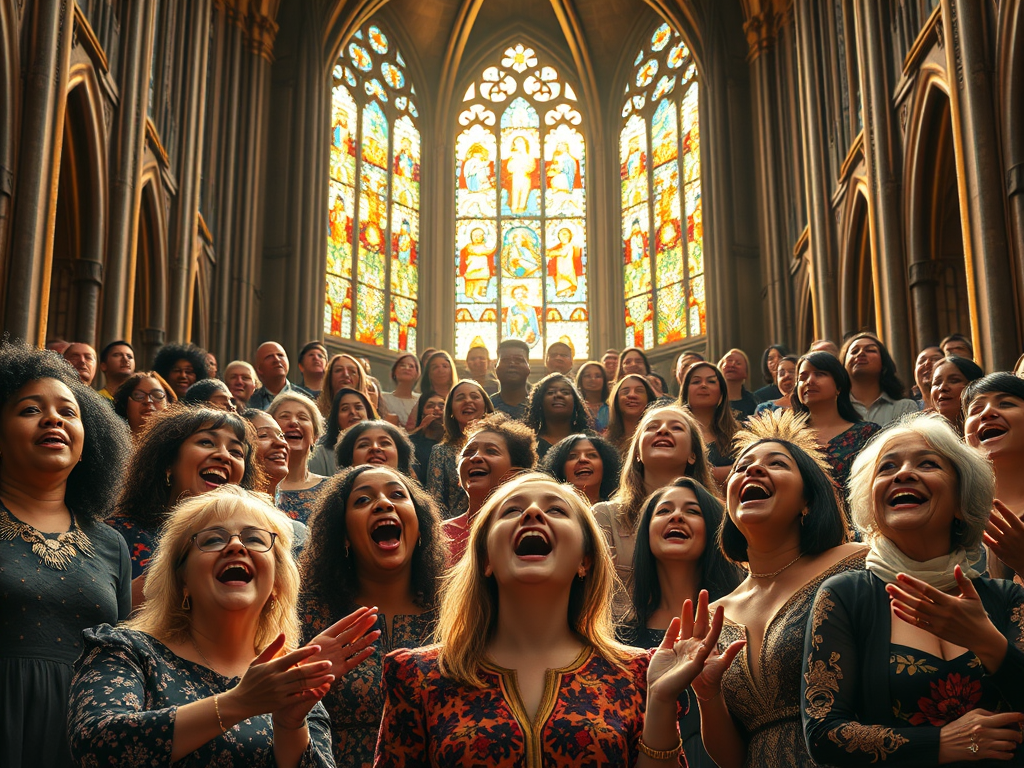
    Picture a cathedral filling with voices. The sopranos and altos sing: “Old things have passed away.” The tenors and basses respond: “Behold, He makes all things new.”

    This isn’t random dialogue. It’s theological conversation. The music itself teaches theology: voices representing different aspects of human experience all discovering the same truth. Slowly, impossibly, they come together in unity: “All things new, all things new.”

    The full choir joins: “The grave could not contain Him, the stone was rolled away.” The music swells toward majesty. Resurrection isn’t just theology—it’s orchestral triumph.

    This is formal affirmation of fundamental Christian truth: Christ’s resurrection power is active, present, transformative.

    The Broadway Version: “Everything Is Possible Now”

    The stage is darker at first. A single character stands alone: “They told me I was finished.”

    But then—the turning point—”But then came the resurrection. The moment everything shifted. And we all felt it at once.”

    One by one, other characters join. Not in harmony necessarily—in solidarity. Each voice added represents another person discovering transformation. By the time the full ensemble sings “Everything is possible now,” the stage is flooded with light and people.

    The Broadway approach shows transformation as a journey from despair to possibility, from isolation to community. The repeated chorus—”Everything is possible now!”—becomes infectious, contagious, real.

    This is resurrection theology experienced relationally: I don’t believe alone. I believe alongside others who’ve also discovered that death doesn’t have the final word.

    The Singer/Songwriter Version: “I’m Starting Over”

    “I’m starting over. Not from zero, not erased, but from this moment forward, something’s changed.”

    The singer/songwriter doesn’t make grand claims. There’s no orchestra. Just voice and guitar. But the honesty is devastating: transformation isn’t one moment. It’s daily. It’s “small decisions, day by day. The tiny ‘yes’ to starting over again.”

    The chorus—”Starting over, starting over, can’t go back to who I was before”—captures something the other versions approach differently: transformation as personal choice, as moment-by-moment surrender to newness.

    This is intimate theology. Not doctrine about transformation, but lived experience of what it means to become new.

    The Alternative Rock Version: “I’m Breaking Through”

    An explosive voice declares: “They built a box around me, said this is who you are, stay quiet, stay small. But something in me’s waking, something in me’s breaking through the walls.”

    The alternative rock approach is defiant transformation. Not gentle. Not passive. But fierce, active, reclamatory. “I’m not apologizing, I’m not shrinking down, I’m claiming back my power, I’m taking my crown.”

    The song builds from contained verses to explosive chorus: “I’m breaking through! Everything that tried to break me made me strong!” The energy is cathartic, liberating, powerful.

    This is resurrection theology experienced as liberation: I’m not waiting for permission. I’m not asking for approval. I’m claiming my authentic self.

    The Same Truth, Four Languages

    2 Corinthians 5:17 is radical: all things become new in Christ. But the experience of that newness differs:

    • Baroque celebrates the majesty and theological certainty of transformation
    • Broadway shows transformation as a relational, community discovery
    • Singer/Songwriter honors transformation as a personal, daily practice
    • Alternative Rock celebrates transformation as liberation and reclamation

    What This Means for Your New Year

    As you begin 2026, where do you need “all things new”?

    Are there old patterns you sense God inviting you to release? Baroque theology invites you to contemplate the formal majesty of what transformation could mean.

    Are there broken relationships or fractured communities you long to see healed? Broadway theology shows transformation happening together, in solidarity.

    Are there daily habits or mindsets that need shifting? Singer/songwriter theology honors the small “yes” moments that accumulate into transformation.

    Are there limitations you need to break through, false identities you need to shatter, authentic selves you need to reclaim? Alternative rock theology celebrates transformation as defiant liberation.

    The Invitation to Newness

    2 Corinthians 5:17 isn’t conditional on feeling transformed. It’s declarative: you are new creation. The work is done. What remains is for us to experience and live into that reality.

    In 2026, that could mean listening to how four different artistic traditions celebrate the same resurrection power. It might mean discovering which one speaks most deeply to your particular transformation journey.

    Or it might mean recognizing that transformation sounds different in each season of life—sometimes we need formal theology, sometimes relational community, sometimes intimate personal reflection, sometimes defiant liberation.

    All are true. All are new. All are Christ.

    Album cover featuring four styles of musical performance: Baroque choir in a cathedral, Broadway cast in festive costumes, singer-songwriter performing on stage, and alternative rock band playing energetically, with the title 'New Beginnings' by Melanie Grace.
  • Reflection and Mercy: How Doubt Meets Faith Across Four Different Genres

    Reflection and Mercy: How Doubt Meets Faith Across Four Different Genres

     • SPOTIFY • APPLE MUSIC • AMAZON MUSIC • DEEZER • PANDORA • YOUTUBE

    What Held Us: When Faithfulness Feels Like a Surprise

    The end of one year and the beginning of another invites reflection. We look back and ask: Where was God in this year? How was He faithful? What didn’t make sense then that makes sense now?

    Lamentations 3:22-23 offers a surprising answer from a surprising place: “Because of the Lord’s great love we are not consumed, for his compassions never fail. They are new every morning; great is your faithfulness.”

    Lamentations. A book of mourning and wrestling with God. Yet here, in the midst of genuine grief and doubt, the writer discovers something radical: God’s mercy didn’t disappear. It renewed itself every single morning, even when the writer couldn’t see it.

    The Baroque Version: “The Year Now Past”

    In a quiet sanctuary, a single soprano voice begins. The harpsichord is sparse, almost lonely. She reflects formally on the year: swift, filled with seasons, marked by questions. “How swift the turning of the year. What goodness have we witnessed here?”

    But then something shifts. Her voice gains strength. The oboe enters—not with fanfare, but with gentle accompaniment. She realizes: “His mercies never fail.” The music modulates from minor to major, from introspection to affirmation.

    The baroque approach honors both the weight and the wonder. It gives time and space to sit with the difficulty (“What goodness have we witnessed?”) before arriving at the deeper truth (“His mercies are new”). This is formal theology expressed musically: the human soul wrestling with God’s nature, articulating doubt before faith.

    The Broadway Version: “The Weight I’m Carrying”

    Now a character steps forward on a stage. They’re tired. Real. They speak directly to the audience: “I’ve been carrying this year like a stone.”

    This Broadway character doesn’t hide their struggle. They admit failures. They confess expectations unmet. But then—the turning point—they remember: “He whispers in the dark: ‘I haven’t left you.’”

    The Broadway approach is relational and real. It insists that before we can celebrate faithfulness, we must name the struggle. The spoken dialogue in the middle is pure character revelation. This is theology that meets you where you are: exhausted, doubting, carrying stones. And then it invites you to lay them down.

    The Singer/Songwriter Version: “Doubt’s Whisper”

    “I’m not supposed to say this, but I’m gonna say it anyway.” These opening lines are pure singer/songwriter honesty. The artist admits: I don’t know if I believe half of what I claim. I doubt. Deeply.

    With minimal accompaniment, just voice and guitar, the song unfolds like a late-night confession. There are doubts. Big ones. The year was hard. But then—and this is where the magic happens—the artist hears a whisper: “Your doubts don’t disqualify you.”

    The singer/songwriter approach to Lamentations 3:22-23 refuses to pretend faith is simple. It honors the complexity: doubt and faith coexisting. Questions and trust in the same breath. The repeated realization—”Mercies, I’m learning about mercies”—becomes almost a mantra. A permission slip to acknowledge struggle while also acknowledging love.

    The Alternative Rock Version: “What Held Me”

    An ethereal yet powerful voice opens quietly: “In the darkness, there was something. I couldn’t name it, couldn’t see it, but it held me, held me, held me.”

    The alternative rock approach is defiant introspection. The year was brutal. The breaking was real. “My mind was breaking, my heart was shaking, everything I built was crumbling to dust.”

    But then: “Morning came again, and it was fresh, like the darkness never happened.” The song builds from sparse vulnerability to fuller power. The repeated refrain—”What held me? What held me?”—is a question being asked with increasing certainty. Something did hold. Something is real.

    The alternative rock approach honors both the weight of the year and the mysterious grace that sustained through it. It’s ethereal because grace is hard to explain. It’s powerful because surviving requires strength.

    The Same Truth, Four Languages

    All four versions articulate the same truth: even in difficulty, even in doubt, God’s mercy is real and renewed. But they reach different listeners:

    • Baroque speaks to those who need formal, theological beauty to process their year
    • Broadway speaks to those who need relational honesty and character-driven storytelling
    • Singer/Songwriter speaks to those who need to feel personally known in their specific struggle
    • Alternative Rock speaks to those who need to acknowledge the battle while also acknowledging the mysterious grace that sustained them

    What This Means for Your Reflection

    As you close this year and open the next, Lamentations 3 asks: Have you noticed God’s faithfulness?

    Not in the big, obvious ways necessarily. But in the morning mercies? In the fact that despite doubt, you’re still here? Still believing, even if it’s “just barely”?

    Perhaps the baroque version invites you into contemplative review—formally acknowledging both the weight and wonder.

    Perhaps the Broadway version invites you to name your struggle honestly before celebrating God’s faithfulness.

    Perhaps the singer/songwriter version invites you to admit that doubt and faith coexist, and both are welcome.

    Perhaps the alternative rock version invites you to acknowledge the battle while also acknowledging the mystery of grace that held you.

    The Mercy That Never Ends

    Lamentations teaches us something counterintuitive: the book of deepest grief contains one of the Bible’s brightest affirmations of God’s faithfulness. The darkest book of Scripture proclaims one of its brightest truths.

    Your year—with all its difficulty, doubt, and complexity—is held in that same reality. God’s mercies are new. Not because everything went well. But because He is faithful, regardless.

    A collage of four performance scenes representing different musical styles: Baroque choir, a Broadway stage with performers, a solo singer-songwriter at a microphone, and a lively alternative rock band. The title 'New Beginnings' is prominently displayed, along with the artist's name, Melanie Grace, and featured artist Claude H. Becker.
  • The Church Needs Story-Telling Songs About Christ

    The Church Needs Story-Telling Songs About Christ

    A Call to the Church

    I love traditional Christmas carols. I truly do. “O Holy Night” moves me to tears every year. “Hark! The Herald Angels Sing” is theological gold. “Silent Night” is hauntingly beautiful.

    But we’ve been singing the same songs for 100, 200, even 300 years.

    And I wonder: where are the NEW songs? Where are the fresh expressions of these timeless truths? Where are the stories told in the language and musical style of TODAY?

    Why New Songs Matter

    Psalm 96:1 commands, “Sing to the Lord a NEW song; sing to the Lord, all the earth.”

    Not INSTEAD of the old songs—but ALONGSIDE them. New songs for new generations. Fresh expressions of unchanging truth.

    Our kids are growing up in a world that’s drastically different from even 20 years ago. They need Christmas music that sounds like THEIR music, that tells the story in ways that connect with THEIR hearts.

    And honestly? So do we.

    The Power of Story-Telling Songs

    The Bible is full of songs that TELL STORIES:

    • Moses sang about the Red Sea crossing
    • Deborah sang about victory in battle
    • Mary sang the Magnificat about God’s faithfulness
    • The Psalms are full of narrative—telling God’s story

    Music has always been how God’s people remember, celebrate, and pass down the faith.

    But somewhere along the way, we settled. We stopped writing new stories. We let the old songs carry the weight of the entire Christmas narrative. And while they’re beautiful, they can’t be the ONLY way we tell the story.

    What I’m Asking Churches to Do

    I’m not asking you to throw out “Silent Night” or “Joy to the World.” I’m asking you to ADD to them.

    I’m asking worship leaders to consider: what if we sang a NEW song about Mary’s faith journey alongside “O Little Town of Bethlehem”?

    What if we introduced our congregations to “Rachel’s Tears” and helped them sit with the hard parts of the Christmas story—not just the cozy, Hallmark moments?

    What if we taught our children “Light Has Come” so they grow up knowing that Jesus is the answer to every darkness they’ll face?

    Story-Telling Connects Generations

    Here’s what I’ve discovered: when you tell the STORY through song, people connect differently. They don’t just hear facts—they feel them. They don’t just learn theology—they live it.

    Traditional hymns are wonderful for doctrine and reverence. But story-telling songs help us ENTER the narrative. They help us see ourselves in Mary’s faith, the shepherds’ urgency, Rachel’s tears, and the unshakeable hope that light has come.

    When a grandmother hears “By Faith We Go,” she remembers her own journey of trusting God through the unknown. When a teenager hears “Without Hesitation,” they’re challenged to respond to Jesus with that same immediacy. When a parent hears “Rachel’s Tears,” they’re given permission to lament while still hoping.

    Stories do that. Stories connect us across time, across pain, across joy.

    The Great Commission of Christmas

    Jesus said, “Go and make disciples… teaching them to obey everything I have commanded you.” (Matthew 28:19-20)

    Part of making disciples is TELLING THE STORY. Over and over. In fresh ways. In new expressions. So that every generation encounters Jesus for themselves.

    If we only sing 200-year-old carols, we’re telling today’s generation that the story stopped being relevant two centuries ago. But if we’re STILL writing songs about Jesus, we’re saying: This story is ALIVE. It’s still unfolding. It’s still changing lives TODAY.

    An Invitation to Worship Leaders

    I’m asking you to take a risk. To introduce one new Christmas song this year alongside the traditional ones. To help your congregation experience the story in a fresh way.

    Use “Christmas With The Saints” or any of these songs if they serve your church. Or write your own! Partner with songwriters in your congregation. Encourage creativity. Give permission for fresh expression.

    Because the story of Jesus is too good, too powerful, too RELEVANT to be confined to the past.

    The Next Generation Is Watching

    Our kids are growing up in a world that tells them Christianity is outdated, irrelevant, boring. If all they hear at church are songs from centuries ago, they might believe it.

    But when they hear NEW songs—songs that sound like their music, that address their struggles, that tell the timeless story in timely ways—they realize: this faith is ALIVE. This Jesus is PRESENT. This story is MINE.

    Story-Telling as Discipleship

    Acts 2:42 says the early church devoted themselves to “the apostles’ teaching and to fellowship, to the breaking of bread and to prayer.”

    But before that, in verse 11, the people declared, “We hear them declaring the wonders of God in our own tongues!”

    In our own tongues. In our own language. In our own musical style.

    That’s what I’m calling for—declaring the wonders of God in the language of TODAY, through story-telling songs that help us remember, celebrate, and pass down the faith.

    My Prayer for the Church

    I pray that churches would become places where:

    • Old and new songs coexist in beautiful harmony
    • Story-telling is valued as much as doctrine
    • Every generation finds expression for their worship
    • The Christmas story is told with ALL its dimensions—joy AND sorrow, triumph AND lament
    • Creativity is celebrated as an act of worship
    • The next generation encounters Jesus through songs that speak their language

    Final Thoughts

    “Christmas With The Saints” is my offering—10 songs that tell the complete Christmas story in a fresh, contemporary way. But it’s not just an album. It’s a vision.

    A vision for what the church COULD be if we embraced story-telling songs. If we gave space for new expressions. If we trusted that the Holy Spirit is STILL inspiring new songs for new generations.

    The story of Jesus doesn’t need defending—it needs TELLING. Over and over. In every language, every style, every generation.

    So let’s sing the old songs with gratitude.

    And let’s write new songs with courage.

    Let’s tell the story in every way possible, so that every person—young and old, churched and unchurched—can encounter the baby in the manger who changed everything.

    Because Christmas isn’t just a season. It’s a story. And stories are meant to be told, retold, and told again—forever.

    Will you join me in bringing story-telling songs about Christ back to the church? Let’s make sure the next generation knows this story is THEIRS.