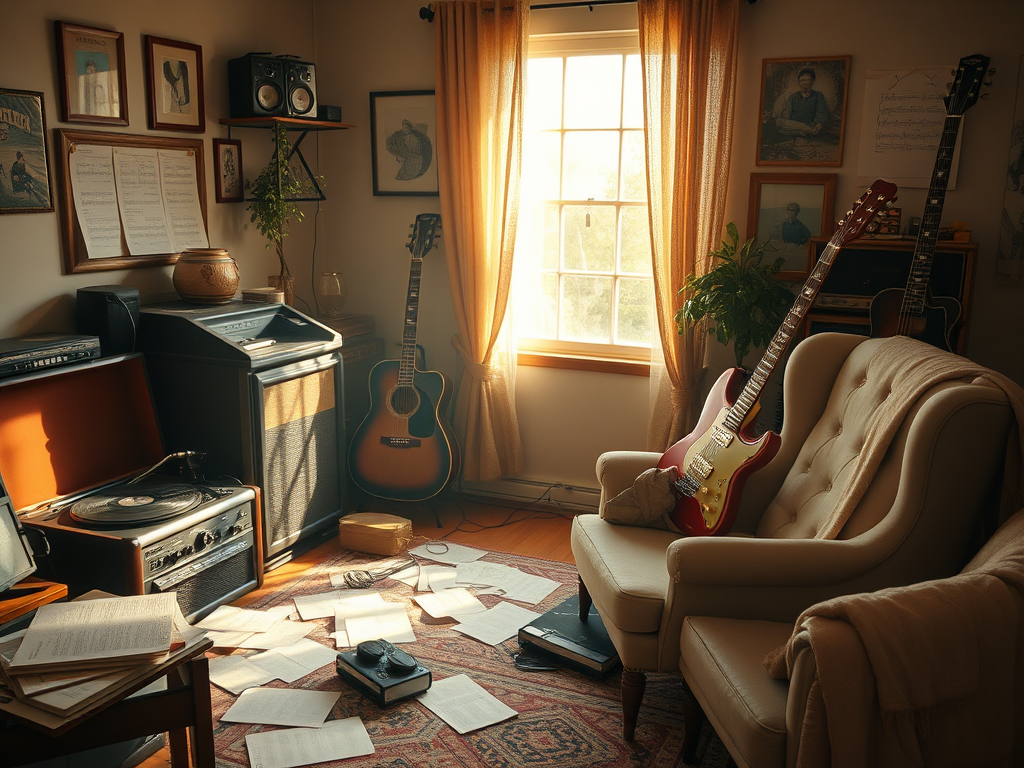
Tag: Do Not Disturb

  • Why Lo-Fi Music Is More Than Background Noise: A Songwriter’s Perspective

    Why Lo-Fi Music Is More Than Background Noise: A Songwriter’s Perspective

    Why is lo-fi music so popular?  Lo-fi music is popular because it provides a sonic environment that feels human, warm, and undemanding in a world saturated with high-production, algorithmically optimized sound. It functions as permission to slow down, which is something a significant portion of the listening public is actively craving right now.

    From Classical Training to Lo-Fi Songwriter

    Before I made Do Not Disturb, I would not have described myself as a lo-fi artist under any circumstances. I have classical choral training. I sang in oratorios and large ensemble settings where precision was the entire point of every rehearsal, where every note had a specific place in a carefully constructed and extensively rehearsed tapestry of sound. Lo-fi as a genre felt like the philosophical opposite of everything that musical formation stood for.

    Then I started actually listening to lo-fi music with the kind of full attention I give to everything I genuinely care about. Not having it on as ambient background while I worked on something else, but sitting with it as its own subject. And I started understanding what the genre was doing that no other genre was doing in quite the same way.

    What Does Lo-Fi Music Actually Do for the Listener?

    Lo-fi music is permission. It is permission to not be polished, to let warmth matter more than technical precision, to let music breathe without it needing to optimize every element of itself. In a listening landscape absolutely saturated with tracks that have been compressed and processed and engineered until every trace of human imperfection has been carefully removed, lo-fi makes the deliberate choice to put the imperfection back. And that choice carries emotional meaning before a single lyric has been processed.

    The cultural appetite for lo-fi music right now makes complete and obvious sense to me. People are exhausted by highly produced, algorithmically-driven everything. They want something that sounds like it was made by an actual human, for an actual human, in a real room on a real afternoon when the light was a particular quality. That is what lo-fi offers and it explains the genre’s sustained popularity with remarkable consistency.

    How Did Lo-Fi Change Your Songwriting Process?

    Making Do Not Disturb taught me something I carry into every project now: imperfection is not a failure of craft. It is a deliberate aesthetic choice. It is an emotional language that speaks directly to the part of a person that just needs to sit down and breathe for a minute. The warmth in the low end, the slight texture, the unhurried tempo, all of these are intentional decisions that carry meaning independently of the lyrics.

    As a classically trained singer moving into this genre, I found that lo-fi required me to unlearn some things. That unlearning turned out to be one of the most valuable creative experiences of my career. It pushed me toward emotional truth over technical performance. Toward feeling over impression. I think there will be more lo-fi work from me. This sound opened a door I was not expecting and I am genuinely not done with what is behind it.

    FAQ: Lo-Fi Music Questions Answered

    Is lo-fi music good for studying? Research and widely shared experience both support it as a study and focus aid because its consistent, unobtrusive texture provides ambient presence without lyrical or melodic distraction. Is lo-fi music always instrumental? Not always. Lo-fi singer-songwriter music like Do Not Disturb includes vocals, using the aesthetic to create warmth around the words rather than remove them. Can lo-fi music be meaningful? Absolutely. The depth of feeling possible within lo-fi is exactly what distinguishes it from mere pleasant background sound.

  • Do Not Disturb Album: Why I Wrote a Lo-Fi Album About Burnout and Rest

    Do Not Disturb Album: Why I Wrote a Lo-Fi Album About Burnout and Rest

    What is the Do Not Disturb album about? 

    Do Not Disturb is a lo-fi album by singer-songwriter Melanie Grace, released April 1, 2026. The album is about burnout, emotional exhaustion, and the healing power of intentional rest. It is designed to feel like sonic permission to slow down without guilt.

    Writing a Burnout Album While Burned Out

    Do Not Disturb came out on April 1st and I have been sitting with the response ever since, listening to how people are receiving it and reflecting on what it actually cost to make it. There is a particular kind of vulnerability in releasing music about burnout. Because to talk about burnout honestly, you have to admit you burned out. You have to stand in front of your audience and say plainly: at some point, the demands of life and work and creativity and motherhood and marriage stacked up until I had to put up a sign and say, not right now. Not today.

    That is what this lo-fi album is at its core. It is soft and warm and unhurried, the sonic equivalent of a Sunday morning when nobody needs anything from you for an hour. It was not made to impress anyone. It was made to exhale. And exhaling turned out to be exactly what a lot of people needed.

    Why Is Lo-Fi Music the Right Sound for Rest?

    I have classical training. I sang in oratorios and choral settings where precision was everything and every note had a specific place in a carefully constructed tapestry. Lo-fi as a genre felt initially like the opposite of everything that training stood for. But the more I listened to lo-fi music with real attention, the more I understood what it was doing that no other genre was doing quite the same way.

    Lo-fi is permission. Permission to not be polished. Permission to let warmth matter more than perfection. Permission to let the music breathe without needing to optimize itself into something frictionless. In a listening landscape saturated with highly produced, algorithmically engineered everything, lo-fi puts the human imperfection back in deliberately and that communicates something emotionally before a single lyric even registers.

    What Has the Response to Do Not Disturb Been Like?

    People are telling me they put it on at night when the day finally ends. They are telling me it is their study playlist, their wind-down ritual, the signal they give their nervous system that the day is done and rest is allowed now. One message I received said this album is the first time music made me feel like it was okay to stop. That response meant everything to me because that was exactly and precisely the feeling I was trying to create when I wrote it.

    Women especially are conditioned to treat rest as a reward for finishing everything on the list rather than as a practice woven through life. This lo-fi album about burnout is my direct pushback against that cultural conditioning. Rest is not what you earn after productivity. Rest is how you come back to yourself. The sign is still up honestly, but now it is there by choice rather than by collapse. Those are two completely different things.

  • No April Fools Joke Here – “Do Not Disturb” Is Out Now

    No April Fools Joke Here – “Do Not Disturb” Is Out Now

    April 1, 2026

    I know what day it is. I promise this isn’t a joke.

    Today, I’m releasing “Do Not Disturb”, a 10-track lo-fi album about mental health, burnout, boundaries, and needing everyone to leave me alone.

    And I want to be really honest with you about where I was when I wrote it.

    The Truth Behind the Album

    II wrote these songs with my AI co-writer Claude H. Becker on a really, really, really bad day. Actually, several really bad days. I was PMSing, my family was getting on my nerves, I was exhausted from work, my head hurt, my heart hurt, and I just needed music that matched how awful I felt.

    So I wrote it. All 10 songs. In one sitting. Because that’s what I needed.

    Here’s what was actually happening:

    I was working my retention specialist job from home, hitting my performance goals (214% to goal, actually), but somehow still feeling like I was failing everyone. My husband works from home too. My boys needed things. Everyone needed something from me, and I had nothing left to give.

    I was forgetting things. Making mistakes. Apologizing constantly. Working harder and harder but feeling like I was disappointing everyone no matter what I did.

    And I was so tired. Not just physically tired – that bone-deep exhaustion where even simple conversations feel like too much.

    I didn’t want to hurt anyone’s feelings. I didn’t want to be dramatic. I just wanted to lock myself in a room with four walls and not talk to anyone for a while.

    But you can’t just say that to the people you love without sounding terrible. So instead, I turned it into songs.

    And it helped.

    Writing “Four Walls” gave me permission to need space. Writing “Don’t Take It Personal” helped me set boundaries without guilt. Writing “Background Noise” made me feel less alone in feeling invisible. Writing “Stop Putting Words In My Mouth” let me be angry without actually starting a fight.

    By the time I finished all 10 songs, I felt… not better exactly, but heard. Like I’d finally said out loud (well, in songs) what I’d been holding in.

    Music has always been my therapy. But this album? This was therapy in real-time.

    I’m Getting Help

    I want you to know: I’m not just wallowing. I recently started using Headspace and I meet with a coach each week to talk about my problems. I’m working on it. But working on mental health doesn’t mean pretending you’re fine when you’re not.

    Sometimes you need to sit in the sad. Sometimes you need music that doesn’t try to cheer you up or tell you it’ll all be okay. Sometimes you just need someone to say “yeah, me too.”

    That’s this album.

    If You’re Happy, Don’t Listen to This

    Seriously. If you’re in a good place right now, this album is not for you.

    Listen to these instead:

    • Unbreakable – if you need empowerment and strength
    • Through It All – if you’re happy in love
    • Dance With Me – if you want romantic vibes
    • Last First Kiss – if you’re feeling sweet and hopeful

    But if you’re sad? If you’re exhausted? If you’re barely holding it together? If you just need someone to understand?

    I’m here for you with this album.

    The Tracklist

    1. Four Walls
    2. Rainy Day Inside
    3. Don’t Take It Personal
    4. Background Noise
    5. Autopilot
    6. Numb
    7. 3 AM Thoughts
    8. No Answers
    9. Stop Putting Words In My Mouth
    10. I’m Not Making Anyone Happy

    There’s More Where This Came From

    Here’s the thing: while I was in that headspace, I also wrote a bunch of songs about my financial problems. Debt. Self-sabotage. Knowing what Dave Ramsey would say but doing it anyway. The whole mess.

    I haven’t released those yet because… honestly, they’re even more vulnerable than this album. Financial shame is real.

    But if you think I should release that album too, comment below and let me know. If enough people want it, I’ll put it out there. We can all be broke and sad together.

    Listen Now

    “Do Not Disturb” is available now on:

    I hope this album makes you feel less alone in whatever you’re going through.

    Final Thoughts

    This isn’t an April Fools joke. This is me being honest about struggling with mental health while actively working on it.

    You can be in therapy AND still need sad music. You can be getting help AND still have really bad days. Both things can be true.

    So here’s the album. Take it or leave it. But if you need it, it’s here.

    With honesty and vulnerability,
    Melanie


    P.S. Seriously, comment below if you want the financial problems album. I need to know I’m not alone in that mess either.


    A Note About Mental Health & Getting Help

    This album deals with heavy topics: burnout, depression, numbness, exhaustion, and the overwhelming need for space. While writing these songs was therapeutic for me, I want to be very clear: music is not a replacement for professional help.

    If you’re struggling with depression, burnout, anxiety, suicidal thoughts, or mental health challenges, please reach out to someone who can actually help:

    Crisis Resources:

    • 988 Suicide & Crisis Lifeline: Call or text 988 (available 24/7)
    • Crisis Text Line: Text HOME to 741741 (available 24/7)
    • SAMHSA National Helpline: 1-800-662-4357 (free, confidential, 24/7 treatment referral service)

    Professional Support:

    • Talk to your doctor about mental health referrals
    • Consider therapy (many therapists offer sliding scale fees)
    • Look into employee assistance programs (EAP) if available through your work
    • Check out online therapy options like BetterHelp or Talkspace if in-person isn’t accessible

    For Friends & Family: If someone you love is struggling, please don’t just tell them to “listen to music” or “stay positive.” Encourage them to seek professional help. Offer to help them find a therapist. Drive them to appointments if needed. Sometimes the kindest thing you can do is help someone access real support.

    My Personal Message: I’m okay. I’m working through my exhaustion with support, boundaries, and rest. But if these songs resonate with you on a deep level – especially songs like “Numb,” “3 AM Thoughts,” or “No Answers” – please don’t suffer alone. You deserve real help, not just a sad playlist.

    Music can be therapy. But it’s not the therapist.

    Please take care of yourself. You’re worth it.

    With love,
    Melanie

  • I want to be alone – Choosing Solitude Over Constant Disappointment

    I want to be alone – Choosing Solitude Over Constant Disappointment

    Track 10 from “Do Not Disturb”


    I’m not making anyone happy. So I’ll just be alone instead.

    The Title Track (In Spirit)

    While the album is called “Do Not Disturb,” this song is really the thesis statement. This is what the whole album has been building to:

    I’m not making anyone happy no matter how hard I try, so maybe it’s time to just choose solitude.

    The Raw Opening

    The song starts with brutal honesty:

    “I see it in the way you look away
    When I walk in the room these days
    Every word I say feels like a mistake
    So maybe it’s better if I just stay away”

    That’s the moment when you realize: people aren’t happy when you’re around. Your presence doesn’t bring joy. Your words feel wrong. Everything you do seems to disappoint.

    So why keep trying?

    The Resignation in the Chorus

    The chorus is pure resignation:

    “I’m not making anyone happy
    Not even trying anymore
    I just want to be alone
    Close my door and hit the floor
    Let the static fill my head
    ‘Til I can’t hear what they said
    I’m not making anyone happy
    So I’ll just be alone instead”

    I’m done trying to make people happy. I’m done performing. I’m done pretending I can be what everyone needs.

    I’ll just close my door, sit on my floor, and let the static drown out all the voices telling me I’m not enough.

    The Defiant Bridge

    But here’s where the anger from the last song bleeds through:

    “Have some generosity for once, please
    Now leave me alone
    If I’m happy, you’re that mad”

    This bridge is everything. “Have some generosity” – give me a break. Cut me some slack. Stop expecting perfection.

    And that last line: “If I’m happy, you’re that mad” – the ultimate can’t-win situation. When I’m struggling, you’re disappointed. When I’m finally happy? You’re mad about that too.

    So what am I supposed to do? Just… exist wrong all the time?

    Fine. I’ll do it alone then.

    Why This Song Closes the Album

    After the journey through exhaustion, numbness, insomnia, pain, and anger, this song is the conclusion:

    If I can’t make anyone happy, I might as well stop trying. I might as well choose the peace of solitude over the constant disappointment of failing to meet expectations.

    It’s not a happy ending. But it’s an honest one.

    The Layers of Meaning

    This song works on multiple levels:

    Level 1: Literal – I’m disappointing people and would rather be alone
    Level 2: Burnout – I’m too exhausted to keep trying to please everyone
    Level 3: Boundaries – I’m choosing myself even when it disappoints others
    Level 4: Self-preservation – Solitude is safer than constant rejection

    All of these are true at once.

    The Complicated Feelings

    Here’s what’s complicated about this song: I don’t actually want to be alone all the time.

    But I do want to stop feeling like I’m constantly disappointing people. I want to stop apologizing for not being perfect. I want to stop feeling like my presence makes things worse.

    And if the only way to stop feeling that way is to remove myself… then that’s what I’ll do.

    Who This Song Is For

    This song is for:

    • Anyone who feels like they can’t win
    • People who are tired of disappointing others
    • Anyone who’s chosen solitude because it’s easier than failing
    • People who feel like their presence makes things worse
    • Anyone exhausted from trying to make everyone happy

    What I Want You to Know

    If this song resonates with you… if you feel like you’re not making anyone happy no matter what you do…

    It might not be you.

    Sometimes the problem isn’t that you’re failing. Sometimes the problem is that the expectations are impossible. Sometimes the people around you need to have some generosity and grace.

    And sometimes? Sometimes you do need to choose solitude. Not forever. But long enough to remember who you are when you’re not performing for others.

    The Hope Hidden in Resignation

    Here’s the thing about choosing solitude: it’s not giving up. It’s regrouping.

    When you stop trying to make everyone happy, you make space to figure out what makes you okay. You get quiet enough to hear your own voice again.

    And maybe – just maybe – when you come back, you’ll come back stronger. With better boundaries. With less need for external validation.

    Or maybe you won’t come back the same at all. Maybe you’ll come back different. Changed. With new priorities and clearer limits.

    Final Thoughts

    “I’m Not Making Anyone Happy” is the hardest song on this album for me to sing. Because it’s admitting defeat in some ways.

    But it’s also claiming victory. Victory over people-pleasing. Victory over the exhausting cycle of trying and failing. Victory over the need to make everyone else happy at my own expense.

    So yes, I’m not making anyone happy. And I’ve stopped trying.

    And you know what? That’s okay.

    Maybe better than okay.

    Maybe that’s exactly what I need right now.


    Listen to “I’m Not Making Anyone Happy” on  SPOTIFY • APPLE MUSIC • AMAZON MUSIC • DEEZER • PANDORA • YOUTUBE

    Full album “Do Not Disturb” available April 1, 2026


    Are you making everyone happy except yourself? When will you choose solitude over constant disappointment?


    Thank You for Listening

    Thank you for going on this journey with me through Do Not Disturb. These ten songs are my truth – raw, uncomfortable, honest.

    If even one of these songs made you feel less alone, then it was worth being this vulnerable.

    Now, if you’ll excuse me… I’m closing my door.

    With love and boundaries,
    Melanie


  • Stop Calling Me out – When They Rewrite What You Said

    Stop Calling Me out – When They Rewrite What You Said

    Track 9 from “Do Not Disturb”


    I didn’t say that. That’s not what I meant. Stop twisting my words.

    The Angriest Song on the Album

    After eight tracks of sadness, exhaustion, and numbness, “Stop Putting Words In My Mouth” is where the anger finally breaks through.

    And honestly? It feels good to let it out.

    The Frustration of Being Misunderstood

    The opening verse gets right to it:

    “Stop calling me out
    I didn’t say that, I didn’t use that word
    You’re twisting everything around
    Making me the villain in a story I never heard”

    Have you ever had someone get mad at you for something you didn’t actually say? They’ve twisted your words, filled in blanks with their own assumptions, and now they’re angry at a version of you that doesn’t exist.

    And you’re supposed to apologize for words you never spoke.

    The Chorus: Drawing the Line

    The chorus is pure defiance:

    “Stop putting words in my mouth
    Stop telling me what I meant
    I know what I said
    I know what I meant
    And it wasn’t that”

    This is me drawing a line. No, I will not let you rewrite my words. No, I will not accept your interpretation as truth. I know what I said. I know what I meant. And it wasn’t what you’re claiming.

    When Someone Wants You to Be Wrong

    The second verse captures something darker:

    “You heard what you wanted to hear
    Filled in the blanks with your own fear
    Now you’re mad at me for something I never said
    And I’m supposed to apologize instead?”

    Sometimes people want you to be wrong. They want you to be the villain. So they’ll twist your words until they fit the narrative they’ve already decided on.

    And then they expect you to apologize for their own misinterpretation.

    No. Not doing that anymore.

    The Bridge: I’m Done

    The bridge is exhausted defiance:

    “I’m tired of defending myself
    Against words that aren’t even mine
    You want me to be wrong so bad
    You’ll rewrite every line”

    I’m done defending myself against accusations based on words I never said.

    You want me to be the bad guy? Fine. But I’m not going to help you build that case by apologizing for things I didn’t do.

    Why This Anger Matters

    After all the sadness and numbness in this album, this anger is important. Because it’s healthy anger. It’s boundary-setting anger. It’s “I will not be gaslit” anger.

    It’s the moment when exhaustion meets injustice and says: No. Not this. Not anymore.

    The Outro: Final Word

    The outro is simple and final:

    “Stop calling me out
    For things I didn’t say
    I’m done with this game today”

    Done. Finished. No more playing along with the twisting of words. No more defending myself against false accusations.

    I’m out.

    Who This Song Is For

    This song is for:

    • Anyone who’s been gaslit
    • People whose words get twisted regularly
    • Anyone tired of defending themselves against things they didn’t say
    • People who know what they meant and refuse to be told otherwise
    • Anyone who’s done apologizing for other people’s misinterpretations

    Standing Your Ground

    This song is permission to stand your ground.

    You don’t have to accept someone else’s version of what you said. You don’t have to apologize for their misunderstanding. You don’t have to let them make you the villain in a story you’re not even in.

    You know what you said. You know what you meant.

    And that’s enough.

    The Relationship Aspect

    I want to be clear: this isn’t about my marriage or my kids. My family doesn’t do this to me.

    But we’ve all had those relationships – friends, coworkers, extended family, acquaintances – where someone consistently twists your words. Where you can’t win because they’ve already decided you’re wrong.

    This song is for those moments. Those relationships. Those conversations where you realize you’re being set up to fail no matter what you say.

    What I Hope

    I hope this song gives you permission to stop defending yourself.

    I hope it reminds you that you’re allowed to be angry when people twist your words.

    I hope it helps you recognize when someone is rewriting your narrative to make you the villain.

    And I hope it gives you the strength to say: “Stop. That’s not what I said. And I’m done explaining myself.”


    Listen to “Stop Putting Words In My Mouth” on  SPOTIFY • APPLE MUSIC • AMAZON MUSIC • DEEZER • PANDORA • YOUTUBE

    Full album “Do Not Disturb” available April 1, 2026


    Have you ever been accused of saying something you didn’t say? How did you handle it?