Category: Music

  • Where Were You? Twenty-Five Years of Remembering September 11

    Where Were You? Twenty-Five Years of Remembering September 11

    Twenty-five years.

    Today marks twenty-five years since the attacks of September 11, 2001. It is hard to believe I am old enough to remember such an awful atrocity happening on US soil. But I do. I remember every minute of it.

    What I Remember About That Morning

    Early September 2001, I was asleep in my bed at my parents’ house when my mom ran in, frantic, and said, “Honey, the US is being attacked.”

    I jumped out of bed. “What on earth do you mean?”

    I ran to the front room, and there it was on the TV. The first plane had just crashed into the first tower. We stood there horrified, watching the smoke billow from the building, and all we could think was, I hope those people can get out.

    Then we heard the panic in the news anchors’ voices. There was another plane.

    I still cannot believe I watched it live: a plane crashing into the second tower. It was devastating and shocking, and we did not know what to do. So we just sat there, glued to the television, watching smoke pour down into the streets, people running covered in dust, everyone in shock.

    Those images are burned into my brain.

    And then the most horrible sight of all. We noticed things falling from the buildings, only to discover that those things were people. I will never unsee that.

    My heart breaks for everyone who died that day. In New York. At the Pentagon. In that field in Pennsylvania where Flight 93 went down.

    The Classmates Who Signed Up

    I graduated high school in 2001, and the irony of that year is not lost on me. The same year I walked across the stage, the whole world changed.

    After September 11, a bunch of the guys in my graduating class dropped out of college to join the military. I knew two of them personally. One became a Marine, and one became an Army man. Their passion and their support of the USA warms my heart to this day.

    That evening, once we learned everything was safe here in California, I still went to my college class. My teacher showed up even though he told us he did not think he would. He spent the whole evening talking about the economics of what war can cause. I have never forgotten that lecture.

    How I Remember September 11 Each Year

    Over the years I have gone to many September 11 events and remembrances on this anniversary.

    One of the most breathtaking was a church event at Shepherd of the Hills in Porter Ranch, over in the valley. They displayed flags with pictures of every single person who died that day. Standing among them, it is astonishing to see just how many people that is. There was a huge fireworks show afterwards commemorating America’s triumph.

    A couple of years ago, the Nixon Library brought in a steel beam from one of the towers and set it up in the parking lot. We attended, and honestly, it was a little miserable, folding chairs on hot asphalt on a warm September day. We were not too physically comfortable. But we were there, and that is what mattered.

    Twenty-five years later, I remember. I will always remember.


    Now I want to hear from you.

    Where were you on the morning of September 11?

    Tell me in the comments. I read every single one.

  • October Ready: The Song About Bringing the Season Inside

    October Ready: The Song About Bringing the Season Inside

    There is a specific kind of Saturday that happens every fall in my house. It starts with me pulling bins down from the attic. Orange and black ones, the ones stacked behind the Christmas stuff, the ones that have been waiting patiently since last November. And the moment those bins hit the floor something shifts in the whole house. The kids come running. Someone starts asking about costumes before we have even opened the first lid. And we are off.

    That Saturday is “October Ready.”

    Track 9 on Give Me Fall, releasing August 31st, is the most festive song on the album and honestly one of the most fun things I have ever recorded. It is a song about the particular joy of decorating for fall and Halloween, the craft show hauls and the pumpkins appearing on every surface and the candy bowl materializing by the front door and the wreath that someone bought that we absolutely did not need but that looks genuinely perfect and I will admit it now publicly.

    The song gets to the chorus fast because that is the energy of decoration day. There is no slow build. The moment the bins come down you are fully committed and the whole house knows it. October ready, got the porch all dressed up right. October ready, there are pumpkins left and right. Candy in the bowl by the door, costumes on the floor, craft show haul we didn’t plan but we adore.

    The craft show line deserves its own paragraph. If you have ever gone to a fall craft show telling yourself you are just going to look and then come home with a handmade wreath, a set of personalized pumpkin signs, a candle that smells like a cinnamon-scented dream, and a wooden scarecrow for the porch swing, this song is for you. I am you. We are the same person. The craft show haul is a love language and I will not apologize for it.

    The second verse introduces the costume conversation, which in my house begins approximately one to two months before Halloween and goes through approximately seven hundred revisions before landing on something that causes a fight and then resolves into something everyone loves. The song captures that chaos with genuine affection because the chaos is actually part of the joy. Somebody wants something that’s gonna cause a fight. That is just true. And beautiful. And very, very fall.

    The bridge is where the song finds its deeper truth, which is that every decoration in those bins has a story. Every fake cobweb and every plastic bat was chosen for a reason, was bought at a particular place, was hung up by particular hands in a particular year. The bins themselves are a kind of family archive. And doing all of this with someone beside you, making your house look like October together, is really what the song is trying to say when it says I love fall.

    I wrote this album collaborating with Claude AI and using Suno AI for music production, which sampled my own voice. October Ready was one of the fastest songs to write because the joy of that decoration Saturday practically wrote itself.

    Tell me in the comments: are you an early decorator or do you wait until it feels officially fall enough? And what is the one fall decoration you bring out every single year that makes your house feel like home? I want to know.

    Give Me Fall is out August 31st and I am so excited for you to hear the whole thing. Please follow me on Spotify, Apple Music, Amazon Music, Deezer, and Pandora so this album lands in your ears the moment it releases. Come hang with me on Instagram, Facebook, and YouTube, and join my email list here where I share everything first.

    October ready. The scarecrow is on the porch swing. The lights are on the door. With you.

    Warmly, Melanie Grace


  • Jump: The Song That Surprised Me Most

    Jump: The Song That Surprised Me Most

    This song started as the silliest idea I had for this album and ended up being the one that makes me cry the most. I need you to know that going in.

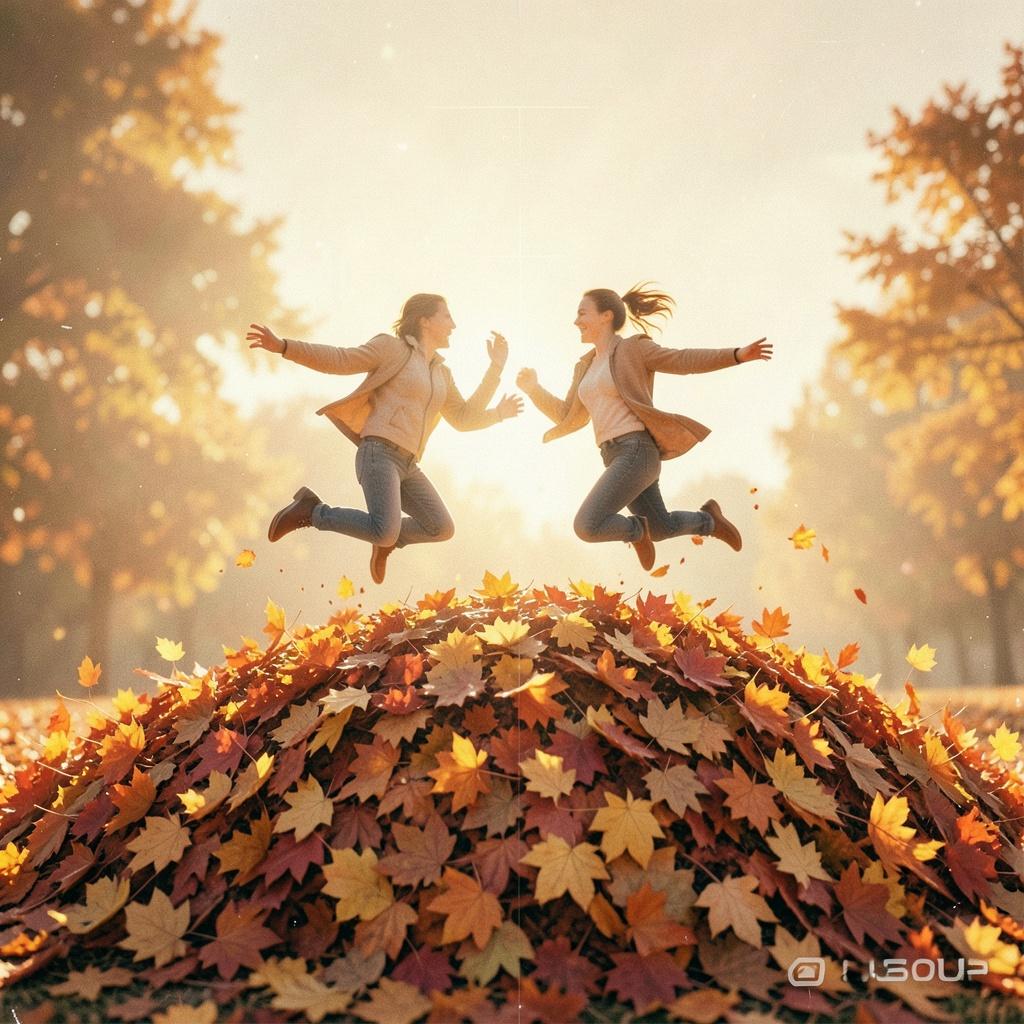
    “Jump” is Track 8 on Give Me Fall, my new album released August 31st, and the premise is exactly what it sounds like. Someone raked the leaves into a big pile. Someone had the very good idea to back up fifteen paces, get a running start, and land right in the middle of it without fear. And then the adults did it too. Multiple times. Until the pile was nothing but a scattered mess of spent October gold.

    That is the whole story. That is the song.

    Except it is not, because somewhere between the first chorus and the bridge this simple little leaf-pile song became one of the most emotionally true things I have ever written about what it means to stay young in your spirit, to stay loose and playful and unserious in a world that is always asking you to be more careful, more measured, more grown.

    The first two verses set up the scene with pure delight. The kids raking the pile, the running start, the landing. Then you look at the person beside you and you both already know. You drop the rakes. You count down from three. You hit that pile like nothing you have heard before and there are leaves absolutely everywhere. The kids think you have completely lost your minds. Which, as the song points out, is honestly the biggest compliment.

    The pre-chorus is where the shift starts. And I thought about how long it’s been since I did something just because it’s fun. No reason and no outcome and no plan. Just you and me and running and the sun. That line about no reason and no outcome is the one that gets me. Because somewhere along the way most of us learned to justify everything. We learned to have a purpose and a plan and a measurable result. And we forgot how to just run at a pile of leaves because it looked like the best possible thing to do with the next thirty seconds of our lives.

    The chorus is a pure, joyful, singalong invitation. Jump like nobody’s watching. Jump like we are free. Jump like we were seven. Jump like we’re still young. Jump like fall is magic and the best is yet to come. I wrote that chorus in one sitting and I have not changed a single word because sometimes a chorus is just right and you leave it alone.

    The bridge is where I did not expect to end up. Somewhere along the way we learned to be so careful. Somewhere we got serious and small. But every year October gives us back permission to be the kind of people who just jump and let it fall. I want to stay this loose with you forever. I want to be the one who makes you run. I want us to be old and still be jumping. Still laughing, still ridiculous, still us. That phrase, still us, is the heart of the whole song. Because the best love stories are the ones where you still make each other laugh until you are both covered in October leaves in the middle of your own front yard.

    This is what faith and love and fall all have in common for me. They all give permission. Permission to let go, to be silly, to trust that the pile will catch you, to stop being so careful and just run.

    I wrote this album collaborating with Claude AI and using Suno AI for music production, which sampled my own voice. This song is one hundred percent real memory and real feeling, and I hope it makes you want to go find a leaf pile immediately.

    Tell me in the comments: when is the last time you did something just because it was fun? When is the last time you jumped? I am genuinely asking because I think we could all use a little more of that.

    Give Me Fall released August 31st. Follow me on Spotify, Apple Music, Amazon Music, Deezer, and Pandora so you never miss a new release. Come find me on Instagram, Facebook, and YouTube, and join my email list here.

    Still laughing. Still ridiculous. Still us. Jump with me.

    Warmly, Melanie Grace


  • Crisp Fall Air: The Song About Wishing You Were Here

    Crisp Fall Air: The Song About Wishing You Were Here

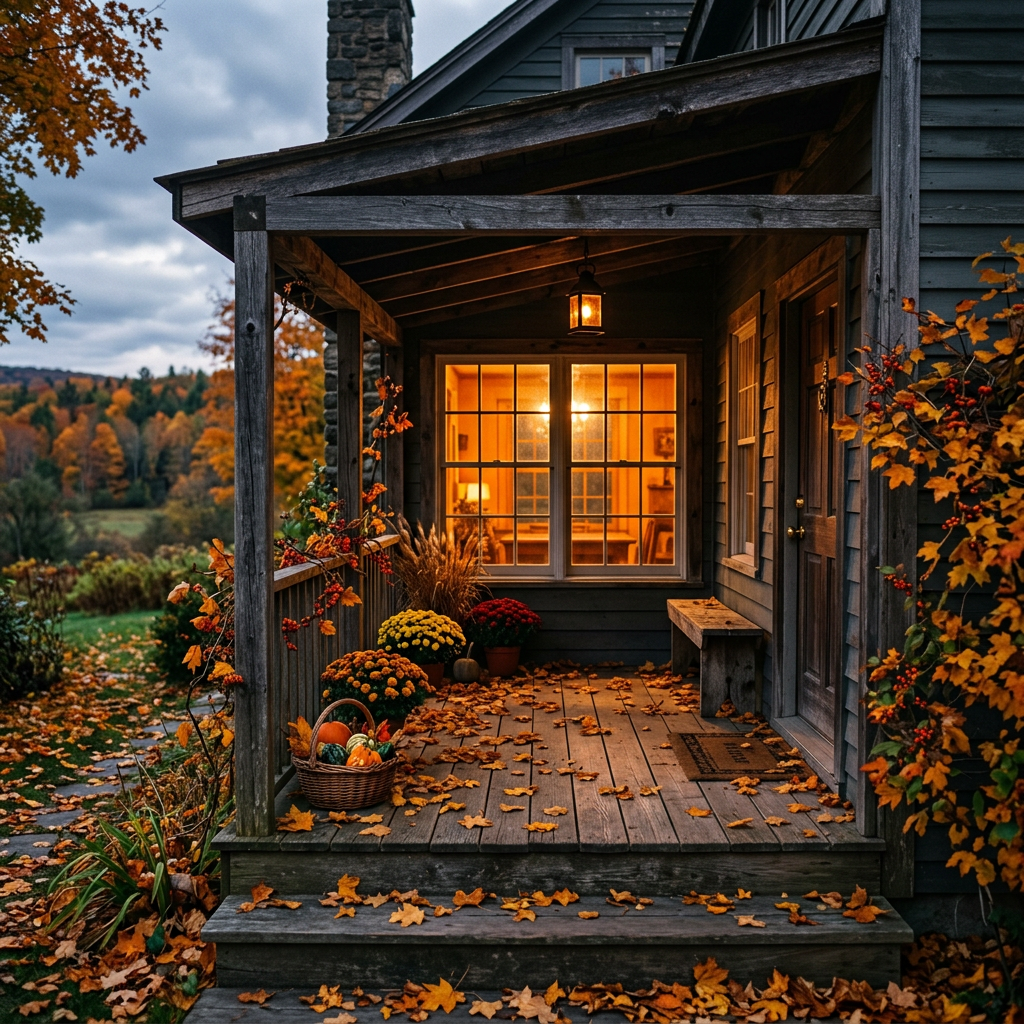
    Picture this. A porch. A cup of coffee. Kids laughing somewhere down the street, playing without a care. The wind in my hair and that first real crisp fall air moving through everything. It is a perfect scene. It is a completely full moment.

    Except for one empty chair.

    “Crisp Fall Air” is Track 6 on Give Me Fall, my new album releasing August 31st, and it is the surprise of the whole record. It is a Motown ballad. Yes, you read that right. In the middle of an album full of pumpkin patches and corn mazes and flannel, there is a slow, string-swelling, call-and-response Motown ballad, and it is the most tender thing on the album. Because this one is not really about fall. Fall is just where it happens. This one is about missing someone.

    The song opens like a memory that refuses to fade. Oh it feels like yesterday, when I first laid eyes on you. And I still feel the same way, like it’s all brand new. And then the pre-chorus makes the quiet confession that carries the whole song: the years have gone by, but my heart hasn’t changed. It’s still the same as it was in those good old days. Time moves. The heart doesn’t. That is the whole ache of this song in two lines.

    The chorus is where the fall comes in, and I love how ordinary it is. I’m just sitting on the porch enjoying the crisp fall air. Drinking my coffee with the wind in my hair. Hearing kids laughing, playing without a care. Everything about that scene is contentment. And then the last line turns the whole thing over: and I’m wishing you were here. That is how missing someone actually works. It does not always arrive in the big dramatic moments. It arrives on an ordinary porch on a beautiful morning, in the middle of a scene that would be complete if one more person were in it.

    The second verse says the quiet part out loud. It’s been quite a few years now since you went away. But I think about you often, every single day. And then the line that gets me every time: I wonder what you’re up to, and I hope you’re okay. But I’d love to see you again one of these days. There is no bitterness anywhere in this song. No blame, no wound being reopened. Just honest, patient missing. I hope you’re okay. I’d love to see you again. That is love with the grip loosened, and I think it might be the hardest kind to write.

    The bridge is where fall and memory fold into each other. The leaves are turning gold and red, just like they did back then. And every autumn breeze reminds me of where we’ve been. Fall does that. It is the most remembering season. The same colors come back every year and they bring everything with them. And then the bridge dares to hope: maybe someday soon our paths will cross, and we’ll sit down side by side. Catching up on all those years, with nothing left to hide.

    And here is my favorite songwriting moment on the whole track. In the final chorus, one word changes everything. The song stops wishing and starts imagining. We’ll be sitting on the porch enjoying the crisp fall air. Drinking our coffee with the wind in our hair. And I’ll be so glad you’re here. My coffee becomes our coffee. Wishing you were here becomes so glad you’re here. The empty chair gets filled, even if only in the singing of it. Then the background vocals come in, full Motown call and response, and the whole song lifts like the reunion is already happening.

    I wrote this album with Claude AI as my songwriting collaborator and Suno AI for music production, which sampled my own voice. Every word is mine and every feeling in this one is real.

    Tell me in the comments: who do you think of when you sit on the porch in the fall? Is there someone you’ve lost touch with that you’d love to catch up with again, side by side, with nothing left to hide? Maybe this is your sign to reach out.

    Give Me Fall releases August 31st. Fifteen songs, all of them reaching for that golden fall feeling. Please follow me on Spotify, Apple Music, Amazon Music, Deezer, and Pandora so this album finds you the day it drops. Come find me on Instagram, Facebook, and YouTube, and join my email list here.

    The coffee is warm. The air is crisp. The chair is waiting. Wishing you were here.

    Warmly, Melanie Grace


  • Why Christmas needed monsters

    Why Christmas needed monsters

    Frau Perchta carries a knife.

    Pre-Save the Album today!

    She comes on the Twelfth Night, in the Alpine regions, and she checks two things. She checks whether the house is clean and she checks whether the year’s spinning is finished. If a girl has spun her whole allotted portion of flax, Perchta may leave a small silver coin in a shoe. If not, Perchta opens the girl’s belly, takes out the stomach and the guts, and packs the space with straw and pebbles.

    That is the folklore. It is not a modern embellishment and it is not something a horror movie invented. Church officials in Bavaria were condemning the cult of Fraw Percht in 1468, and Thomas Ebendorfer had condemned the same practice in Vienna in 1439, and the reason they were condemning it is that people were doing it: leaving food and drink out for her on the night she came, hoping for a good year.

    The question worth asking is not why a culture invented something so ugly. The question is what it was for.

    Start with the spinning.

    In a household economy before industrial textiles, wool and flax were not a hobby. They were the difference between having clothes and not having clothes, in a place where not having clothes in February was a way of dying. The spinning had to be done, and it had to be done by a specific date, and it had to be done by the women and girls of the house, and there was no manager, no schedule, no consequence available except the one the family could invent.

    So the family invented Perchta.

    She is not arbitrary. That is the thing everyone misses about her. She has a rule, the rule is knowable, and the rule is survivable. Finish the flax. Clean the house. Eat the fish and the gruel on her night and nothing else. Do those things and she leaves a coin. A child could hold all of that in her head. A child could act on it.

    Now look at what she replaced. Without Perchta, a girl in a Tyrolean farmhouse in 1500 still has to spin the flax, and she still freezes if she does not, and the danger is exactly as real. The difference is that the danger has no face, no name, no date, and no method. It is just the vague, unbounded dread of a world that might kill you for reasons you cannot enumerate.

    Perchta takes that formless thing and gives it a nose, a foot, a knife, and a deadline.

    This is the pattern under nearly every figure in this book. The Yule Cat eats children who did not receive new clothes for Christmas, which sounds absurd until you understand that new clothes at Christmas meant the household had done its wool work, and that a household that had not done its wool work was in genuine trouble. The Cat is the wool quota, made visible. Krampus comes with Saint Nicholas because a saint who only gives is a saint who cannot enforce anything. The Kallikantzaroi come up from below during the twelve days, when the sun is lowest and the world is at its least reliable, and they go back down when the light returns.

    None of these creatures is a decoration bolted onto a nice holiday. They are the load-bearing part. Take them out and the holiday is still standing, but it is not carrying anything.

    And that is more or less what we did. Over about a century and a half, in most of the Western world, we removed the punishing figures one by one and kept the giving ones, and we told ourselves this was progress. In some ways it plainly was. The 1821 Santa handed out a birch rod for parents to beat children with, and I am not arguing for that.

    But notice what got left behind along with the rod. The specificity. The rules a child could actually learn. The idea that Christmas is a reckoning as well as a reward, that the year is being counted, that something is owed. We kept the watching, in fact. We just took away the consequence. That is what the Elf on the Shelf is: surveillance without judgment, an eye with nothing behind it.

    Perchta had a knife. That is horrible. But Perchta also told you exactly what to do to avoid it, and if you did it, she left a coin, and that was the end of the matter until next year.

    There is a kind of mercy in a monster with rules.

    Twenty-three of them are in the book. The Kindle is available now; print lands October 1.