Tag: vulnerability

  • No Answers – When Your Head and Heart Both Hurt

    No Answers – When Your Head and Heart Both Hurt

    Track 8 from “Do Not Disturb”


    I’m sorry I don’t have the answers. I wish I did.

    The Weight of Expectations

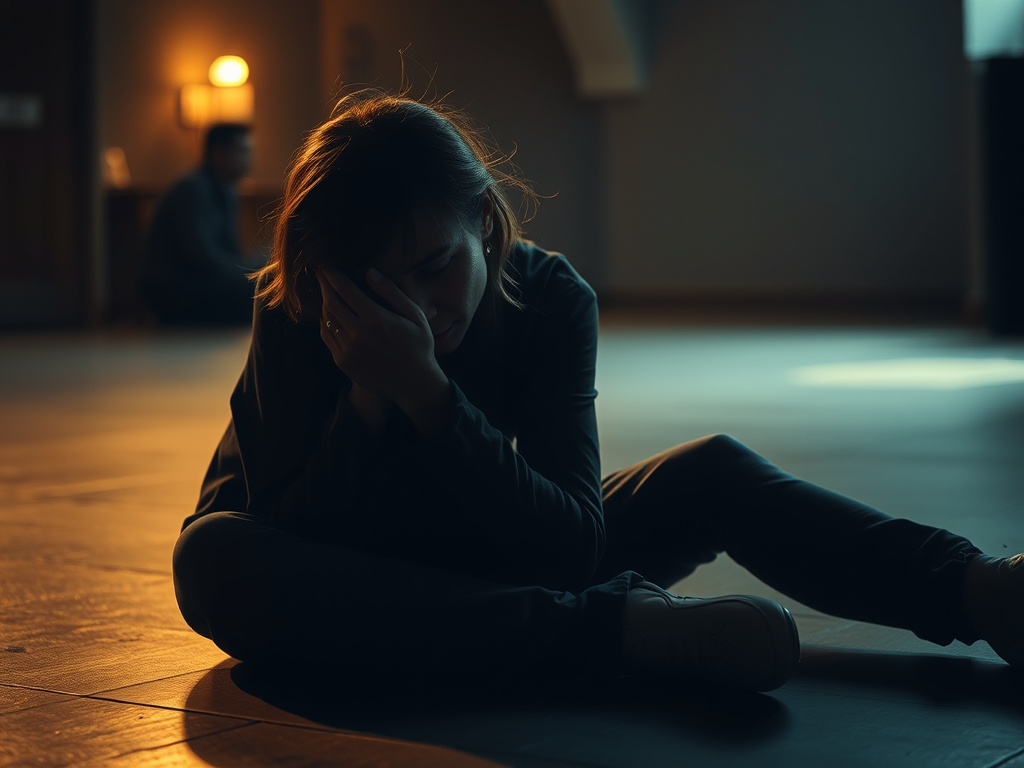
    “No Answers” came from a place of pure exhaustion – that moment when everyone’s looking at you to fix things, to know what to do, to have solutions… and you’ve got absolutely nothing left.

    Not because you don’t care. Because you’re completely depleted.

    When Everything Hurts

    The opening verse lays it all out:

    “I’m sorry I don’t have the answers
    Wish I could give you what you need
    But my head hurts and now my heart hurts
    And I’m running on empty”

    My head hurts from overthinking (thanks, 3 AM thoughts). My heart hurts from trying so hard. And somewhere between the two, I’ve lost the ability to help anyone – including myself.

    Stop Asking Me to Fix It

    The chorus is my breaking point:

    “I don’t know, I don’t know
    Stop asking me to fix it all
    I don’t know, I don’t know
    I’m just trying not to fall”

    There’s desperation in that repetition. “I don’t know, I don’t know.” Please stop expecting me to have answers. Please stop asking me to be the one who fixes everything. I’m barely holding myself together.

    I’m not trying to solve problems right now. I’m just trying not to fall apart.

    The Look That Expects More

    The second verse hits differently:

    “You look at me like I should know
    Like I’ve got some hidden key
    But I’m just as lost as you are
    Maybe even more than me”

    That look. That expectation. Like I’m supposed to have it all figured out.

    But I don’t. I’m lost too. Probably more lost than you are because I’m also carrying the weight of disappointing you by not having answers.

    The Bridge: Where I Lost Myself

    The bridge is the most vulnerable part:

    “My head hurts from overthinking
    My heart hurts from trying too hard
    And somewhere in between the two
    I lost who I are
    I lost who I are”

    (Yes, “who I are” instead of “who I am” – that grammatical slip is intentional. When you’re that exhausted, even your words break down.)

    Somewhere between thinking too much and trying too hard, I lost myself. I don’t even know who I am anymore beyond someone who’s constantly failing to meet expectations.

    The Outro: Barely Getting Through

    The song ends with raw honesty:

    “I’m sorry I don’t have the answers
    I wish I did, I really do
    But my head hurts and now my heart hurts
    And I can barely get through”

    I’m not being difficult. I’m not being stubborn. I genuinely wish I had answers for you.

    But I don’t. And right now, just getting through today is taking everything I have.

    Who This Song Is For

    This song is for:

    • The person everyone turns to for solutions
    • Anyone who’s tired of being the “strong one”
    • People whose head hurts from overthinking and heart hurts from caring too much
    • Anyone who’s lost themselves trying to be what everyone needs
    • The person who’s just trying not to fall apart

    What I Need You to Hear

    If you’re the person in your life who always has answers… if you’re the one people turn to… if you’re expected to fix everything…

    You’re allowed to not know. You’re allowed to be lost. You’re allowed to say “I don’t have answers right now.”

    And the people who love you should give you grace for that.

    A Note to Those Asking

    If someone in your life is saying “I don’t know” more than usual… if they seem lost when they’re usually the one with answers… please be gentle.

    Don’t look at them like they should know. Don’t put more pressure on them. Just… give them space to be uncertain for a while.

    Sometimes the kindest thing you can do is stop asking questions they can’t answer.


    Listen to “No Answers” on  SPOTIFY • APPLE MUSIC • AMAZON MUSIC • DEEZER • PANDORA • YOUTUBE

    Full album “Do Not Disturb” available April 1, 2026


    When was the last time you were allowed to say “I don’t know” without pressure to figure it out?


    A Note About Mental Health & Getting Help

    This album deals with heavy topics: burnout, depression, numbness, exhaustion, and the overwhelming need for space. While writing these songs was therapeutic for me, I want to be very clear: music is not a replacement for professional help.

    If you’re struggling with depression, burnout, anxiety, suicidal thoughts, or mental health challenges, please reach out to someone who can actually help:

    Crisis Resources:

    • 988 Suicide & Crisis Lifeline: Call or text 988 (available 24/7)
    • Crisis Text Line: Text HOME to 741741 (available 24/7)
    • SAMHSA National Helpline: 1-800-662-4357 (free, confidential, 24/7 treatment referral service)

    Professional Support:

    • Talk to your doctor about mental health referrals
    • Consider therapy (many therapists offer sliding scale fees)
    • Look into employee assistance programs (EAP) if available through your work
    • Check out online therapy options like BetterHelp or Talkspace if in-person isn’t accessible

    For Friends & Family: If someone you love is struggling, please don’t just tell them to “listen to music” or “stay positive.” Encourage them to seek professional help. Offer to help them find a therapist. Drive them to appointments if needed. Sometimes the kindest thing you can do is help someone access real support.

    My Personal Message: I’m okay. I’m working through my exhaustion with support, boundaries, and rest. But if these songs resonate with you on a deep level – especially songs like “Numb,” “3 AM Thoughts,” or “No Answers” – please don’t suffer alone. You deserve real help, not just a sad playlist.

    Music can be therapy. But it’s not the therapist.

    Please take care of yourself. You’re worth it.

    With love,
    Melanie

  • The Dream: What I Really Want From This Music Journey

    The Dream: What I Really Want From This Music Journey

    Hey friends,

    It’s late. My son is asleep. The house is quiet. And I’m sitting here thinking about what I’m actually doing with all of this – the albums, the singles, the blogs, the constant creating.

    What’s the dream? What am I chasing?

    Let me tell you.

    The Big Dreams (The Ones That Feel Impossible)

    I want my songs in movies and TV shows. I want someone to be watching their favorite show and hear “Bloom Where You’re Planted” during a character’s breakthrough moment, and I want that song to become part of their story too.

    I want to perform live. Not just in my living room. I want to stand on a stage and see people singing “The Irish Goodbye” back to me. I want to belt “Bloom Where You’re Planted” and feel the energy of a crowd who GETS IT.

    I want to make a living doing this. Not millions. Not fame. Just… enough. Enough to keep creating. Enough to support my family. Enough to prove that authentic storytelling still matters in an industry that often feels like it’s optimized the soul right out of music.

    I want sync licensing deals. I want music supervisors to hear my songs and think “THIS. This is perfect for this scene.” I want my music in commercials, in indie films, in streaming shows, in moments that matter.

    I want to release 12 albums in 2026. One for every month. Is it crazy? Yes. Am I doing it anyway? Also yes. Because I have stories to tell and I’m not waiting for permission.

    The Medium Dreams (The Ones That Feel Achievable)

    I want to build a community. I want people who follow my journey. Who care about the stories behind the songs. Who show up for each release because they’re invested in what I’m creating.

    I want other independent artists to see what I’m doing and think “I could do that too.” I want to prove that you don’t need a label. You don’t need millions of dollars. You need good stories, hard work, and the courage to put yourself out there.

    I want my kids to see their mom pursuing her dreams. I want them to grow up knowing that it’s never too late. That you don’t have to choose between being a parent and being an artist. That you can bloom where you’re planted while still reaching for more.

    I want to connect with my Irish heritage through music. These folklore singles, these Irish-themed songs – they’re not just content. They’re me exploring where I come from. They’re me passing down stories to my children. They’re me claiming a part of my identity that matters.

    The Small Dreams (The Ones That Make My Heart Happy)

    I want someone to walk down the aisle to “The Claddagh Ring.”

    I want a new parent to hear “March Eighteenth” and cry because they GET IT.

    I want someone having a terrible day to put on “First Thaw” and feel hope again.

    I want introverts everywhere to adopt “The Irish Goodbye” as their anthem.

    I want someone to hear “It Runs on Both Sides of the Family” and feel less alone in their family struggles.

    I want people to blast “The Day We’re All Irish” on St. Patrick’s Day and FEEL the chaos and joy.

    What Success Actually Looks Like to Me

    Here’s the truth: I don’t need to be famous.

    I need to be HEARD.

    I need my music to MATTER to the people who find it.

    Success, for me, is:

    • Someone telling me my song helped them through a hard time
    • A sync licensing deal that gets my music into a show I love
    • Enough streaming revenue to keep making more music
    • Building a sustainable career as an independent artist
    • My children being proud of what I’m creating
    • Looking back at 2026 and seeing 12 complete albums that tell authentic stories

    Success is proving that you can be a mom, a wife, a regular person living in Southern California, and STILL create art that connects with people.

    The Scary Part

    You know what’s terrifying? Putting all of this out there.

    Every blog I write, every song I release, every time I say “hey, I made this, please listen” – it’s vulnerable. It’s scary. What if nobody cares? What if the music supervisors don’t call? What if I release 12 albums and nobody notices?

    But here’s what I’ve learned: the fear of NOT doing it is worse.

    The fear of being 80 years old and thinking “I had all these songs in me and I never shared them” – that’s scarier than any rejection.

    Why I’m Telling You This

    Because I want you to know: I’m not some industry insider with connections. I’m not someone who “made it” and is now documenting the journey.

    I’m IN IT. Right now. Figuring it out as I go.

    I’m using Suno AI to produce my music because I can’t afford a full band and studio time.

    I’m writing these blogs myself (with some help from Claude!) because I can’t afford a marketing team.

    I’m learning sync licensing by researching online because I don’t have an agent.

    I’m doing this the independent artist way: with determination, creativity, limited resources, and a whole lot of hope.

    What I Need From You

    Stream the music. Seriously. Every stream matters. Every listen tells algorithms that this music is worth promoting.

    Share it. If a song speaks to you, tell someone. Post it on social media. Send it to a friend. Word of mouth is how independent artists grow.

    Engage. Comment on the blogs. Tell me which songs you love. Tell me which ones you connect with. Tell me your stories.

    Support independent artists. Not just me – ALL of us. We’re out here making authentic music, telling real stories, and we need listeners who care.

    The Dream Is Alive

    Every time someone streams “March Winds,” the dream gets a little more real.

    Every time someone shares “The Irish Goodbye,” the dream grows.

    Every time someone tells me a song mattered to them, the dream becomes worth it.

    I’m not chasing fame. I’m chasing connection. I’m chasing the moment when my music becomes part of YOUR story.

    And that’s a dream worth pursuing.

    So here’s to monthly albums in 2026. Here’s to Irish folklore singles. Here’s to sync licensing dreams and independent artist hustle.

    Here’s to blooming where we’re planted while reaching for the stars.

    Let’s do this.

    ❤️ Melanie

    P.S. – If you’re a music supervisor reading this, my contact info is on my website. Let’s make something happen.

    P.P.S. – If you’re an independent artist reading this, keep going. Your music matters. Your stories matter. Don’t give up.


    Want to support the dream?

    • Stream “March Winds” and the folklore singles
    • Share your favorite songs on social media
    • Tell music supervisors about my work
    • Follow the journey and engage with the content
    • Support independent artists everywhere

  • Personal Transformation: How Brokenness Becomes Beauty Through God’s Grace

    Personal Transformation: How Brokenness Becomes Beauty Through God’s Grace

     • SPOTIFY • APPLE MUSIC • AMAZON MUSIC • DEEZER • PANDORA • YOUTUBE

    From Ashes: When Destruction Becomes Resurrection

    “To bestow on them a crown of beauty instead of ashes, the oil of joy instead of mourning, and a garment of praise instead of a spirit of despair.” (Isaiah 61:3)

    Isaiah 61 is poetry of restoration. It promises that what’s been destroyed won’t merely be repaired—it will be transformed into something more beautiful than before.

    This is the most intimate truth of the gospel: your particular brokenness, your specific destruction, can become the exact place where God’s grace is most visible.

    The Baroque Version: “From Ashes, I Rise”

    A solo alto voice enters in E minor—the key of introspection, of sorrow. The accompaniment is spare: just harpsichord and strings, pizzicato, like gentle fingertips. She sings of ashes. Of being scattered. Of thinking brokenness was permanent.

    But then—at the climax—the music modulates. E minor becomes E major. Strings shift from pizzicato to sustained, rich chords. An oboe enters with a gentle obbligato. The same melody that expressed despair now expresses hope. “From the ashes, I rise.”

    The baroque approach uses the power of modulation to show spiritual truth: transformation isn’t metaphorical. It’s real. It’s present. The musical key change is proof.

    This is formal beauty expressing intimate truth: your particular destruction is being transformed into something sacred.

    The Broadway Version: “From the Ashes”

    A character stands alone, speaking directly to the audience: “I was destroyed. That’s not metaphor. That’s not poetic. I was actually, literally, completely destroyed.”

    The rawness is immediate. This isn’t formal confession—it’s real, broken testimony.

    But then the character remembers: “He reached down and found me there and clothed me in His grace and set me free.”

    The Broadway approach refuses to minimize the pain. It insists on naming the reality of destruction. Only then does transformation become believable, powerful, redemptive.

    The spoken moment in the middle—”I’m standing here, still broken, still learning, but alive, alive, alive, and burning with a hope that death cannot contain”—is pure character revelation. This person isn’t claiming to be fixed. They’re claiming to be transformed while still carrying scars.

    The Singer/Songwriter Version: “Becoming Whole”

    “I was shattered into a thousand pieces, scattered across a floor I couldn’t sweep up alone.”

    The singer/songwriter doesn’t soften the language. The destruction is real, personal, devastating.

    But then, quietly: “Something happened—in the quiet, in the dark, something whispered a different story.”

    The chorus—”I’m becoming whole, not fixed, just learning as I go”—reframes transformation entirely. Not instant perfection. Not sudden wholeness. But a direction. A journey. A daily choice to believe.

    The bridge—”The pain didn’t erase me. It shaped me. It taught me. And now it’s becoming part of my story instead of the whole of it”—captures something profoundly true: healing isn’t forgetting. It’s integration. It’s making meaning from the destruction.

    The Alternative Rock Version: “From These Ashes”

    A powerful yet ethereal voice opens vulnerably: “I was scattered into dust, every piece of me was lost. I thought the breaking was the ending, but it was just the cost.”

    The song builds from vulnerable verses to powerful chorus: “From these ashes, from these ashes, I’m rising up to claim my name. From these ashes, from these ashes, I’m not the broken girl to blame.”

    The alternative rock approach combines vulnerability with defiance. Yes, the destruction was real. But so is the reclamation. “I taste the sweetness of the fighting, I taste the victory.”

    By the final chorus, the song is powerful and transcendent: “From these ashes, rising, rising, from these ashes, I’m alive. From these ashes, I’m a testament to survival, to thriving, to the power to survive.”

    This is intimate theology meets defiant affirmation.

    The Same Truth, Four Languages

    Isaiah 61:3 promises transformation so radical that beauty emerges from ashes. But the experience of that transformation differs:

    • Baroque celebrates the musical, theological certainty that transformation is real and present
    • Broadway insists on naming the full reality of destruction before celebrating redemption
    • Singer/Songwriter honors healing as ongoing, incomplete but real journey of integration
    • Alternative Rock celebrates transformation as vulnerable vulnerability becoming fierce resilience

    What This Means for Your Healing

    Do you carry ashes? Personal destruction? Things broken beyond what you thought could be repaired?

    Isaiah 61 says: that’s exactly where God’s most specific grace appears.

    The baroque version invites you into the formal beauty of transformation—to contemplate musically how despair can genuinely become hope.

    The Broadway version invites you into honest testimony—to see that transformation is most believable when it doesn’t deny the pain.

    The singer/songwriter version invites you into integration—to recognize that healing is ongoing, that scars tell stories, that becoming whole doesn’t mean forgetting the fire.

    The alternative rock version invites you into defiant reclamation—to celebrate that you’re not broken, you’re becoming, you’re rising, you’re a testament.

    The Crown That Replaces Ashes

    Isaiah 61 doesn’t ask us to pretend our destruction didn’t happen. It promises something more radical: that our specific brokenness, held in God’s hands, becomes the exact place where His grace is most visible.

    In 2026, that might mean listening to these four versions and discovering which one gives you permission to grieve, hope, and heal in the way your particular story requires.

    A promotional image for "New Beginnings" by Melanie Grace, featuring four music volume themes: Baroque, Broadway, Songwriter, and Alternative. The design includes visuals of choirs, performances, and an artist singing on stage.