Tag: music production

  • Why Lo-Fi Music Is More Than Background Noise: A Songwriter’s Perspective

    Why Lo-Fi Music Is More Than Background Noise: A Songwriter’s Perspective

    Why is lo-fi music so popular?  Lo-fi music is popular because it provides a sonic environment that feels human, warm, and undemanding in a world saturated with high-production, algorithmically optimized sound. It functions as permission to slow down, which is something a significant portion of the listening public is actively craving right now.

    From Classical Training to Lo-Fi Songwriter

    Before I made Do Not Disturb, I would not have described myself as a lo-fi artist under any circumstances. I have classical choral training. I sang in oratorios and large ensemble settings where precision was the entire point of every rehearsal, where every note had a specific place in a carefully constructed and extensively rehearsed tapestry of sound. Lo-fi as a genre felt like the philosophical opposite of everything that musical formation stood for.

    Then I started actually listening to lo-fi music with the kind of full attention I give to everything I genuinely care about. Not having it on as ambient background while I worked on something else, but sitting with it as its own subject. And I started understanding what the genre was doing that no other genre was doing in quite the same way.

    What Does Lo-Fi Music Actually Do for the Listener?

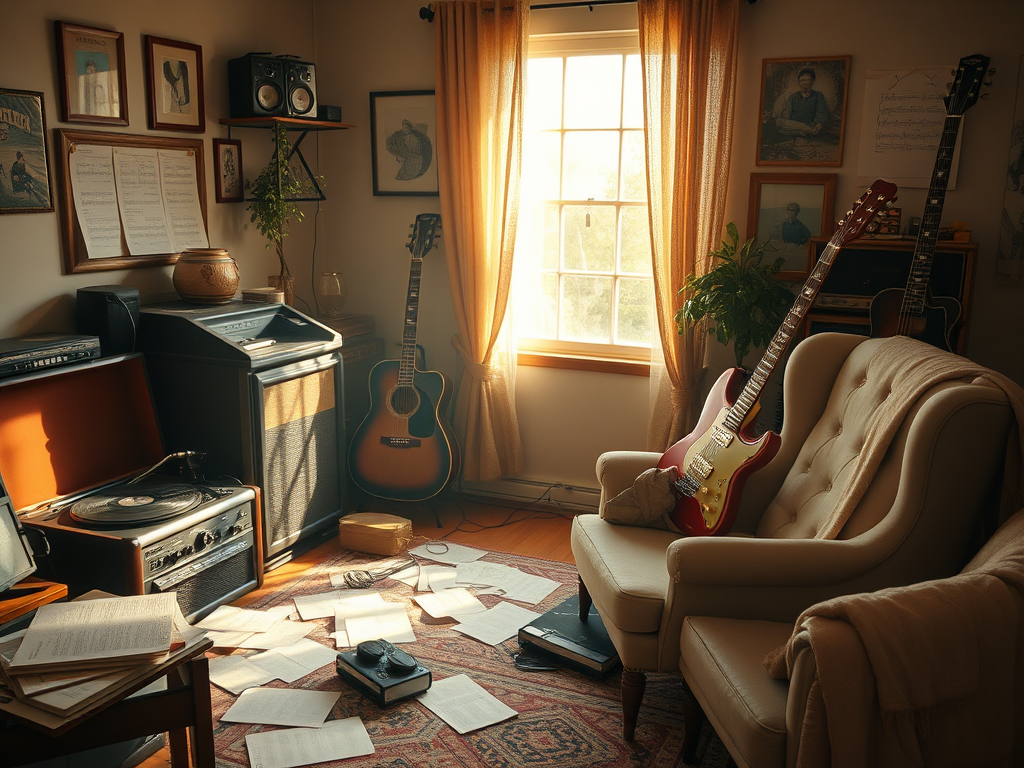
    Lo-fi music is permission. It is permission to not be polished, to let warmth matter more than technical precision, to let music breathe without it needing to optimize every element of itself. In a listening landscape absolutely saturated with tracks that have been compressed and processed and engineered until every trace of human imperfection has been carefully removed, lo-fi makes the deliberate choice to put the imperfection back. And that choice carries emotional meaning before a single lyric has been processed.

    The cultural appetite for lo-fi music right now makes complete and obvious sense to me. People are exhausted by highly produced, algorithmically-driven everything. They want something that sounds like it was made by an actual human, for an actual human, in a real room on a real afternoon when the light was a particular quality. That is what lo-fi offers and it explains the genre’s sustained popularity with remarkable consistency.

    How Did Lo-Fi Change Your Songwriting Process?

    Making Do Not Disturb taught me something I carry into every project now: imperfection is not a failure of craft. It is a deliberate aesthetic choice. It is an emotional language that speaks directly to the part of a person that just needs to sit down and breathe for a minute. The warmth in the low end, the slight texture, the unhurried tempo, all of these are intentional decisions that carry meaning independently of the lyrics.

    As a classically trained singer moving into this genre, I found that lo-fi required me to unlearn some things. That unlearning turned out to be one of the most valuable creative experiences of my career. It pushed me toward emotional truth over technical performance. Toward feeling over impression. I think there will be more lo-fi work from me. This sound opened a door I was not expecting and I am genuinely not done with what is behind it.

    FAQ: Lo-Fi Music Questions Answered

    Is lo-fi music good for studying? Research and widely shared experience both support it as a study and focus aid because its consistent, unobtrusive texture provides ambient presence without lyrical or melodic distraction. Is lo-fi music always instrumental? Not always. Lo-fi singer-songwriter music like Do Not Disturb includes vocals, using the aesthetic to create warmth around the words rather than remove them. Can lo-fi music be meaningful? Absolutely. The depth of feeling possible within lo-fi is exactly what distinguishes it from mere pleasant background sound.

  • Behind the Music: “Home”

    Behind the Music: “Home”

    The Journey’s End That’s Really a Beginning

    How do you end an album that’s been about searching, growing, struggling, and becoming? You come home. Not to a place, but to yourself. “Home” is the exhale at the end of the journey, the moment when you realize that everything you were looking for was already within you.

    This is where the album has been leading all along – to this place of peace with who you are.

    It Was Never About the Destination

    “It was never just about finding where I belong / It was learning I’m already where I need to be” – this revelation changed everything for me. I spent so many years thinking I needed to arrive somewhere. To achieve something that would make me feel complete. To become someone who finally had it all figured out.

    But home isn’t a destination you reach. It’s a recognition that you’re already there. You’ve always been there. You just needed the journey to realize it.

    The Roles We Play vs. Who We Are

    “Beneath the roles – the mother, wife, the dreamer in disguise / There’s just a woman learning she’s enough.” This is the core of it, isn’t it? We play so many roles, wear so many hats, meet so many expectations. And somewhere underneath all of that is the simple truth of who we are.

    I’m a mother, yes. A wife, absolutely. A songwriter, a dreamer, a work in progress. But beneath all of those identities is just me – Melanie – and she’s enough. Without any of the titles, without any of the achievements, without any of the roles. Just as she is.

    The Long Way Home

    Sometimes we have to take the long way home to appreciate where we started. Every song on this album has been a step on that path:

    • “Where I Stand” – accepting where I am
    • “Unbreakable Sky” – breaking through limitations
    • “Borrowed Light” – leaning on others
    • “The In-Between” – finding peace in transition
    • “Coffee Shop Stranger” – opening to love
    • “Roots and Wings” – the paradox of letting go
    • “Ghost of Who I Used to Be” – releasing the past
    • “Keep Showing Up” – persistent courage
    • “Battle Scars” – pride in survival
    • “Garden After Rain” – beauty from pain

    And now, “Home” – the recognition that every step was necessary, every detour was part of the path, every struggle was sculpting who I was meant to be.

    The Production as a Warm Embrace

    The production wraps around you like coming home should – warm, familiar, safe. The acoustic guitar and piano create a foundation that feels solid but not rigid. The strings swell like a deep breath. The vocals are conversational, like I’m talking to an old friend, or maybe to myself in the mirror.

    This is what peace sounds like. This is what self-acceptance sounds like. This is what coming home sounds like.

    Claude H. Becker – The Perfect Circle

    Having “Claude H. Becker” as the AI performance credit on this final song feels especially meaningful. My dad, whose playful spirit lives on in this pseudonym, always felt like home to me. He was the one who made me feel safe enough to be myself. He’d love that his playful pseudonym became part of my art, part of my journey home.

    For Everyone Still Searching

    If you’re still searching, still chasing horizons, still running circles – I want you to know: the thing you’re looking for is already within you. Home isn’t somewhere you need to get to. It’s somewhere you return to.

    You are enough. You’ve always been enough. Welcome home.


    Album cover for 'Unbreakable Sky' by Melanie Grace featuring Claude H. Becker, featuring a vibrant flower against a gradient background.