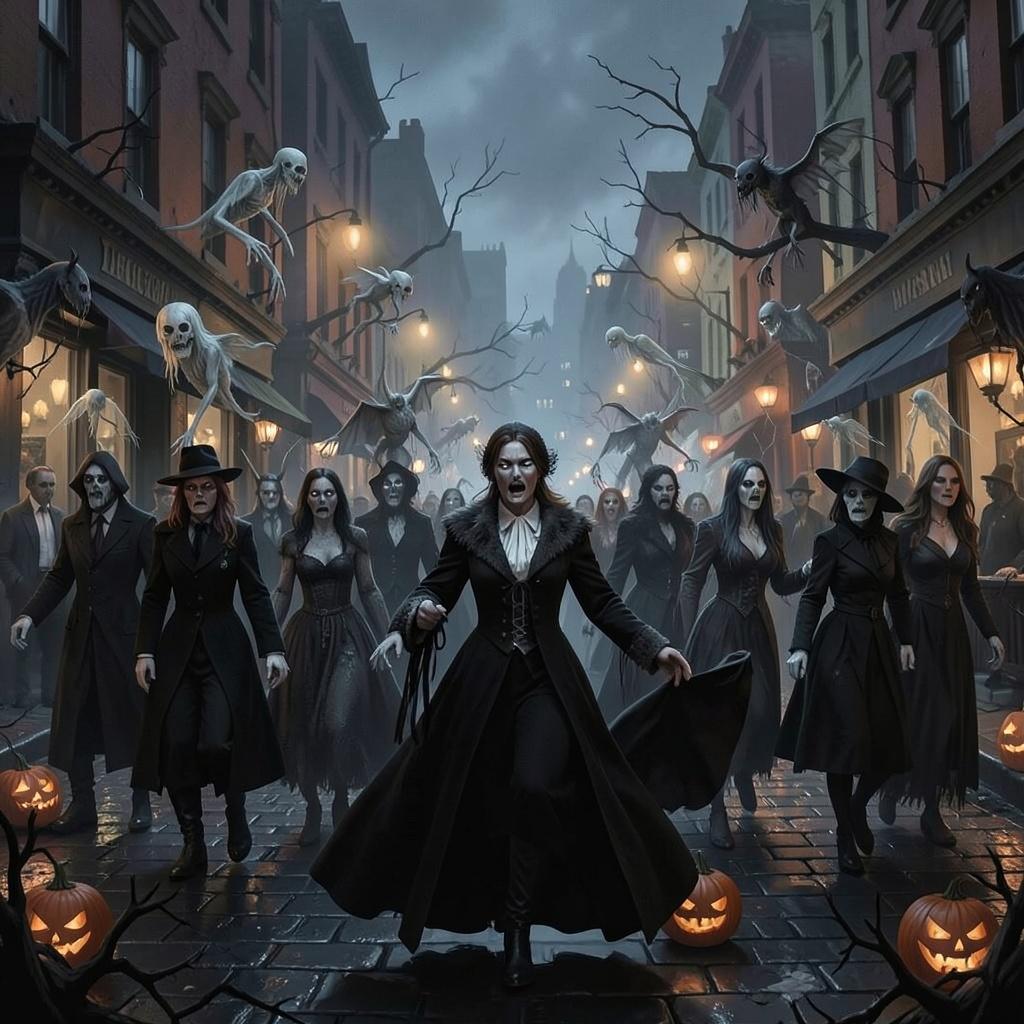
Phantom Parade is a ghost march, and it is meant to feel like weight moving past you in the fog. Snare drums with military rudiments, low brass, cellos and double basses, a distant church bell, and chains and metallic rattles used as percussion. A male-heavy chorus chants in unison, not harmony, and the whole thing swells as if the parade is approaching, then recedes as it walks away down the road. It is a column of the dead, and you are told very plainly not to look one in the face.
The heart of it is the bridge, which I call the roll call. Here come the sailors lost at sea, here come the soldiers three by three, here comes the miner, here comes the maid, every year they walk this parade. Then, low and almost spoken, fall in line and match their pace, but don’t you dare look one in the face. I wanted that repeated here comes to work like a marching cadence, so the words themselves keep the beat.
There is real craft-nerd history behind this one that I get a kick out of sharing. In an earlier version, this song was a big four-part choir finale, and it was nearly identical to another song later on the record. Two giant choir moments back to back would have canceled each other out. So we pulled Phantom Parade way back, slowed it down, and turned it into a march instead of a finale. A parade should feel like a heavy procession passing by, not like a choir standing still. That one decision made both songs better, and it left the album with a single true monumental moment instead of two competing ones.
That is the difference an album makes. You get to shape how one song sets up the next, so the whole night has a build. A pile of singles cannot do that. A record can.
Follow me so the parade keeps coming.
Follow me so you never miss a new song or album:
Join my email list so you hear each new release first.
Come say hi: Instagram | YouTube | Facebook
One click for the road: pre-save A Folklore Christmas on Spotify and it will be waiting in your library the moment it launches.