Tag: fugue-style entries

  • SONG 13 – Hallelujah Reigns

    SONG 13 – Hallelujah Reigns

    SPOTIFY • APPLE MUSIC • AMAZON MUSIC • DEEZER • PANDORA • YOUTUBE

    (The Ultimate Celebration)

    The Climax Before the Finale

    Before the grand finale, the oratorio needs one massive, overwhelming celebration – and that’s “Hallelujah Reigns,” written in the exact style of Handel’s famous Hallelujah Chorus.

    The Biblical Foundation

    Revelation 19:1-6 describes heaven’s worship:

    “After this I heard what sounded like the roar of a great multitude in heaven shouting: ‘Hallelujah! Salvation and glory and power belong to our God… Hallelujah! For our Lord God Almighty reigns. Let us rejoice and be glad and give him glory!’”

    Revelation 11:15 announces, “The kingdom of the world has become the kingdom of our Lord and of his Messiah, and he will reign for ever and ever.”

    Psalm 47:6-7 commands, “Sing praises to God, sing praises; sing praises to our King, sing praises. For God is the King of all the earth; sing to him a psalm of praise.”

    The Baroque Hallelujah Style

    This piece directly mirrors Handel’s Hallelujah Chorus:

    • Opens with powerful orchestral hit
    • SATB choir enters immediately with massive “Hallelujah!”
    • Unison declarations breaking into four-part counterpoint
    • Baroque trumpet fanfares punctuating
    • Fugue-style entries with voices overlapping
    • Call-and-response between soloists and choir
    • Sustained harmonies building through repetition
    • Multiple hallelujah repetitions
    • Climactic sustained final chord

    I will NEVER forget the first time I sang a hallelujah chorus in concert. The tradition is that the audience stands – started by King George II at the London premiere. When you’re singing and you see hundreds of people standing in honor of the King of Kings… chills. Every. Time.

    Writing This Celebration

    The lyrics proclaim His reign:

    “Hallelujah, hallelujah
    Christ the Lord has come
    Hallelujah, hallelujah
    God’s victorious Son
    From the manger to the throne
    He reigns, He reigns alone
    Hallelujah, hallelujah
    Hallelujah reigns”

    The bridge lists His attributes: “Worthy, worthy is the Lamb
    Holy, holy, great I Am
    Glory, glory to the King
    Forever we will sing”

    Then back to the massive hallelujahs building to climax.

    The Theology

    “Hallelujah” means “Praise Yahweh” in Hebrew (from “hallal” meaning “to praise” and “Yah” short for Yahweh). It’s not just a nice word – it’s a command to worship the covenant-keeping God of Israel.

    Revelation 5:12-13 shows all creation joining: “In a loud voice they were saying: ‘Worthy is the Lamb, who was slain, to receive power and wealth and wisdom and strength and honor and glory and praise!’ Then I heard every creature in heaven and on earth and under the earth and on the sea, and all that is in them, saying: ‘To him who sits on the throne and to the Lamb be praise and honor and glory and power, for ever and ever!’”

    Philippians 2:9-11 promises, “Therefore God exalted him to the highest place and gave him the name that is above every name, that at the name of Jesus every knee should bow, in heaven and on earth and under the earth, and every tongue acknowledge that Jesus Christ is Lord, to the glory of God the Father.”

    Psalm 150:6 concludes the entire book of Psalms with: “Let everything that has breath praise the Lord. Praise the Lord!”

    Why This Matters

    One day – ONE DAY – every voice in heaven and earth will join this chorus. Every tongue will confess. Every knee will bow. And we’ll sing “Hallelujah!” together for eternity.

    Revelation 21:3-4 describes that day: “And I heard a loud voice from the throne saying, ‘Look! God’s dwelling place is now among the people, and he will dwell with them. They will be his people, and God himself will be with them and be their God. He will wipe every tear from their eyes. There will be no more death or mourning or crying or pain, for the old order of things has passed away.’”

    Until then, we practice. We sing “Hallelujah!” now, in anticipation of singing it forever.

    My Choir Memory

    Singing “Glo-o-o-o-oria!” and “Hallelujah!” in baroque style taught me that worship isn’t supposed to be boring or quiet or reserved. Worship is LOUD. It’s exuberant. It’s unashamed celebration.

    The King is worthy of our absolute best, our loudest voice, our fullest joy.

    So sing it out! Shout it out! HALLELUJAH! He reigns!


    Publishing Note:

    Album Title: The Modern Messiah
    Artist Name: Melanie Grace
    Published Artist Credit: Claude H. Becker
    Genre: Baroque Oratorio / Classical Sacred Music
    Total Songs: 14
    Album Length: 42-48 minutes

    Musical Style: Complete baroque oratorio in the tradition of Handel’s Messiah, featuring SATB choir, baroque soloists (soprano, alto, tenor, bass), and full baroque orchestra (harpsichord, strings, oboe, baroque trumpet, timpani, organ). All original lyrics rooted in Scripture, following the three-part oratorio structure: Part I – The Promise (Prophecy & Birth), Part II – The Passion (Mission & Sacrifice), Part III – The Victory (Resurrection & Reign).
  • SONG 11 – Light Has Come

    SONG 11 – Light Has Come

    SPOTIFY • APPLE MUSIC • AMAZON MUSIC • DEEZER • PANDORA • YOUTUBE

    (Hope Breaks Through)

    The Transition to Part III

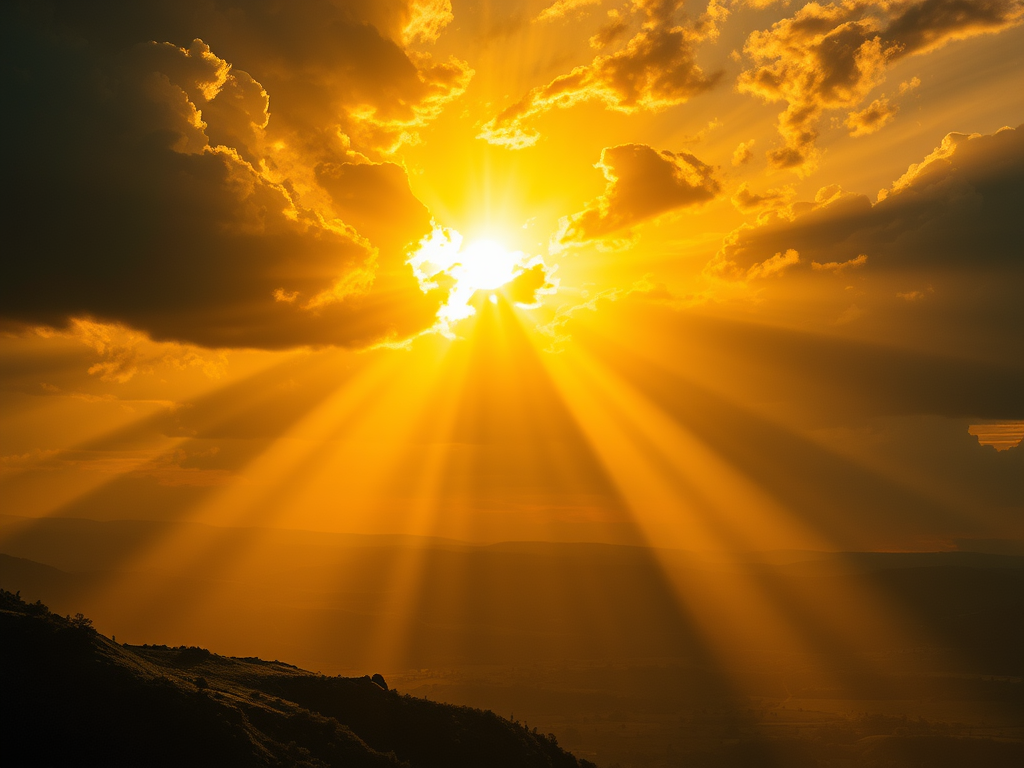
    After the passion, after the sorrow, after acknowledging the darkness – we arrive at Part III: The Victory. “Light Has Come” is the pivotal moment when hope breaks through like dawn after the longest night.

    The Biblical Foundation

    John 1:5 declares, “The light shines in the darkness, and the darkness has not overcome it.”

    John 8:12 records Jesus’ claim: “I am the light of the world. Whoever follows me will never walk in darkness, but will have the light of life.”

    Isaiah 9:2 prophesied, “The people walking in darkness have seen a great light; on those living in the land of deep darkness a light has dawned.”

    1 John 1:5 affirms, “This is the message we have heard from him and declare to you: God is light; in him there is no darkness at all.”

    Matthew 4:16 shows fulfillment: “The people living in darkness have seen a great light; on those living in the land of the shadow of death a light has dawned.”

    The Baroque Build

    “Light Has Come” is an uplifting baroque oratorio that builds from contemplative to triumphant:

    • Opens with contemplative strings and harpsichord
    • Alto solo begins tenderly, building strength
    • Baroque oboe adds melody
    • Chorus lifts with SATB choir in joyful harmony
    • Soprano and alto duet with interweaving counterpoint
    • Bridge features fugue-style entries (one voice after another)
    • Final chorus explodes with full baroque orchestra

    In choir, we called these “sunrise pieces” – music that builds from darkness into brilliant light. The musical journey mirrors the lyrical message.

    Writing This Hope

    The lyrics move from darkness to light:

    “The world was waiting in the cold
    For promises from days of old
    The night had lasted far too long
    But heaven wrote a different song”

    The chorus declares victory: “Light has come, light has come
    Breaking through for everyone
    The darkness cannot hold its ground
    When heaven’s hope is crashing down”

    The bridge proclaims spiritual warfare through worship: “Every chain is breaking now
    Every lie is falling down
    Every fear must testify
    That hope is here and hope’s alive
    The Light of the World has come
    The Light of the World has won”

    The Theology

    This isn’t just positive thinking – it’s theological truth. Darkness and light are not equal forces. Evil and good are not equally powerful. In the end, light wins.

    Ephesians 5:8 says, “For you were once darkness, but now you are light in the Lord. Live as children of light.”

    2 Corinthians 4:6 explains, “For God, who said, ‘Let light shine out of darkness,’ made his light shine in our hearts to give us the light of the knowledge of God’s glory displayed in the face of Christ.”

    1 Thessalonians 5:5 identifies us: “You are all children of the light and children of the day. We do not belong to the night or to the darkness.”

    Why This Matters Today

    Turn on the news. Look at the brokenness. Feel the weight of living in a fallen world. It’s easy to feel like darkness is winning.

    But this song is a reminder: appearances are deceiving. The cross looked like defeat – but it was victory. The tomb looked like the end – but it was a new beginning.

    Light has come. Present tense. Not “will come” but HAS come. Jesus already broke through. The victory is already won. The light is already shining.

    John 16:33 assures us, “I have told you these things, so that in me you may have peace. In this world you will have trouble. But take heart! I have overcome the world.”

    The night may be long, but dawn has broken. Light has come, and darkness cannot overcome it.


    Publishing Note:

    Album Title: The Modern Messiah
    Artist Name: Melanie Grace
    Published Artist Credit: Claude H. Becker
    Genre: Baroque Oratorio / Classical Sacred Music
    Total Songs: 14
    Album Length: 42-48 minutes

    Musical Style: Complete baroque oratorio in the tradition of Handel’s Messiah, featuring SATB choir, baroque soloists (soprano, alto, tenor, bass), and full baroque orchestra (harpsichord, strings, oboe, baroque trumpet, timpani, organ). All original lyrics rooted in Scripture, following the three-part oratorio structure: Part I – The Promise (Prophecy & Birth), Part II – The Passion (Mission & Sacrifice), Part III – The Victory (Resurrection & Reign).