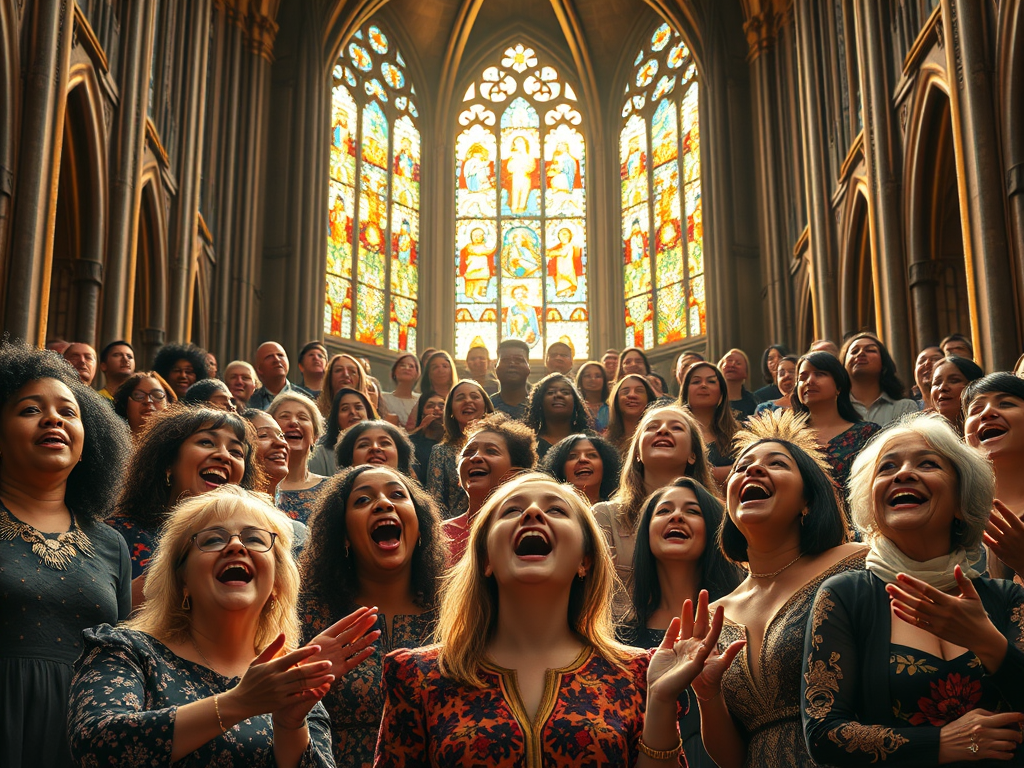
Tag: defiance

  • Resurrection Joy: Why Rejoicing Isn’t About Denying Pain—It’s About Refusing to Let Pain Have the Final Word

    Resurrection Joy: Why Rejoicing Isn’t About Denying Pain—It’s About Refusing to Let Pain Have the Final Word

     • SPOTIFY • APPLE MUSIC • AMAZON MUSIC • DEEZER • PANDORA • YOUTUBE

    Joy in the Lord: The Revolutionary Practice of Rejoicing

    “Rejoice in the Lord always. I will say it again: Rejoice!” (Philippians 4:4)

    Paul writes this while imprisoned. While suffering. While facing genuine hardship.

    Yet he doesn’t write, “Rejoice when circumstances are good.” He writes, “Rejoice always.”

    This isn’t toxic positivity. This isn’t denying pain. This is something more radical: choosing to let God’s faithfulness have the final word instead of suffering.

    The Baroque Version: “Joy in the Lord”

    A tenor voice enters with energy. The recitative is conversational, almost urgent: “The world would tell us joy has fled. But listen! There’s a deeper song.”

    The harpsichord quickens. Strings brighten. Natural trumpet fanfares punctuate the melody. The tempo increases. The energy builds.

    “Rejoice! Rejoice in the Lord always!” The tenor melody soars. Harpsichord and continuo drive relentlessly forward. Trumpet interludes between phrases add jubilant punctuation.

    The baroque approach is energetic celebration. The formal structure and classical instrumentation communicate: this joy is not frivolous. It’s grounded in theological conviction. It’s powerful. It endures.

    This is formal rejoicing: the full orchestra and soloists declaring that joy—authentic, deep, resurrection joy—is not optional. It’s commanded. It’s possible.

    The Broadway Version: “I’m Gonna Shout It Out!”

    A tenor bounces onto the stage. The energy is infectious. Immediate. “I’ve got good news and I can’t keep quiet! I’ve got this feeling, it’s a spiritual riot!”

    There’s a spoken moment in the middle—”It’s not about denying pain. It’s about refusing to let pain have the last word. That’s the joy that shakes the foundations”—that reframes everything.

    The Broadway approach is relational and contagious. Joy isn’t something you experience alone. It’s something that spreads, invites others in, calls backup singers to join.

    By the end, backup singers are echoing the tenor’s joy. The ensemble is literally embodying Philippians 4:4: “I’m gonna shout it out! That’s what living’s all about!”

    This is joyful witness: one person’s conviction about joy becoming infectious to others.

    The Singer/Songwriter Version: “The Joy in Small Things”

    “I found joy in my morning coffee. In the way the light hits the kitchen. In the song the birds are singing outside my window in the dawn.”

    The singer/songwriter approach is intimate and specific. Joy isn’t abstract—it’s in the coffee. The light. The birds.

    The chorus—”Joy, joy, joy in the small things, that’s where real love is found”—reframes rejoicing entirely. We don’t wait for perfect circumstances. We notice the small mercies, the ordinary sacred moments, and find joy there.

    There’s a bridge that’s crucial: “The world tells us joy should be big, climactic, ‘Instagram-worthy,’ but I’m learning the deepest joy lives in the small, sacred, ordinary moments.”

    This is intimate rejoicing: noticing that joy is already present if we have eyes to see it.

    The Alternative Rock Version: “Burning Bright”

    A powerful voice declares: “The world says be careful, be quiet, be small. But I’ve got a joy that refuses to fall. A joy that was born in the fire, a joy that survived the night. I’m done with playing it safe, I’m burning, burning bright!”

    The alternative rock approach is defiant joy. Not gentle. Not quiet. But fierce, loud, celebratory in the face of what tried to destroy it.

    “You can’t dim what’s been through the furnace, you can’t break what’s already been broke. This joy is defiant, this joy is a weapon, this joy’s gonna help me reclaim my cloak.”

    The song explodes with punk/ska energy. “I’m celebrating survival, I’m dancing on the grave of everything that tried to destroy me!”

    This is revolutionary joy: joy as resistance, joy as reclamation, joy as refusal.

    The Same Truth, Four Languages

    Philippians 4:4 commands rejoicing regardless of circumstance. But the way we rejoice differs:

    • Baroque celebrates joy as formal, theological conviction rooted in God’s nature
    • Broadway celebrates joy as contagious witness that invites others into belief
    • Singer/Songwriter celebrates joy as recognition of small mercies already present
    • Alternative Rock celebrates joy as defiant resistance and revolutionary reclamation

    What This Means for Your Year

    Where in your life do you need Philippians 4:4? Where are you facing circumstances that would tempt you toward despair?

    The baroque version invites you into formal, energetic celebration—to let your spirit rise with trumpet fanfares toward genuine theological joy.

    The Broadway version invites you into community and witness—to let your joy become infectious, calling others into belief.

    The singer/songwriter version invites you into gratitude for small mercies—to recognize that joy is often hiding in plain sight, in coffee and light and birdsong.

    The alternative rock version invites you into revolutionary resistance—to celebrate your survival, to dance on the grave of what tried to destroy you, to refuse to be silenced.

    The Joy That Shakes Foundations

    Philippians 4:4 isn’t naive. Paul writes it while imprisoned. He knows that pain is real. Suffering is real.

    Yet he insists: joy is more real. God’s faithfulness is more real. Resurrection power is more real.

    In 2026, that might mean discovering which version of joy speaks to your particular need for rejoicing.

    All three are true. All three are joy. All three are revolutionary.

    Collage of four musical performances showcasing different genres: Baroque choir, Broadway-style show, singer-songwriter on stage, and an alternative rock band, with the title 'New Beginnings' and artist name 'Melanie Grace' prominently displayed.
  • Resurrection Power: How Christ’s Victory Transforms Everything We Know

    Resurrection Power: How Christ’s Victory Transforms Everything We Know

     • SPOTIFY • APPLE MUSIC • AMAZON MUSIC • DEEZER • PANDORA • YOUTUBE

    All Things New: When Everything Changes

    “Therefore, if anyone is in Christ, he is a new creation; the old has gone, the new is here!” (2 Corinthians 5:17)

    This verse is the beating heart of Christian theology. Not improvement. Not renovation. But new creation. Resurrection power working in us now.

    Yet how do we experience this truth? How do we move from intellectual belief to lived reality?

    The Baroque Version: “All Things New”

    Picture a cathedral filling with voices. The sopranos and altos sing: “Old things have passed away.” The tenors and basses respond: “Behold, He makes all things new.”

    This isn’t random dialogue. It’s theological conversation. The music itself teaches theology: voices representing different aspects of human experience all discovering the same truth. Slowly, impossibly, they come together in unity: “All things new, all things new.”

    The full choir joins: “The grave could not contain Him, the stone was rolled away.” The music swells toward majesty. Resurrection isn’t just theology—it’s orchestral triumph.

    This is formal affirmation of fundamental Christian truth: Christ’s resurrection power is active, present, transformative.

    The Broadway Version: “Everything Is Possible Now”

    The stage is darker at first. A single character stands alone: “They told me I was finished.”

    But then—the turning point—”But then came the resurrection. The moment everything shifted. And we all felt it at once.”

    One by one, other characters join. Not in harmony necessarily—in solidarity. Each voice added represents another person discovering transformation. By the time the full ensemble sings “Everything is possible now,” the stage is flooded with light and people.

    The Broadway approach shows transformation as a journey from despair to possibility, from isolation to community. The repeated chorus—”Everything is possible now!”—becomes infectious, contagious, real.

    This is resurrection theology experienced relationally: I don’t believe alone. I believe alongside others who’ve also discovered that death doesn’t have the final word.

    The Singer/Songwriter Version: “I’m Starting Over”

    “I’m starting over. Not from zero, not erased, but from this moment forward, something’s changed.”

    The singer/songwriter doesn’t make grand claims. There’s no orchestra. Just voice and guitar. But the honesty is devastating: transformation isn’t one moment. It’s daily. It’s “small decisions, day by day. The tiny ‘yes’ to starting over again.”

    The chorus—”Starting over, starting over, can’t go back to who I was before”—captures something the other versions approach differently: transformation as personal choice, as moment-by-moment surrender to newness.

    This is intimate theology. Not doctrine about transformation, but lived experience of what it means to become new.

    The Alternative Rock Version: “I’m Breaking Through”

    An explosive voice declares: “They built a box around me, said this is who you are, stay quiet, stay small. But something in me’s waking, something in me’s breaking through the walls.”

    The alternative rock approach is defiant transformation. Not gentle. Not passive. But fierce, active, reclamatory. “I’m not apologizing, I’m not shrinking down, I’m claiming back my power, I’m taking my crown.”

    The song builds from contained verses to explosive chorus: “I’m breaking through! Everything that tried to break me made me strong!” The energy is cathartic, liberating, powerful.

    This is resurrection theology experienced as liberation: I’m not waiting for permission. I’m not asking for approval. I’m claiming my authentic self.

    The Same Truth, Four Languages

    2 Corinthians 5:17 is radical: all things become new in Christ. But the experience of that newness differs:

    • Baroque celebrates the majesty and theological certainty of transformation
    • Broadway shows transformation as a relational, community discovery
    • Singer/Songwriter honors transformation as a personal, daily practice
    • Alternative Rock celebrates transformation as liberation and reclamation

    What This Means for Your New Year

    As you begin 2026, where do you need “all things new”?

    Are there old patterns you sense God inviting you to release? Baroque theology invites you to contemplate the formal majesty of what transformation could mean.

    Are there broken relationships or fractured communities you long to see healed? Broadway theology shows transformation happening together, in solidarity.

    Are there daily habits or mindsets that need shifting? Singer/songwriter theology honors the small “yes” moments that accumulate into transformation.

    Are there limitations you need to break through, false identities you need to shatter, authentic selves you need to reclaim? Alternative rock theology celebrates transformation as defiant liberation.

    The Invitation to Newness

    2 Corinthians 5:17 isn’t conditional on feeling transformed. It’s declarative: you are new creation. The work is done. What remains is for us to experience and live into that reality.

    In 2026, that could mean listening to how four different artistic traditions celebrate the same resurrection power. It might mean discovering which one speaks most deeply to your particular transformation journey.

    Or it might mean recognizing that transformation sounds different in each season of life—sometimes we need formal theology, sometimes relational community, sometimes intimate personal reflection, sometimes defiant liberation.

    All are true. All are new. All are Christ.

    Album cover featuring four styles of musical performance: Baroque choir in a cathedral, Broadway cast in festive costumes, singer-songwriter performing on stage, and alternative rock band playing energetically, with the title 'New Beginnings' by Melanie Grace.
  • Finding Gratitude: How One Truth Sounds in Four Completely Different Languages

    Finding Gratitude: How One Truth Sounds in Four Completely Different Languages

     • SPOTIFY • APPLE MUSIC • AMAZON MUSIC • DEEZER • PANDORA • YOUTUBE

    Finding Gratitude: The Song That Sounds Four Different Ways

    “This day the Lord has made; let us rejoice and be glad.” Psalm 118:24 is one of Scripture’s most joyful invitations. Yet the way we experience gratitude—and the way we express it—varies wildly depending on our spiritual and artistic traditions.

    More radically, it varies depending on where we are in our journey. Sometimes gratitude looks like formal thanksgiving. Sometimes it looks like relief that we survived. Sometimes it’s intimate recognition of grace. Sometimes it’s defiant celebration despite everything.

    The Baroque Version: “This Day the Lord Has Made”

    Step into a grand sanctuary. The harpsichord begins, steady and majestic. Strings swell in layers of complexity. Soprano and alto voices enter with reverence, their lines intricate and theologically articulate. “This day the Lord has made, let us rejoice and be glad, in the mercies given by His hand.”

    By the time the full choir joins, you’re experiencing the formal liturgical gratitude of centuries of Christian tradition. This approach is architectural—building layer upon layer of harmonic beauty to express profound reverence before God. Individual voices give way to community, introspection yields to corporate praise, and the journey from contemplation to celebration mirrors the spiritual awakening of recognizing God’s provision.

    This is gratitude as formal theological statement. It assumes you have time, space, and language to articulate appreciation. It’s beautiful. It’s true. And it speaks directly to those who find God in formal beauty and tradition.

    The Broadway Version: “The Day the Lord Has Made”

    Now imagine a theater. Bright lights. A character steps forward—vulnerable, honest, almost conversational. “Wake up, wake up, the morning’s here. The sun is breaking through. This day the Lord has made for us, so let’s believe it’s true.”

    The Broadway approach is intimate first, communal second. The character asks: “Can you feel it in the air?” They share their struggle: “I didn’t know if I would make it here.” Then they invite others into the realization together.

    Broadway theology is relational. It’s about characters discovering truth together, about recognizing that gratitude isn’t automatic—it’s a choice made fresh each morning despite the weight we carry. This speaks to those who need to see others believing before they can believe.

    The Singer/Songwriter Version: “This Morning”

    Picture someone alone, early morning, with an acoustic guitar. The song is so simple it could be a whisper: “I opened up my eyes this morning, didn’t know if I would make it through the day, but there it was—the sun on my pillow, the mercy brand new.”

    The singer/songwriter approach honors the struggle intimately. It admits some mornings feel like battles. But it captures something the other versions approach differently: the recognition of God’s presence in the most ordinary moments. The sun on a pillow. A thought that whispers, “You’re not done yet.” This speaks to those who need to feel personally known by God.

    The Alternative Rock Version: “Still Standing”

    Now imagine someone who’s been through hell and back, standing defiant in the face of what tried to destroy them. “I woke up this morning, didn’t think I would. The night tried to take me but it never could. Still standing, still breathing, still here, still alive.”

    The alternative rock approach is survival. Not gentle gratitude. Not formal appreciation. But fierce, defiant thanksgiving for the fact that we’re still here despite everything. “They said I’d never make it, but I’m still around.” This isn’t denial of pain—it’s refusal to let pain have the final word. This speaks to those who need to celebrate their own resilience.

    The Same Truth, Four Languages

    Psalm 118:24 contains one truth: each day is a gift from God, worthy of rejoicing. But the experience of that truth is radically different depending on how we encounter it:

    • Baroque speaks to the contemplative soul who finds God in formal beauty
    • Broadway speaks to the relational heart that needs to see others believing
    • Singer/Songwriter speaks to the intimate seeker needing to feel personally known
    • Alternative Rock speaks to the survivor needing to celebrate their own strength

    What This Means for Your Gratitude

    As you begin this new year, consider: which version of gratitude speaks most deeply to your soul today?

    If you’re moved by classical beauty and liturgical tradition, the baroque version might become your morning meditation.

    If you’re energized by ensemble community and character storytelling, the Broadway version might remind you that gratitude is something we choose together.

    If you need intimate reassurance that God knows your particular morning struggle, the singer/songwriter version might be the companion you didn’t know you needed.

    If you’re a survivor celebrating the fact that you’re still here despite the night’s attempt to take you, the alternative rock version might be your battle cry.

    Or perhaps—just perhaps—listening to all four versions might expand your understanding of what gratitude sounds like, helping you hear God’s faithfulness in new ways that speak to different parts of your journey.

    The Invitation Forward

    Psalm 118 doesn’t ask us to choose one way of rejoicing. It invites us to let this day—this ordinary, sacred, hard-won day—awaken gratitude in whatever language our soul understands.

    The story is the same. The gratitude is the same. Only the music—and the vocabulary—changes.

    And maybe that’s exactly as it should be.

    A collage of four music performance scenes representing different genres: a Baroque choir in a grand sanctuary, a Broadway musical ensemble on stage, a singer-songwriter performing with an acoustic guitar, and an alternative rock band playing in a lively setting. The text 'NEW BEGINNINGS' is centered, along with the names of the featured volumes and artists.