Tag: acoustic worship

  • Finding Gratitude: How One Truth Sounds in Four Completely Different Languages

    Finding Gratitude: How One Truth Sounds in Four Completely Different Languages

     • SPOTIFY • APPLE MUSIC • AMAZON MUSIC • DEEZER • PANDORA • YOUTUBE

    Finding Gratitude: The Song That Sounds Four Different Ways

    “This day the Lord has made; let us rejoice and be glad.” Psalm 118:24 is one of Scripture’s most joyful invitations. Yet the way we experience gratitude—and the way we express it—varies wildly depending on our spiritual and artistic traditions.

    More radically, it varies depending on where we are in our journey. Sometimes gratitude looks like formal thanksgiving. Sometimes it looks like relief that we survived. Sometimes it’s intimate recognition of grace. Sometimes it’s defiant celebration despite everything.

    The Baroque Version: “This Day the Lord Has Made”

    Step into a grand sanctuary. The harpsichord begins, steady and majestic. Strings swell in layers of complexity. Soprano and alto voices enter with reverence, their lines intricate and theologically articulate. “This day the Lord has made, let us rejoice and be glad, in the mercies given by His hand.”

    By the time the full choir joins, you’re experiencing the formal liturgical gratitude of centuries of Christian tradition. This approach is architectural—building layer upon layer of harmonic beauty to express profound reverence before God. Individual voices give way to community, introspection yields to corporate praise, and the journey from contemplation to celebration mirrors the spiritual awakening of recognizing God’s provision.

    This is gratitude as formal theological statement. It assumes you have time, space, and language to articulate appreciation. It’s beautiful. It’s true. And it speaks directly to those who find God in formal beauty and tradition.

    The Broadway Version: “The Day the Lord Has Made”

    Now imagine a theater. Bright lights. A character steps forward—vulnerable, honest, almost conversational. “Wake up, wake up, the morning’s here. The sun is breaking through. This day the Lord has made for us, so let’s believe it’s true.”

    The Broadway approach is intimate first, communal second. The character asks: “Can you feel it in the air?” They share their struggle: “I didn’t know if I would make it here.” Then they invite others into the realization together.

    Broadway theology is relational. It’s about characters discovering truth together, about recognizing that gratitude isn’t automatic—it’s a choice made fresh each morning despite the weight we carry. This speaks to those who need to see others believing before they can believe.

    The Singer/Songwriter Version: “This Morning”

    Picture someone alone, early morning, with an acoustic guitar. The song is so simple it could be a whisper: “I opened up my eyes this morning, didn’t know if I would make it through the day, but there it was—the sun on my pillow, the mercy brand new.”

    The singer/songwriter approach honors the struggle intimately. It admits some mornings feel like battles. But it captures something the other versions approach differently: the recognition of God’s presence in the most ordinary moments. The sun on a pillow. A thought that whispers, “You’re not done yet.” This speaks to those who need to feel personally known by God.

    The Alternative Rock Version: “Still Standing”

    Now imagine someone who’s been through hell and back, standing defiant in the face of what tried to destroy them. “I woke up this morning, didn’t think I would. The night tried to take me but it never could. Still standing, still breathing, still here, still alive.”

    The alternative rock approach is survival. Not gentle gratitude. Not formal appreciation. But fierce, defiant thanksgiving for the fact that we’re still here despite everything. “They said I’d never make it, but I’m still around.” This isn’t denial of pain—it’s refusal to let pain have the final word. This speaks to those who need to celebrate their own resilience.

    The Same Truth, Four Languages

    Psalm 118:24 contains one truth: each day is a gift from God, worthy of rejoicing. But the experience of that truth is radically different depending on how we encounter it:

    • Baroque speaks to the contemplative soul who finds God in formal beauty
    • Broadway speaks to the relational heart that needs to see others believing
    • Singer/Songwriter speaks to the intimate seeker needing to feel personally known
    • Alternative Rock speaks to the survivor needing to celebrate their own strength

    What This Means for Your Gratitude

    As you begin this new year, consider: which version of gratitude speaks most deeply to your soul today?

    If you’re moved by classical beauty and liturgical tradition, the baroque version might become your morning meditation.

    If you’re energized by ensemble community and character storytelling, the Broadway version might remind you that gratitude is something we choose together.

    If you need intimate reassurance that God knows your particular morning struggle, the singer/songwriter version might be the companion you didn’t know you needed.

    If you’re a survivor celebrating the fact that you’re still here despite the night’s attempt to take you, the alternative rock version might be your battle cry.

    Or perhaps—just perhaps—listening to all four versions might expand your understanding of what gratitude sounds like, helping you hear God’s faithfulness in new ways that speak to different parts of your journey.

    The Invitation Forward

    Psalm 118 doesn’t ask us to choose one way of rejoicing. It invites us to let this day—this ordinary, sacred, hard-won day—awaken gratitude in whatever language our soul understands.

    The story is the same. The gratitude is the same. Only the music—and the vocabulary—changes.

    And maybe that’s exactly as it should be.

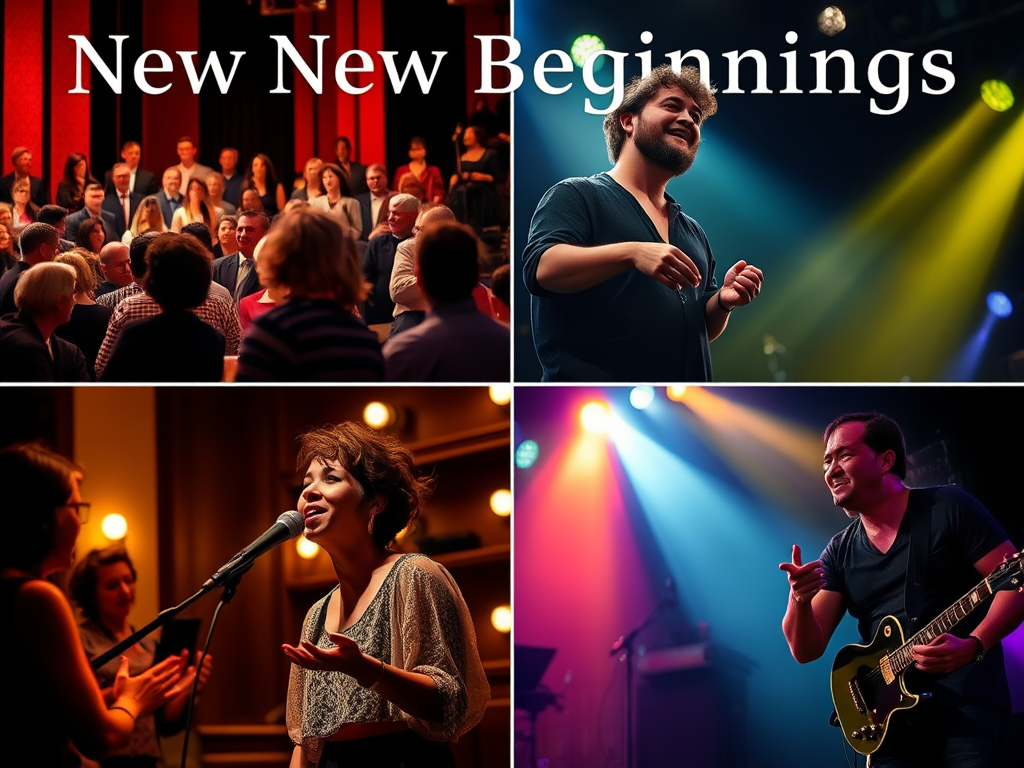
    A collage of four music performance scenes representing different genres: a Baroque choir in a grand sanctuary, a Broadway musical ensemble on stage, a singer-songwriter performing with an acoustic guitar, and an alternative rock band playing in a lively setting. The text 'NEW BEGINNINGS' is centered, along with the names of the featured volumes and artists.
  • New Beginnings: One Spiritual Journey, Four Complete Albums, Endless Possibilities

    New Beginnings: One Spiritual Journey, Four Complete Albums, Endless Possibilities

    New Beginnings: One Message, Four Genres

    Music has an extraordinary power: it speaks directly to the soul in the language that soul understands. A classical musician experiences truth differently than a Broadway devotee, who experiences it completely differently than an indie music lover or an alternative rock enthusiast. Yet the deepest truths—transformation, survival, hope, healing, and transcendence—belong to all of us.

    This is the heart of “New Beginnings: Four Styles, Same Message.”

    Album cover for 'New Beginnings' by Melanie Grace featuring four music genres: Baroque, Broadway, Singer/Songwriter, and Alternative. The image includes a choir, a Broadway performance, a solo singer at a café, and an alternative rock band.

    One Spiritual Vision. Four Complete Albums.

    For January 2026, I’m releasing something unprecedented: a quadruple-album project exploring the same spiritual journey in four distinct musical languages. Not remixes. Not covers. Not adaptations. But four completely original albums, each with customized lyrics, each telling the same story in the idiom that speaks to a different soul.

    • Volume 1: Baroque Oratorio — Formal, liturgical, architecturally beautiful classical excellence
    • Volume 2: Broadway/Musical Theatre — Emotional, character-driven, narrative storytelling
    • Volume 3: Singer/Songwriter Acoustic — Intimate, vulnerable, acoustic authenticity
    • Volume 4: Alternative Rock/Indie — Defiant, survival-focused, ethereal yet powerful

    Each volume stands completely alone as a satisfying artistic and spiritual experience. Yet together, they create something revolutionary: a unified statement that God’s faithfulness speaks every language, reaches every heart, and transforms through any artistic medium.

    Why Four Volumes?

    The inspiration came from a simple realization: not everyone encounters God the same way, and not everyone encounters God through the same musical language.

    A devoted classical music lover may never pick up a contemporary musical theater album. A Broadway fan might dismiss baroque as inaccessible. An indie music listener might never explore either. And alternative rock fans? They’re often overlooked entirely in Christian music.

    But if we tell the same spiritual story in each of these languages—with equal theological depth and artistic excellence—something remarkable happens. Each person encounters profound truth in the idiom that speaks to their soul.

    The Theological Arc

    All four volumes follow the same six spiritual movements, but the emphasis and vocabulary shift with each genre:

    1. Gratitude/Survival — Recognizing what held us through the night
    2. Transformation/Reclamation — Understanding resurrection power and our authentic selves
    3. Joy/Defiant Celebration — Living in breakthrough despite circumstances
    4. Hope/Shared Strength — Trusting God’s plans with others
    5. Healing/Proud Testimony — Experiencing restoration and claiming our scars
    6. Eternity/Transcendence — Setting our hearts on eternal things breaking in now

    Whether you’re listening to a formal baroque chorus, a theatrical ensemble number, an intimate acoustic affirmation, or an explosive alternative rock anthem, you’re experiencing the same theological journey—just in the language that speaks to your heart.

    What Makes This Different

    This isn’t the same lyrics set to different music. This is four completely different sets of lyrics, each one speaking authentically in its genre’s vocabulary:

    • Baroque uses formal theological language and liturgical imagery
    • Broadway uses character-driven narrative and relational storytelling
    • Acoustic uses intimate, personal, confessional imagery
    • Alternative Rock uses survival, defiance, reclamation, and empowerment language

    This is a revolution in how we think about spiritual music. It’s saying: your genre, your language, your musical taste—all of it is welcome here. God’s faithfulness speaks your language.

    What to Expect in This Blog Series

    Over the coming weeks, I’ll be releasing 11 blog posts—one for each song in the project. Each post will:

    • Explore the song’s biblical foundation and theological themes
    • Show how each of the four genres approaches the same truth (using different lyrics)
    • Help you understand what makes baroque, Broadway, acoustic, and alternative rock styles distinct
    • Invite you into deeper spiritual reflection
    • Point you toward all four musical versions so you can experience the full diversity
    • Celebrate how the same message sounds radically different across genres

    By the end of this series, you’ll have encountered the same spiritual story through four completely different artistic lenses.

    An Invitation

    Whether you’re a classical music enthusiast, a Broadway devotee, an indie music lover, an alternative rock fan, or simply someone seeking spiritual depth in music, there’s a version of this project waiting for you.

    And if you’re adventurous, exploring all four versions will give you a richer, more complete picture of how God’s faithfulness sounds across artistic traditions and why diversity in how we experience and express faith is beautiful.

    Welcome to “New Beginnings: Four Styles, Same Message.”

    Let’s begin the journey together.