
Tag: 2 Corinthians 5:17

  • Living Like We Believe It: How Eternal Perspective Changes Everything Right Now”

    Living Like We Believe It: How Eternal Perspective Changes Everything Right Now”

    Eternity Begins Today: The Revolutionary Choice to Live Like We Actually Believe

    “For to me, to live is Christ and to die is gain… our citizenship is in heaven… Set your minds on things above, not on earthly things.” (Colossians 3:2 and Philippians 1:21)

    One of the most radical claims of Christianity is this: eternity isn’t something we wait for. It’s something we enter into now.

    We don’t live as if God might be faithful. We live as if He is faithful. We don’t hope that resurrection power might work in us. We live as if it does work in us.

    This is the leap Colossians 3:2 invites: what if we actually lived like we believe the gospel is true? How would that change everything?

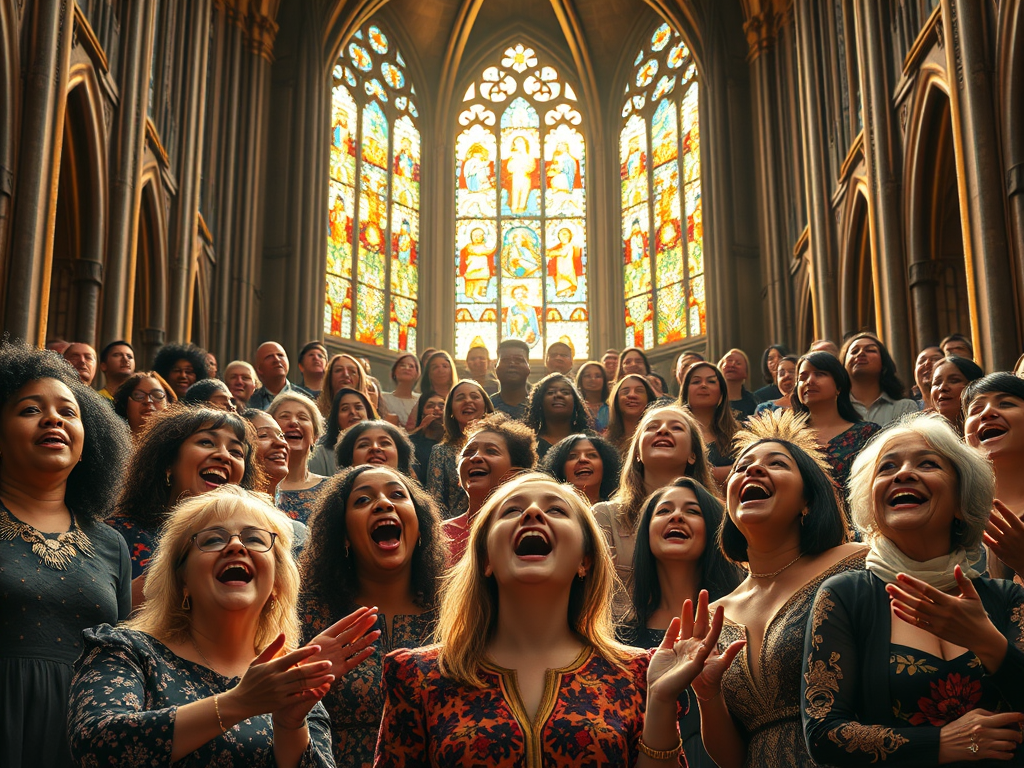
    The Baroque Version: “Eternity Begins Today”

    The full chorus enters with grandeur. Strings swell. Brass announces. The text builds in intensity: “Our hearts are set on things above, not on the passing things of earth. We fix our gaze upon His love, and in His kingdom, find our worth.”

    The music modulates, building energy. “Eternity begins today! Eternity begins today! The old has passed and gone away, all things are made new, we say!”

    This is baroque majesty expressing cosmic truth. Not with arrogance, but with genuine theological conviction. The orchestra swells. The choir rises. This is formal affirmation of the most radical truth: Christ’s kingdom is breaking in. Now. Here.

    The final chorus—”Eternity! Eternity! Eternity begins today!”—is triumphant, powerful, certain.

    This is the baroque approach: celebrate with formal grandeur the revolutionary truth that eternity is now.

    The Broadway Version: “Eternity Is Now”

    A solo soprano opens: “Can you see it? Can you feel it? The kingdom breaking through, a new creation rising up, in me, in you, in all of us.”

    Characters step forward, claiming this truth together. “We’re not waiting for tomorrow, we’re not holding off our hope, eternity is breaking in, and we’ve got the strength to cope.”

    There’s a spoken moment that’s crucial: “We are the bridge between the already and the not yet. We are living in both kingdoms right now. And that means we have access to a power that changes everything.”

    The ensemble builds: “Eternity is now! All things are made new in Him! Eternity is now, and it starts with me and you!”

    This is relational eschatology: we live into eternity together, as community, discovering that God’s kingdom is breaking in through our collective witness.

    The Singer/Songwriter Version: “I’m Gonna Live Like I Believe It”

    “I’m gonna live like I believe it, like the gospel is actually true, like my life matters, like there’s eternal significance in the everyday.”

    The singer/songwriter strips away formality and creates something devastatingly personal. This isn’t about doctrine. It’s about decision.

    “I’m gonna set my mind on things above, keeping my heart tethered to eternity while my feet are planted on solid ground.”

    Then the chorus—”Live like I believe it, believe it, live like I believe it’s true, let it change the things I do”—becomes an invitation to personal transformation.

    “So I’m gonna love boldly, I’m gonna hope fiercely, I’m gonna believe tenderly, and I’m gonna live like I believe that God is faithful and good and near.”

    This is intimate conviction: I’m choosing to live as if the gospel is true, starting today.

    The Alternative Rock Version: “Eternity Crashes In”

    An explosive voice declares: “Everything I thought I knew is burning, everything I thought was solid’s melting. But something’s breaking through the walls, something’s finally, finally arriving.”

    The song builds from sparse verses to explosive choruses: “Eternity’s crashing in, breaking down the barriers! Eternity’s crashing in, and it’s glorious, it’s terrifying!”

    The alternative rock approach is cosmic, transcendent, defiant. Not gentle. Not passive. But fierce, active, revolutionary.

    “The old world is collapsing, the new world is emerging, and I’m caught in the collision, and I’m finally, finally surging.”

    There’s a crucial realization: “This isn’t someday theology, this isn’t future hope. This is now, this is breaking through. This is how I cope.”

    By the final section: “I’m living between the already and the not yet, I’m walking in the power of the resurrection, I’m claiming the truth that Christ has conquered death, and that changes everything, that changes everything!”

    The song explodes with cosmic, otherworldly energy: “Eternity! Eternity! The new world is beginning!”

    The Same Truth, Four Languages

    Colossians 3:2 invites us to set our minds on eternal things, and promises that this perspective transforms everything. The way we experience this transformation differs:

    • Baroque celebrates with formal grandeur the revolutionary truth that eternity begins now
    • Broadway creates communal vision: we enter eternity together, as witnesses to God’s kingdom breaking in
    • Singer/Songwriter creates personal conviction: I’m choosing to live like I believe the gospel is true, starting today
    • Alternative Rock creates cosmic explosion: eternity is crashing in, breaking down the old world, creating something radically new

    What This Means for Your Life

    Here’s the question Colossians 3:2 poses: if you actually believed the gospel was true, how would you live differently?

    Would you worry less about things that don’t matter eternally?

    Would you love more boldly?

    Would you hope more fiercely?

    Would you forgive more readily?

    Would you live as if you’re part of something cosmic, something eternal, something that matters infinitely?

    The baroque version invites you to contemplate, with formal beauty, the radical truth that eternity begins now. What does that mean for you?

    The Broadway version invites you to realize that living into God’s kingdom isn’t a solitary endeavor. It’s something we do together, witnessing to each other that eternity is breaking in.

    The singer/songwriter version invites you to make a decision: I’m gonna live like I believe it. Starting today.

    The alternative rock version invites you into cosmic transcendence: eternity is crashing in, the old world is collapsing, the new world is being born, and you’re part of it.

    The Life That Begins Now

    Eternity isn’t something we wait for. It’s something we enter into the moment we surrender to Christ and begin living as if His kingdom is real.

    And here’s the most beautiful part: the moment we start living like we believe it, we discover it’s actually true.

    In 2026, that might mean discovering which version of “Eternity Crashes In” / “I’m Gonna Live Like I Believe It” calls you into genuine transformation.

    All four offer the same invitation: stop living like eternity is someday. Start living like eternity is now.

    Collage image featuring promotional material for 'New Beginnings' by Melanie Grace. Four sections display images representing different music styles: Baroque choir in a festive setting, Broadway cast performing on stage, a singer-songwriter performing at a cozy venue, and an alternative rock band on stage.
  • Resurrection Power: How Christ’s Victory Transforms Everything We Know

    Resurrection Power: How Christ’s Victory Transforms Everything We Know

     • SPOTIFY • APPLE MUSIC • AMAZON MUSIC • DEEZER • PANDORA • YOUTUBE

    All Things New: When Everything Changes

    “Therefore, if anyone is in Christ, he is a new creation; the old has gone, the new is here!” (2 Corinthians 5:17)

    This verse is the beating heart of Christian theology. Not improvement. Not renovation. But new creation. Resurrection power working in us now.

    Yet how do we experience this truth? How do we move from intellectual belief to lived reality?

    The Baroque Version: “All Things New”

    Picture a cathedral filling with voices. The sopranos and altos sing: “Old things have passed away.” The tenors and basses respond: “Behold, He makes all things new.”

    This isn’t random dialogue. It’s theological conversation. The music itself teaches theology: voices representing different aspects of human experience all discovering the same truth. Slowly, impossibly, they come together in unity: “All things new, all things new.”

    The full choir joins: “The grave could not contain Him, the stone was rolled away.” The music swells toward majesty. Resurrection isn’t just theology—it’s orchestral triumph.

    This is formal affirmation of fundamental Christian truth: Christ’s resurrection power is active, present, transformative.

    The Broadway Version: “Everything Is Possible Now”

    The stage is darker at first. A single character stands alone: “They told me I was finished.”

    But then—the turning point—”But then came the resurrection. The moment everything shifted. And we all felt it at once.”

    One by one, other characters join. Not in harmony necessarily—in solidarity. Each voice added represents another person discovering transformation. By the time the full ensemble sings “Everything is possible now,” the stage is flooded with light and people.

    The Broadway approach shows transformation as a journey from despair to possibility, from isolation to community. The repeated chorus—”Everything is possible now!”—becomes infectious, contagious, real.

    This is resurrection theology experienced relationally: I don’t believe alone. I believe alongside others who’ve also discovered that death doesn’t have the final word.

    The Singer/Songwriter Version: “I’m Starting Over”

    “I’m starting over. Not from zero, not erased, but from this moment forward, something’s changed.”

    The singer/songwriter doesn’t make grand claims. There’s no orchestra. Just voice and guitar. But the honesty is devastating: transformation isn’t one moment. It’s daily. It’s “small decisions, day by day. The tiny ‘yes’ to starting over again.”

    The chorus—”Starting over, starting over, can’t go back to who I was before”—captures something the other versions approach differently: transformation as personal choice, as moment-by-moment surrender to newness.

    This is intimate theology. Not doctrine about transformation, but lived experience of what it means to become new.

    The Alternative Rock Version: “I’m Breaking Through”

    An explosive voice declares: “They built a box around me, said this is who you are, stay quiet, stay small. But something in me’s waking, something in me’s breaking through the walls.”

    The alternative rock approach is defiant transformation. Not gentle. Not passive. But fierce, active, reclamatory. “I’m not apologizing, I’m not shrinking down, I’m claiming back my power, I’m taking my crown.”

    The song builds from contained verses to explosive chorus: “I’m breaking through! Everything that tried to break me made me strong!” The energy is cathartic, liberating, powerful.

    This is resurrection theology experienced as liberation: I’m not waiting for permission. I’m not asking for approval. I’m claiming my authentic self.

    The Same Truth, Four Languages

    2 Corinthians 5:17 is radical: all things become new in Christ. But the experience of that newness differs:

    • Baroque celebrates the majesty and theological certainty of transformation
    • Broadway shows transformation as a relational, community discovery
    • Singer/Songwriter honors transformation as a personal, daily practice
    • Alternative Rock celebrates transformation as liberation and reclamation

    What This Means for Your New Year

    As you begin 2026, where do you need “all things new”?

    Are there old patterns you sense God inviting you to release? Baroque theology invites you to contemplate the formal majesty of what transformation could mean.

    Are there broken relationships or fractured communities you long to see healed? Broadway theology shows transformation happening together, in solidarity.

    Are there daily habits or mindsets that need shifting? Singer/songwriter theology honors the small “yes” moments that accumulate into transformation.

    Are there limitations you need to break through, false identities you need to shatter, authentic selves you need to reclaim? Alternative rock theology celebrates transformation as defiant liberation.

    The Invitation to Newness

    2 Corinthians 5:17 isn’t conditional on feeling transformed. It’s declarative: you are new creation. The work is done. What remains is for us to experience and live into that reality.

    In 2026, that could mean listening to how four different artistic traditions celebrate the same resurrection power. It might mean discovering which one speaks most deeply to your particular transformation journey.

    Or it might mean recognizing that transformation sounds different in each season of life—sometimes we need formal theology, sometimes relational community, sometimes intimate personal reflection, sometimes defiant liberation.

    All are true. All are new. All are Christ.

    Album cover featuring four styles of musical performance: Baroque choir in a cathedral, Broadway cast in festive costumes, singer-songwriter performing on stage, and alternative rock band playing energetically, with the title 'New Beginnings' by Melanie Grace.